▶ Watch the original YouTube video
Can Enel Compete in One Piece’s New World? Fan Reactions and Analysis
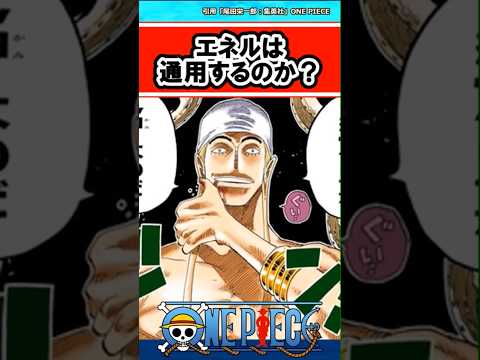
Fifteen years after his introduction in the Skypiea arc, fans continue to debate whether Enel, once a seemingly unstoppable villain, remains viable in One Piece’s increasingly powerful New World. A recent video analysis sparked widespread discussion about the character’s relevance, revealing a complex gap between visual impact and actual combat capability.
What Happened
A video analysis examining Enel’s viability in One Piece’s New World has generated significant discussion within the fan community. The video explores whether the Skypiea arc villain—who once dominated with lightning-based powers and god-like authority—could realistically compete against contemporary New World characters. The discussion centers on a fundamental weakness: Enel’s apparent lack of Armament Haki, the ability that allows fighters to bypass the defenses of Logia-type Devil Fruit users.
Why It Matters
Enel represents a broader phenomenon in long-running anime series: the relative obsolescence of early antagonists as power scaling evolves. Understanding Enel’s current standing illuminates how One Piece’s power system has fundamentally shifted since 2005. The character serves as a lens through which fans examine the series’ progression, the introduction of Haki mechanics, and what constitutes genuine strength in the modern narrative. This discussion also reflects how creator Eiichiro Oda has intentionally managed character power levels across nearly two decades of storytelling.
Background
Enel first appeared in the Skypiea arc (episodes 144–195), where he ruled as a god-like figure with mastery over lightning. At the time, Logia-type Devil Fruit users were considered nearly invincible, and Enel’s natural-type power seemed to place him among the series’ strongest characters. However, the introduction of Haki—particularly Armament Haki—in the New World arc fundamentally altered the power hierarchy. This mechanic allows fighters to strike Logia users directly, negating their intangibility advantage. Enel has not reappeared in the main narrative since Skypiea, though supplementary materials suggest he traveled to the moon.
Key Points
- Armament Haki Deficit: Enel lacks Armament Haki, a critical ability that renders his lightning-based Logia powers vulnerable to modern New World fighters who possess this technique.
- Creator’s Intent: Eiichiro Oda has stated that Enel will not be captured, suggesting limited narrative development for the character and implying his power level remains fixed at Skypiea-era strength.
- Conditional Viability: Some fans argue Enel could succeed through long-range combat against opponents without Haki, though this scenario is increasingly rare in the New World.
- Visual vs. Actual Strength: Enel’s lightning abilities create a powerful visual impression that exceeds his practical combat effectiveness against contemporary opponents.
- Comparative Weakness: Most fan consensus indicates that even Zoro in his current form would defeat Enel, demonstrating the vast power gap between Skypiea and New World characters.
- Character Appeal Persists: Despite combat limitations, Enel remains popular among fans for his design and character concept as a “god left behind by time.”
Timeline
- 2005: Enel introduced in Skypiea arc as seemingly unstoppable antagonist with Logia-type Devil Fruit powers.
- 2009–2011: New World arc begins; Haki mechanics introduced, fundamentally altering power system.
- 2015–Present: Enel absent from main narrative; fan discussions intensify regarding his viability against New World characters.
- Recent: Video analysis reignites debate, with fan comments revealing divided opinions on Enel’s current strength.
Perspectives
Enel Can Compete (Conditional): Some fans argue that under specific circumstances—fighting opponents without Armament Haki or in long-range combat scenarios—Enel retains viability. His lightning speed and area-of-effect attacks could theoretically overwhelm unprepared opponents. This perspective acknowledges that “viability” depends on context rather than absolute power rankings.
Enel Cannot Compete (Majority View): The predominant fan consensus holds that Enel would lose to virtually all major New World characters. Comments such as “he can’t beat current Zoro” and “he couldn’t even defeat Zoro from Fishman Island” reflect the widespread belief that power creep has left Enel behind. The introduction of Haki mechanics specifically negated his primary advantage.
Enel’s Narrative Importance Has Evolved: A nuanced perspective suggests that while Enel’s combat effectiveness has diminished, his narrative significance may increase. His absence and mysterious presence on the moon could position him for a meaningful return, potentially with new abilities or knowledge that would recontextualize his strength.
Visual Design vs. Combat Reality: Fans distinguish between Enel’s striking visual presentation and his actual combat capability. His god-like appearance and lightning effects create an impression of overwhelming power that does not match his practical effectiveness against modern opponents equipped with Haki.
Insights
Enel embodies a fundamental truth about One Piece’s evolution: the series does not simply make characters stronger—it redefines what strength means. When Enel ruled Skypiea, Logia-type powers represented the apex of combat ability. The introduction of Haki did not weaken Enel; rather, it expanded the framework of power in ways that exposed his limitations. This mirrors a broader pattern in long-running shonen anime, where early antagonists become historical markers of the protagonist’s growth rather than ongoing threats.
The character’s absence from the narrative for over a decade suggests intentional creative choice. Eiichiro Oda’s statement that Enel “will not be captured” indicates the creator has deliberately limited Enel’s story potential, effectively freezing his character development at Skypiea. This decision reflects a mature approach to power scaling—acknowledging that some characters cannot be upgraded without breaking narrative logic.
However, Enel’s continued popularity and the persistent fan discussion indicate that strength is not the sole measure of a character’s value. His design, personality, and the mystery surrounding his moon-based activities maintain fan interest despite combat obsolescence. The question “Can Enel compete in the New World?” ultimately reveals more about how fans evaluate characters than about Enel himself. It demonstrates that even as One Piece’s power ceiling rises, earlier characters retain cultural significance as symbols of the series’ journey.
The most likely scenario is that Enel, should he return, would function as a plot device or character study rather than a genuine threat. His reintroduction would serve to illustrate how far the main cast has progressed, much like revisiting early villains demonstrates protagonist growth. In this sense, Enel’s “weakness” in the New World is not a flaw but a feature—a narrative tool that measures the distance traveled since Skypiea.