▶ Watch the original YouTube video
Gundam Rogue Orbit: What Fan Reactions Reveal About the Franchise’s Identity Crisis
Bandai Namco’s announcement of Gundam Rogue Orbit, a hunting-action game launching on PS5, Xbox Series X|S, and PC, has sparked intense debate within the Gundam fan community. The mixed reactions expose deeper tensions about how the 45-year-old franchise balances innovation with its core identity, and whether chasing new audiences means abandoning existing fans.
What Happened
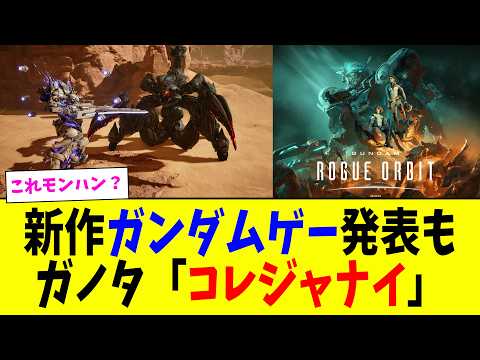
On June 6, 2024, Bandai Namco Entertainment unveiled Gundam Rogue Orbit, a high-speed action game featuring an original Gundam unit called Gundam Helix piloted by protagonist Lex. Unlike traditional Gundam games focused on mobile suit-versus-suit combat, Rogue Orbit adopts a hunting-game framework similar to Monster Hunter and God Eater, pitting players against monstrous space creatures rather than enemy robots.
The game is scheduled for release on PlayStation 5, Xbox Series X|S, and Steam, with a business model expected to include free-to-play mechanics and gacha elements. The announcement triggered a wave of online reactions ranging from cautious optimism to sharp criticism, with fans debating whether the game represents necessary innovation or a fundamental departure from what makes Gundam recognizable.
Why It Matters
Gundam Rogue Orbit represents a critical inflection point for one of anime and gaming’s most valuable intellectual properties. The franchise faces a structural challenge: existing fans are aging, the domestic Japanese market is saturated, and new audiences require different approaches. Yet each attempt to broaden appeal risks alienating the core fanbase whose trust built the IP’s value in the first place.
The fan reactions to Rogue Orbit reveal how IP identity works in practice. When a franchise becomes too diffuse in its creative direction, audiences lose confidence in what the brand promises. This matters not just for Gundam, but for how major entertainment companies balance legacy properties with growth imperatives.
Background
Gundam has dominated mecha anime and gaming since 1979, spawning over 100 anime titles, countless manga series, and dozens of games. The franchise’s strength historically came from a consistent visual and mechanical identity: massive robots engaged in military conflict, grounded in detailed world-building and character-driven narratives.
However, the franchise has gradually expanded its definition. G Gundam (1994) introduced martial-arts-style combat and was initially rejected as “not Gundam,” yet is now celebrated as a landmark series. This precedent created both opportunity and confusion: if Gundam could accommodate radical reimaginings, what actually defines the brand?
Bandai Namco’s game strategy has shifted significantly over the past decade. Between 2013 and 2018, the company focused on niche titles like Gundam Online and Gundam Battle Operation, which satisfied existing fans but failed to attract new players. After the commercial underperformance of Gundam Versus on PS4 in 2019, the company explicitly pivoted toward “new player acquisition” as its primary goal. Rogue Orbit embodies this strategy shift, applying the proven hunting-game formula to the Gundam IP.
Key Points
- Game Design: Rogue Orbit is a high-speed hunting-action game where players pilot Gundam Helix against monstrous space creatures, departing significantly from traditional mobile-suit-versus-suit combat mechanics.
- Visual Identity Concerns: Fan reactions emphasize that the game’s design lacks recognizable “Gundam-ness,” with character models and aesthetics appearing more aligned with Western design sensibilities than classic Gundam visual language.
- Genre Comparison: Multiple fans noted the game resembles God Eater (also published by Bandai Namco) with a Gundam skin applied, raising questions about whether the IP was retrofitted onto existing game architecture.
- Narrative Justification Gap: Unlike G Gundam, which provided in-story explanations for its departure from series conventions, Rogue Orbit lacks apparent narrative context explaining why Gundam exists in this particular setting and scenario.
- Monetization Skepticism: Expected free-to-play and gacha mechanics triggered concerns about predatory design, reflecting years of accumulated distrust toward Bandai Namco’s monetization practices in Gundam games.
- Demographic Mismatch: Recent Gundam anime like Mobile Suit Gundam: The Witch from Mercury attracted new viewers, but those audiences may not overlap with players interested in action games, creating a gap between the new audiences Bandai Namco acquired and those it hopes to reach with Rogue Orbit.
Timeline
- 1979: Mobile Suit Gundam airs, establishing the franchise’s core identity and visual language.
- 1994: G Gundam broadcasts, introducing radical stylistic departure; initially rejected, later accepted as expanding franchise definition.
- 2009: Gundam 00 game announcements trigger intense online debate between traditionalists and innovation advocates.
- 2013–2018: Bandai Namco focuses on niche Gundam games (Gundam Online, Gundam Battle Operation) targeting existing fans; new player acquisition remains unsuccessful.
- 2019: Gundam Versus underperforms commercially on PS4; company strategy shifts toward broader market appeal.
- 2020s: Bandai Namco explicitly prioritizes global expansion and new audience acquisition in corporate strategy.
- 2022: Mobile Suit Gundam: The Witch from Mercury launches, successfully attracting new anime viewers.
- 2023: Armored Core VI achieves critical and commercial success by balancing legacy fan expectations with new player accessibility.
- June 6, 2024: Gundam Rogue Orbit announced; online reactions immediately polarize around questions of IP identity and design philosophy.
Perspectives
The Innovation Argument: Some fans argue that constraining Gundam to traditional mobile-suit combat limits creative possibilities. They point to G Gundam’s eventual acceptance as proof that radical departures can become beloved classics. From this view, Rogue Orbit’s hunting-game framework is a legitimate evolution, not a betrayal. The game’s use of an original Gundam unit rather than iconic designs shows respect for the core franchise while creating space for experimentation.
The Identity Preservation Argument: Critics contend that Gundam’s strength lies in a consistent visual and mechanical identity. They note that G Gundam succeeded because it provided narrative justification for its stylistic choices within the story itself. Rogue Orbit, by contrast, appears to apply Gundam branding to a pre-existing game design without equivalent narrative grounding. This perspective emphasizes that IP value depends on audience confidence in what the brand promises, and that diffusing that promise weakens the franchise long-term.
The Business Reality Argument: A third perspective acknowledges that Gundam’s core audience is aging, the domestic market is finite, and global expansion requires different design approaches. From this view, Rogue Orbit represents necessary adaptation to market realities. The criticism, however, is that Bandai Namco may be targeting the wrong “new audience”—players interested in hunting games may not care about Gundam specifically, while Gundam fans acquired through anime like The Witch from Mercury may not be interested in action games.
The Monetization Concern: Across all perspectives, fans express skepticism about expected free-to-play and gacha mechanics. This reflects a decade of accumulated distrust toward Bandai Namco’s monetization practices. The concern is not merely about cost, but about whether the game’s design will be balanced around player progression or around encouraging spending.
Insights
Gundam Rogue Orbit exposes a fundamental tension in how legacy entertainment franchises navigate growth. The franchise’s 45-year history has created both its greatest asset—brand recognition and fan investment—and its greatest liability—accumulated expectations and definitional ambiguity.
The core issue is not whether Gundam should evolve. G Gundam proved that radical reimagining is possible. Rather, the issue is whether evolution requires narrative and thematic justification that makes the departure feel intentional rather than opportunistic. Fans can accept “this is a different kind of Gundam story” if the story explains why. They resist “we applied Gundam branding to a hunting game because hunting games sell.”
The demographic challenge is equally revealing. Bandai Namco acquired new Gundam audiences through anime like The Witch from Mercury, but those audiences’ interests may not align with action-game mechanics. Simultaneously, the company’s core gaming audience—players of Gundam Battle Operation and similar titles—skews older and smaller. Rogue Orbit attempts to bridge this gap by using Gundam IP to attract hunting-game players, but this strategy assumes that IP recognition alone drives purchasing decisions across genre boundaries.
The monetization skepticism reflects a broader industry credibility problem. Free-to-play games with gacha mechanics have become industry standard, but they carry reputational risk, especially for legacy franchises. Bandai Namco’s history of aggressive monetization in Gundam games has created baseline distrust that no announcement can immediately overcome.
For Rogue Orbit to succeed, it must accomplish three things: deliver compelling hunting-game mechanics that stand on their own merit, provide narrative context that makes the Gundam setting feel integral rather than incidental, and demonstrate transparent, player-friendly monetization practices. Whether the game achieves these goals will determine not just its commercial performance, but whether Gundam’s identity can survive another expansion of its definition.
The broader lesson extends beyond Gundam. As entertainment companies manage aging franchises in saturated markets, they face a choice: invest in deepening existing audience loyalty, or risk that loyalty to pursue new audiences who may lack the same commitment to the brand. Rogue Orbit’s reception will signal whether that gamble can succeed.