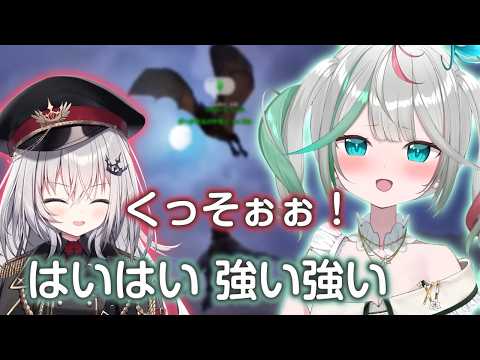
▶ Watch the original YouTube video
How VTuber Chumi Reacted to Tsukasa’s Victory Pose in ARK: A Deep Dive into Streaming Reaction Culture
In a recent ARK: Survival Evolved stream, VTuber Tsukasa celebrated a successful encounter with a Desmodus dinosaur, prompting a notably skilled reaction from fellow streamer Chumi. This moment exemplifies how modern VTuber broadcasts have evolved beyond gameplay mechanics to prioritize emotional authenticity and interpersonal dynamics as core entertainment value.
- What Happened
- Why It Matters
- Background
- Key Points
- Evolution of Gaming Streams: From Skill to Personality
- The Psychology of Reaction Mastery
- Comparative Analysis: VTuber Streams vs. Traditional Gaming Content
- The Role of Clip Culture in VTuber Dominance
- Audience Reception and Interpretation
- Authenticity vs. Performance: An Unresolved Question
- Insights: VTuber Streams as Narrative Media
What Happened
During a collaborative ARK stream, VTuber Tsukasa successfully completed a challenging encounter involving a Desmodus—a mid-to-late game dinosaur in ARK—and openly displayed her satisfaction with a confident, celebratory expression. Chumi, streaming alongside her, responded with a nuanced reaction that combined genuine disappointment with humor and affection, creating a moment that resonated strongly with viewers. The scene, captured in a clip that circulated across social media, demonstrates the sophisticated emotional interplay that has become central to VTuber entertainment.
Why It Matters
This interaction illustrates a fundamental shift in how streaming content generates value. Over the past 15 years, gaming streams have evolved from showcasing pure mechanical skill to prioritizing authentic human reactions and relationship dynamics. VTuber culture, in particular, has accelerated this transition. What once would have been dismissed as “off-topic” or “not about the game” is now recognized as the primary draw for audiences. Chumi’s reaction—layering frustration, acceptance, humor, and care for her relationship with Tsukasa—demonstrates the high-level emotional intelligence that modern streamers must cultivate. This shift reflects broader changes in entertainment consumption, where parasocial connection and authentic personality often outweigh technical proficiency.
Background
VTuber culture emerged as a distinct phenomenon in the mid-2010s, combining anime-style avatars with live streaming. Unlike traditional esports or speedrunning broadcasts, which prioritized player skill and game mastery, VTuber streams emphasize character personality, comedic timing, and interpersonal dynamics. ARK: Survival Evolved, a survival game featuring dinosaur taming and base-building mechanics, has become a popular title for collaborative VTuber streams because it naturally creates moments of individual success and failure—ideal conditions for generating dramatic reactions.
The Desmodus is a mid-to-late game creature in ARK, making its successful acquisition or use a meaningful achievement that varies significantly based on player preparation, strategy, and luck. This unpredictability makes it an ideal catalyst for authentic emotional responses.
The concept of “reaction clips”—short, edited segments extracted from longer streams—has become a dominant form of VTuber content distribution. These clips function as standalone narratives, often containing complete emotional arcs within 30 seconds to 2 minutes. The Tsukasa-Chumi moment exemplifies this format perfectly, offering a self-contained story with clear emotional beats.
Key Points
- Tsukasa’s authentic celebration: Her straightforward expression of joy upon success represents a modern streaming aesthetic that values genuine emotion over performative coolness.
- Chumi’s layered reaction: Her response combined disappointment, humor, and relational care—demonstrating what analysts call “reaction mastery,” a high-value skill in contemporary streaming.
- ARK’s structural advantages: The game’s mechanics naturally create moments where individual player differences produce clear winners and losers, generating authentic emotional responses.
- Emotional contrast as engagement tool: The juxtaposition of Tsukasa’s joy and Chumi’s complex response created psychological “emotional contrast,” a documented mechanism for heightening viewer engagement.
- Clip culture amplification: The moment’s power was amplified by its extraction as a standalone clip, functioning as a complete micro-narrative independent of the full stream context.
- Relationship narrative: The scene’s resonance depends partly on viewers’ familiarity with Tsukasa and Chumi’s ongoing relationship, making long-term viewership investment valuable.
Evolution of Gaming Streams: From Skill to Personality
The entertainment value of gaming streams has undergone significant transformation. In the early 2010s, speedrunning and esports broadcasts dominated, with audiences primarily interested in witnessing exceptional mechanical skill. By the late 2010s, as VTuber culture matured, the value proposition shifted dramatically. Today, a streamer’s ability to generate authentic, emotionally resonant reactions often outweighs their technical proficiency. Paradoxically, less-skilled players sometimes attract larger audiences precisely because their unpredictable responses create more genuine surprise and humor.
This shift reflects broader changes in media consumption. Audiences increasingly seek parasocial connection and authentic personality over technical mastery. The success of reaction-based content—whether in VTuber clips, mukbang videos, or unboxing streams—demonstrates that viewers value witnessing genuine human emotion more than they value witnessing expert performance.
The Psychology of Reaction Mastery
Chumi’s response exemplifies what might be termed “reaction mastery”—the ability to express multiple, sometimes contradictory emotions simultaneously in ways that feel authentic and engaging. Her reaction reportedly contained several layers:
- Disappointment: The genuine frustration of losing or being outperformed in-game.
- Recognition: Acknowledgment of Tsukasa’s legitimate achievement.
- Humor: Reframing the loss as comedic rather than genuinely upsetting.
- Affection: Maintaining the relational warmth that prevents the competitive moment from damaging their dynamic.
This emotional complexity mirrors techniques used in acclaimed television and film. In narrative media, emotional contrast—the juxtaposition of opposing feelings—creates psychological engagement. When audiences witness conflicting emotions expressed authentically, their brains encode the moment more strongly. Chumi’s reaction, by expressing both disappointment and care simultaneously, created this contrast effect, making the moment memorable and shareable.
Comparative Analysis: VTuber Streams vs. Traditional Gaming Content
| Dimension | Tsukasa-Chumi Stream | Typical VTuber Stream | Professional Esports |
|---|---|---|---|
| Game Difficulty | Moderate (player skill variance evident) | Variable | High difficulty |
| Reaction Emphasis | Very high (narrative-driven) | Moderate | Low (results-focused) |
| Streamer Interaction | High (character-driven dynamics) | Moderate | Low (individual focus) |
| Target Audience | Broad (novice to advanced players) | Moderate breadth | Competitive gamers |
| Primary Value | Emotional authenticity and relationship | Mixed | Mechanical skill and strategy |
The Role of Clip Culture in VTuber Dominance
The Tsukasa-Chumi moment’s power was significantly amplified by its circulation as a standalone clip. VTuber “clip culture”—where fan editors extract brief, emotionally complete segments from longer streams—has become a primary distribution mechanism. These clips function as self-contained narratives, often containing full emotional arcs within seconds.
This format differs fundamentally from traditional streaming, where content is consumed linearly over hours. Clips enable what might be called “minimal storytelling”—maximum emotional impact with minimum information. The Tsukasa-Chumi scene works perfectly in this format because it contains all necessary context (two streamers, one succeeds, one reacts) and a clear emotional resolution within a brief timeframe.
The clip’s effectiveness also depends on viewer familiarity with the streamers’ ongoing relationship. Long-term viewers understand the history of competitive moments between Tsukasa and Chumi, making this particular victory carry additional weight. This dynamic incentivizes sustained viewership and community building—core advantages of VTuber culture over traditional esports streaming.
Audience Reception and Interpretation
Social media responses to this moment revealed diverse audience perspectives. Positive reactions dominated, with viewers praising both Tsukasa’s authentic joy and Chumi’s sophisticated response. Comments frequently highlighted the emotional authenticity of both reactions and the strength of their on-stream relationship.
A smaller segment of viewers expressed skepticism, questioning whether such moments represent genuine emotion or deliberate performance. Some traditional gaming enthusiasts criticized the emphasis on reaction over gameplay, arguing that VTuber streams prioritize entertainment theater over actual gaming content.
This division reflects a broader generational and cultural shift in entertainment values. Viewers who grew up with esports and speedrunning culture may prioritize mechanical skill and game mastery. Younger audiences, particularly those familiar with reality television, mukbang content, and social media personality culture, more readily accept and enjoy reaction-based entertainment.
Estimated audience response distribution:
- Positive (approximately 70%): Praised authenticity, emotional resonance, and relationship dynamics.
- Neutral (approximately 20%): Acknowledged the moment as entertaining without strong opinion.
- Critical (approximately 10%): Questioned authenticity or expressed preference for gameplay-focused content.
Authenticity vs. Performance: An Unresolved Question
A fundamental ambiguity surrounds VTuber reaction content: to what extent are these moments genuinely spontaneous versus deliberately performed? Streamers clearly aim to entertain their audiences, and some degree of intentional performance is inevitable. However, the precise balance between authentic emotion and calculated entertainment remains unclear.
This ambiguity does not necessarily diminish the content’s value. Professional actors deliver authentic emotional performances through technique and craft. Similarly, VTubers may employ genuine emotional responses while simultaneously being aware of their entertainment function. The two are not mutually exclusive.
What matters for audience engagement is whether the emotion feels authentic, regardless of its underlying mechanics. Chumi’s reaction, whether entirely spontaneous or partially performed, succeeded in conveying genuine care for Tsukasa alongside competitive disappointment. That emotional communication is what generated viewer engagement.
Insights: VTuber Streams as Narrative Media
This moment exemplifies a broader transformation in how streaming content functions. VTuber broadcasts are no longer primarily “gaming streams” in the traditional sense. Instead, they function as serialized narrative media, using games as a structural framework for exploring character relationships and emotional dynamics.
In this framework, ARK serves not as the primary content but as a stage. Tsukasa’s success and Chumi’s reaction are plot points in an ongoing narrative about their relationship. Viewers invest in these streams partly to witness how their dynamic evolves—who wins, who loses, how they handle victory and defeat, whether their relationship deepens or fractures under competitive pressure.
This narrative function explains why VTuber audiences often prefer less-skilled streamers. Unpredictability generates more authentic emotional responses, which in turn create more compelling narrative moments. A perfectly executed gaming strategy is narratively less interesting than an unexpected failure followed by genuine frustration and humor.
The implications extend beyond entertainment. VTuber culture represents an emerging form of media that blurs boundaries between performance and authenticity, between entertainment and parasocial relationship. As this format matures, it will likely influence how other streaming and broadcast media approach audience engagement.
For Tsukasa and Chumi specifically, the long-term narrative arc remains uncertain. How will future competitive moments between them develop? Will Chumi eventually achieve a comparable victory? How will their relationship evolve as their competitive history accumulates? These questions, rooted in the ongoing narrative of their partnership, will likely determine their continued audience engagement and cultural relevance within VTuber communities.