▶ Watch the original YouTube video
Sephiroth vs. Lightning: Why Final Fantasy Fans Are Obsessed With This Dissidia Duel Encounter
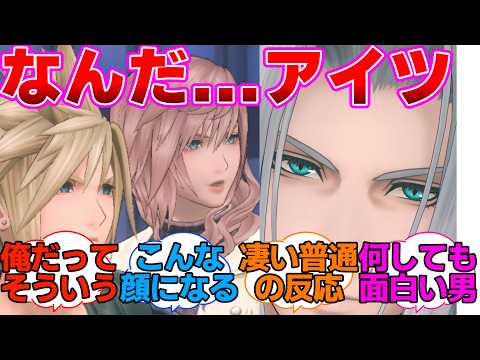
A crossover scene between Sephiroth and Lightning in the mobile game Dissidia Duel Final Fantasy has sparked intense debate across gaming communities. The encounter highlights a generational divide in Final Fantasy’s iconic characters and raises questions about what truly defines a legendary villain in gaming history.
What Happened
Dissidia Duel Final Fantasy, a smartphone-based fighting game featuring characters from across the Final Fantasy franchise, recently implemented a scene where Sephiroth and Lightning come face-to-face. The encounter has generated significant online discussion, with fans analyzing the dynamic between these two iconic characters from different eras of the series. The scene’s visual presentation and the perceived power dynamic between the characters have become the focal point of fan analysis and debate.
Why It Matters
This crossover represents more than a simple character interaction—it symbolizes a generational shift in gaming and the lasting cultural impact of different Final Fantasy titles. Sephiroth, the antagonist of Final Fantasy VII (1997), remains one of gaming’s most influential villains, while Lightning, the protagonist of Final Fantasy XIII (2009), represents a later era of the franchise. The comparison reveals how gaming audiences perceive character significance and how historical context shapes a character’s cultural weight within the industry.
Background
Final Fantasy VII introduced Sephiroth during the PlayStation 1 era, a time when 3D graphics and cinematic presentation were revolutionary. His design, backstory, and the game’s cultural impact established him as a defining character in gaming history. The game received multiple sequels, spin-offs, and a full remake released in 2020, cementing Sephiroth’s position at the center of Final Fantasy’s legacy.
Lightning emerged as the protagonist of Final Fantasy XIII during the PlayStation 3 generation. While the game achieved commercial success and spawned multiple spin-offs including Final Fantasy XIII-2 and Lightning Returns: Final Fantasy XIII, it never achieved the same level of cultural resonance or received the same level of continued investment as the FF7 franchise. Unlike Sephiroth, who has been reimagined and reintroduced through the FF7 Remake project, Lightning has largely remained a character of the past.
Key Points
- The Dissidia Duel scene depicting Sephiroth and Lightning’s encounter has become a focal point for discussing character hierarchy within the Final Fantasy franchise
- Fans perceive a significant “power gap” between the two characters, influenced by their respective games’ cultural impact and production values
- Sephiroth’s status as a generational icon from the PS1 era contrasts sharply with Lightning’s role as a character from the PS3 generation
- The scene has sparked debate about whether FF7 has ever truly had a successor character in terms of cultural significance
- Online reactions reveal both nostalgic appreciation for Sephiroth and defensive commentary from Lightning supporters
- The encounter highlights broader questions about creativity and character development in modern gaming franchises
Timeline
- 1997: Final Fantasy VII releases on PlayStation 1, introducing Sephiroth as the main antagonist
- 2005: Final Fantasy VII: Advent Children released, further cementing Sephiroth’s cultural presence
- 2009: Final Fantasy XIII launches with Lightning as the protagonist
- 2013-2015: Multiple FF13 spin-offs released, including Lightning Returns
- 2015: Final Fantasy VII Remake development announced
- 2020: Final Fantasy VII Remake released, reintroducing Sephiroth to a new generation
- Recent: Dissidia Duel Final Fantasy implements the Sephiroth-Lightning encounter scene
Perspectives
The Sephiroth Camp: Many fans argue that Sephiroth’s visual presentation, musical accompaniment, and overall production quality in the Dissidia scene demonstrate a clear superiority. They point to his revolutionary impact on gaming in 1997 and his continued relevance through the FF7 Remake as evidence of his unmatched status. These fans view the scene as a natural reflection of the character hierarchy within Final Fantasy history.
The Lightning Defense: Other fans counter that Lightning deserves recognition for her own merits. They argue that FF13 provided a complex protagonist with deep personal struggles and that comparing characters across different eras is inherently unfair. These supporters view the perceived power gap as a product of production constraints rather than actual character quality.
The Historical Analysis Perspective: A third group approaches the scene from a gaming history standpoint, viewing it as evidence of a broader industry trend. They argue that no character has successfully replaced Sephiroth as a cultural icon since FF7, suggesting a potential decline in creative innovation within the franchise. This perspective treats the encounter as a symptom of larger questions about modern game design and character development.
Insights
The viral response to this scene reveals that character significance in gaming extends far beyond in-game mechanics or narrative importance. A character’s cultural weight is determined by the historical moment of its creation, the technological innovations it represents, and the sustained investment a company makes in its legacy. Sephiroth benefits from all three factors: he emerged during a revolutionary moment in gaming, his visual design pushed technical boundaries, and Square Enix has consistently reinvested in his character through remakes and spin-offs.
The scene also illustrates how gaming audiences intuitively recognize production quality and creative effort. The subtle differences in animation, sound design, and visual presentation between Sephiroth’s and Lightning’s scenes communicate a hierarchy that viewers absorb immediately, even if they cannot articulate why.
Perhaps most significantly, this encounter highlights a question that has haunted Final Fantasy since 1997: whether the franchise will ever create another character capable of matching Sephiroth’s lasting impact. While Lightning is a well-developed character within her own context, she has not transcended her original game to become a franchise-defining symbol in the way Sephiroth has. This gap suggests that the conditions that created Sephiroth—a combination of technological innovation, creative ambition, and cultural timing—may be difficult to replicate in the modern gaming landscape.