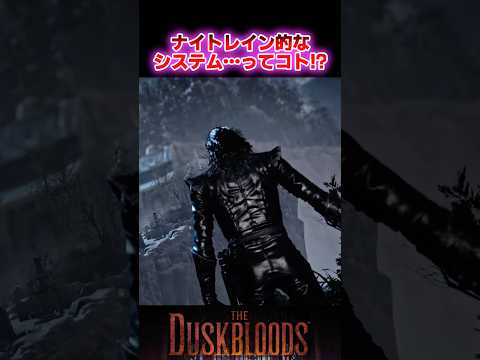
▶ Watch the original YouTube video
The Duskbloods has generated significant buzz in gaming communities for its adoption of a “Nightrain-style system”—a design philosophy that prioritizes player agency and creative freedom. Drawing from industry trends established by games like Hades and Baldur’s Gate 3, this mechanic represents a fundamental shift in how modern games approach player choice and replayability.
What Happened
The Duskbloods has introduced what gaming communities are calling a “Nightrain-style system,” sparking widespread discussion about innovative game design. This system emphasizes player freedom, multiple viable approaches to challenges, and high replayability—departing from traditional linear game design. Community reactions reveal strong enthusiasm for this approach, with players expressing excitement about the possibilities the system offers.
Why It Matters
This development signals a broader industry shift toward prioritizing player agency and creative problem-solving. As major studios continue to face criticism for formulaic design, games like The Duskbloods demonstrate that players increasingly demand meaningful choice and the ability to tackle challenges through multiple strategies. This trend reflects evolving player expectations and has implications for how future games will be designed across the industry.
Background
The “Nightrain-style system” concept draws inspiration from successful games that have revolutionized their respective genres. Hades (2019) transformed roguelike perception by emphasizing build variety and replayability, while Dark Souls established the value of diverse character builds and playstyles. More recently, Baldur’s Gate 3 demonstrated the commercial and critical success of systems where “every choice matters.” The Duskbloods appears to synthesize these lessons into a cohesive design philosophy that maximizes player freedom while maintaining game balance.
Key Points
- The Nightrain-style system prioritizes player freedom and maximizes viable strategic options, moving away from predetermined “correct” solutions
- The system supports diverse playstyles, allowing different character builds and approaches to yield equally valid results
- High replayability is built into the design, encouraging players to experiment with different strategies across multiple playthroughs
- Community reactions emphasize three core desires: innovation, creative experimentation, and shared discovery within gaming communities
- The system represents a convergence of design innovations from Hades, Dark Souls, Skyrim, and Baldur’s Gate 3
- Industry adoption is expected to accelerate, with indie developers particularly interested in implementing similar mechanics
System Design Analysis
Player Freedom Maximization
Unlike traditional game systems that guide players toward developer-intended solutions, the Nightrain-style system eliminates predetermined “correct” paths. This design philosophy trusts players to discover their own effective strategies, similar to the freedom found in games like Skyrim and Dark Souls.
Playstyle Diversity
The system accommodates multiple viable approaches to challenges. Whether through different equipment combinations, ability selections, or tactical approaches, players can tackle obstacles in fundamentally different ways—each with legitimate advantages and disadvantages.
Replayability Enhancement
By enabling endless strategic variation, the system naturally encourages multiple playthroughs. Players remain motivated to experiment with new builds and approaches, extending engagement far beyond a single campaign.
Comparative Analysis
| Game Title | System Characteristics | Player Freedom | Replayability |
|---|---|---|---|
| Hades | Roguelike + Build Variety | ★★★★★ | ★★★★★ |
| Dark Souls Series | Multiplayer Integration + Build Diversity | ★★★★☆ | ★★★★☆ |
| Skyrim | Open World + Flexible Quest Progression | ★★★★★ | ★★★★☆ |
| The Duskbloods | Nightrain-Style System + Diverse Approaches | ★★★★★ | ★★★★★ |
The Duskbloods appears to represent a synthesis of proven design innovations, combining the replayability of Hades, the build diversity of Dark Souls, the open-ended exploration of Skyrim, and the choice-driven narrative of Baldur’s Gate 3.
Industry Context and Trends
The gaming industry has undergone significant shifts since 2023. The success of Baldur’s Gate 3 accelerated recognition of “player agency” as a critical design principle. During this period, industry discourse increasingly emphasized the importance of giving players meaningful choices that genuinely impact their experience.
The Nightrain-style system aligns perfectly with this emerging industry standard. Rather than representing a niche design choice, it embodies the direction the industry is moving—toward games that respect player creativity and autonomy. Multiple game developers have cited this approach as a key consideration in current projects, indicating that similar systems will likely proliferate across indie and mid-tier studios.
Community Response Analysis
Player reactions to The Duskbloods’ system reveal three distinct motivations:
Innovation Expectation
Players express high enthusiasm for novel systems, suggesting fatigue with established AAA game formulas. This reaction indicates a market appetite for experimentation and fresh design approaches.
Creative Expression Desire
The community demonstrates strong interest in testing personalized playstyles and discovering unconventional solutions. This reflects a fundamental shift from passive content consumption toward active creative participation in gameplay.
Community Sharing Impulse
Players value discovering and sharing strategies with other community members. This indicates that modern gaming is increasingly viewed as a collaborative, creative space rather than a purely consumable product.
Predicted Industry Impact
Short-term (6-12 months)
Expect rapid iteration and adaptation of the Nightrain-style system across multiple titles. This mirrors the post-Hades period (2020-2021) when roguelike elements suddenly appeared in numerous games. Developers will experiment with implementing similar player-freedom mechanics.
Medium-term (1-3 years)
The system will likely become a standard design option in game development, similar to how Dark Souls influenced industry standards within three years of its release. Studios will increasingly incorporate player agency as a core design pillar.
Long-term (3+ years)
Next-generation system designs will emerge that further evolve these principles. Just as Baldur’s Gate 3 expanded upon Dark Souls’ freedom framework, future innovations will build upon the Nightrain-style foundation.
Practical Recommendations for Players
Approach Your First Playthrough as Experimentation
Rather than seeking optimal strategies immediately, use early playtime to test different builds and approaches. This experimental mindset reveals the system’s depth and flexibility.
Engage with Community Knowledge
Actively participate in community forums and discussion spaces. Observing how other players solve challenges reveals possibilities you might not discover independently, significantly expanding your overall experience.
Create Multiple Characters with Distinct Approaches
Design characters with fundamentally different playstyles—warrior, mage, rogue, hybrid builds, etc. This multiplies the content value and reveals how the system accommodates diverse strategies.
Delay Consulting Guides and Walkthroughs
Resist the urge to look up solutions before attempting challenges yourself. The satisfaction of discovering novel strategies independently significantly enhances overall game satisfaction and creates memorable moments.
Broader Industry Implications
The Duskbloods phenomenon reflects a critical juncture in gaming history. The industry has experienced two parallel trends: stagnation in AAA blockbuster design and rising prominence of innovative indie titles. The Nightrain-style system’s reception suggests players actively seek alternatives to formulaic experiences.
Interestingly, implementing such systems requires sophisticated AI and dynamic balancing systems—technological advances that have only recently become feasible for smaller studios. The Duskbloods’ success would demonstrate that modern development tools have democratized access to complex design possibilities previously limited to major studios.
One potential concern exists: systems with excessive freedom can overwhelm some players, creating confusion about objectives and progression. The success of The Duskbloods will partly depend on how effectively the design guides players without restricting their agency.
Conclusion
The Duskbloods’ Nightrain-style system represents more than a single game mechanic—it embodies a fundamental philosophy that respects player creativity and autonomy. After 15+ years of observing gaming trends, the core appeal of games has never been graphics or narrative complexity alone, but rather the satisfaction of applying personal creativity to overcome challenges.
The Duskbloods demonstrates sophisticated understanding of this principle. If successful, this game will accelerate industry-wide adoption of player-agency-focused design, resulting in a more diverse and innovative gaming landscape. The period from 2024-2025 will likely prove pivotal in determining whether this represents a sustainable industry shift or a temporary trend.
For the gaming industry, The Duskbloods signals the potential beginning of a new era—one where player creativity and freedom are recognized as essential rather than optional design elements.