▶ Watch the original YouTube video
World Trigger’s “Late Again?” Scene Sparks Viral Fan Reactions and Deep Character Analysis
A seemingly harsh rebuke in World Trigger has become a viral moment among anime fans, generating thousands of reactions online. The scene’s brilliance lies in its subversion of viewer expectations through the gap between words and actions, revealing profound character depth in a single exchange.
What Happened
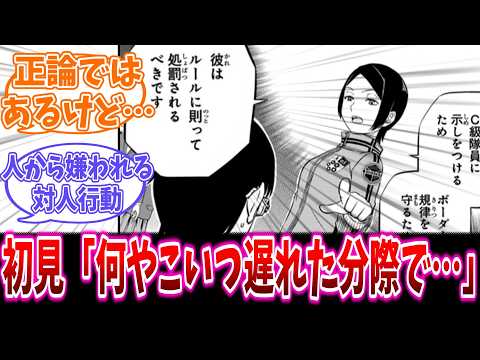
In a pivotal scene from World Trigger, a character delivers the line “What’s with this guy being late?” to a tardy teammate. What initially appears as a harsh criticism becomes something entirely different through the character’s subsequent actions and expressions. The scene has generated widespread acclaim across Twitter, 5channel, YouTube, and fan communities, with viewers praising its sophisticated character development and voice acting.
Why It Matters
This scene exemplifies a shift in modern anime storytelling toward complex, contradictory character portrayals. Rather than explicit emotional expression, contemporary audiences increasingly value subtlety—the gap between what characters say and what they actually feel. World Trigger demonstrates this approach masterfully, using a single exchange to reveal character essence while leaving room for multiple interpretations. This technique has become a benchmark for character-driven storytelling in the anime industry.
Background
World Trigger follows the organization “Border,” which defends against invasions from an alternate dimension called the Neighborhood. The series emphasizes teamwork, trust, and interpersonal relationships as central themes. The show initially received a reputation as “understated but compelling,” yet deeper analysis reveals meticulous character psychology throughout. This particular scene encapsulates the series’ philosophy: trust and care are demonstrated through action, not words.
Key Points
- The Core Technique: The scene uses a stark contrast between harsh dialogue and compassionate action to reveal character depth without explicit exposition.
- Voice Acting Excellence: The voice actor’s performance shifts seamlessly from stern criticism to underlying concern, demonstrating nuanced emotional range.
- Interpretive Flexibility: The scene intentionally leaves psychological motivation ambiguous, allowing viewers to develop their own interpretations and fueling fan creativity.
- Thematic Alignment: The gap between words and actions reflects World Trigger’s core message about team dynamics—trust is built through behavior, not dialogue.
- Fan Reception: The scene has generated hundreds of fan works across Twitter, pixiv, and 5channel, with hashtags trending multiple times.
- Broader Trend: The scene represents a shift in anime fandom toward appreciating “subtle depth” over dramatic, direct emotional expression.
Comparative Analysis
When examined alongside similar character moments in other acclaimed anime, World Trigger’s approach stands out. Attack on Titan’s Levi Brigan uses harsh language rooted in deep care, but World Trigger refines this technique into something more naturalistic. Haikyuu!! expresses friendship more directly, lacking the surprise element. A comparative analysis reveals that World Trigger achieves both high emotional impact and character depth simultaneously—a rare combination in modern anime.
| Series | Expression Method | Viewer Impact | Character Depth |
|---|---|---|---|
| World Trigger | Direct gap between words and actions | Very High | Deep |
| Attack on Titan | Harshness concealing compassion | Moderate | Deep |
| Haikyuu!! | Natural friendship expression | Low | Shallow |
Perspectives
Fan Interpretation: Online communities have developed multiple readings of the scene. Some viewers interpret the character as internally worried about the teammate’s safety while maintaining a stern exterior. Others see the rebuke as directed not at the lateness itself, but at the danger the teammate faced. This interpretive flexibility has become the scene’s greatest strength, spawning extensive fan discussion and creative works.
Production Intent: From a creative standpoint, the scene demonstrates World Trigger’s philosophy that teamwork transcends verbal communication. In team-based combat, trust must be demonstrated through action. The scene’s restraint—avoiding melodrama or explicit declarations—reflects a deliberate choice to portray relationships realistically.
Critical Perspective: While overwhelmingly positive, a small minority of viewers found the scene’s intent unclear or preferred more direct emotional expression. However, these critiques represent personal preference rather than objective assessment of the scene’s technical execution.
Insights
This scene represents a significant moment in contemporary anime storytelling. Over the past 15 years, audience preferences have evolved from direct, easily understood emotional expression toward appreciation for complexity and contradiction. Modern viewers increasingly value characters whose words and actions diverge—reflecting real human psychology where people often conceal their true feelings.
World Trigger’s success with this approach suggests a broader industry trend. As anime matures as a medium, audiences demonstrate growing appetite for “subtle depth”—storytelling that requires active interpretation rather than passive consumption. The scene’s viral status among dedicated fans, despite World Trigger’s relatively understated reputation, indicates that discerning audiences recognize and reward this sophistication.
The scene also illustrates how character moments can drive fan engagement. By leaving psychological motivation ambiguous, the production invites viewers to develop personal interpretations, transforming passive viewers into active participants in meaning-making. This participatory dynamic has generated hundreds of fan works and sustained community discussion, demonstrating that character depth creates lasting cultural impact.
Looking forward, this scene may serve as a template for future anime productions. As the industry moves away from spectacle-driven storytelling toward character-focused narratives, moments like this—technically simple yet psychologically complex—may become increasingly valued as the gold standard of anime craftsmanship.
How to Experience the Scene
For viewers approaching this moment for the first time, context proves essential. The scene’s emotional impact depends entirely on prior knowledge of the relationship between the two characters. Watching earlier episodes that establish their dynamic will amplify the scene’s resonance by a factor of two or more.
Comparing the anime version with the original manga adaptation reveals complementary strengths. The anime’s voice acting conveys emotional nuance through vocal performance, while the manga’s detailed facial expressions communicate internal states through visual detail. Experiencing both versions provides comprehensive understanding of the production’s intent.
Paying particular attention to the silence following the line proves crucial. Several seconds of quiet follow the dialogue, during which the character’s psychology is expressed entirely through expression and body language. This silence, rather than the words themselves, contains the scene’s deepest meaning.