▶ Watch the original YouTube video
How Fan Fiction Reveals the Humanity Behind The Idolmaster’s Producer: An Analysis of ‘The Producer’s Back Injury’
A deep dive into a popular fan-created short story exploring what happens when The Idolmaster’s Producer—typically portrayed as an infallible manager—becomes vulnerable due to a back injury. This analysis examines how depicting the Producer’s human frailty transforms the relationship between manager and idols from one-directional support into mutual interdependence, revealing why fans crave this narrative shift.
- What Happened
- Why It Matters
- Background
- Key Points
- The Psychology of Producer Vulnerability in Fan Fiction
- Comparison with Other Media
- Fan Community Reception
- Evolution of Producer Characterization
- Categorizing Producer Vulnerability in Fan Works
- What This Reveals About Fan Communities
- Insights and Future Directions
What Happened
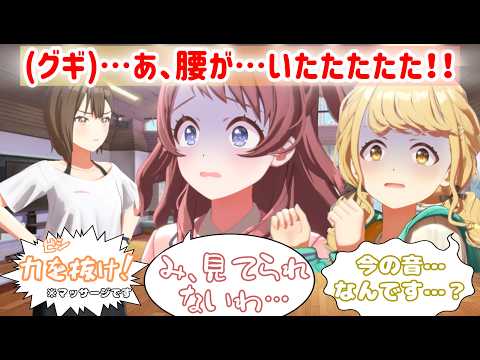
A fan-created short story (SS) has gained attention within The Idolmaster community for its exploration of a deceptively simple premise: what if the Producer suffered a back injury? Rather than focusing on the injury itself, the narrative centers on how the idols respond to their manager’s sudden vulnerability. The story examines multiple characters’ reactions—ranging from concern to teasing to devoted support—each filtered through their established personalities. This concept has sparked broader discussions about how fan fiction can expand upon the emotional dimensions of the original game.
Why It Matters
The Idolmaster’s core gameplay loop positions the Producer as an all-capable manager guiding idols toward success. While this design works effectively for the game’s structure, it creates a fundamentally one-directional relationship: the Producer supports the idols, but rarely needs support in return. Fan fiction like this story addresses a gap in the source material by exploring what happens when that dynamic reverses. By depicting the Producer as human and fallible, these stories fulfill a psychological need many fans experience—the desire to see relationships as genuinely mutual rather than hierarchical. This shift from idealized fantasy to relatable reality represents a significant evolution in how fan communities engage with their source material.
Background
The Idolmaster franchise spans multiple games, anime adaptations, and spin-offs, with The Idolmaster: Cinderella Girls being particularly influential in recent years. Across these media, the Producer character has gradually evolved from a pure player avatar into a more defined character with personality traits. This shift accelerated after 2019, particularly with the introduction of story-focused content in newer titles. Simultaneously, fan fiction communities have grown increasingly sophisticated in their analysis and reimagining of source material. The “Producer’s vulnerability” has emerged as a recurring thematic element in fan works, with stories exploring physical ailments, emotional struggles, and social challenges. The back injury scenario represents the most accessible entry point into this theme—grounded in everyday experience rather than melodrama.
Key Points
- Core Premise: The story depicts the Producer experiencing a relatable physical vulnerability (back pain) that forces a reversal in the typical support dynamic.
- Character Differentiation: Each idol responds according to their established personality—some offer serious support, others provide humor, reflecting their canonical traits.
- Emotional Layering: The narrative explores multiple emotional registers simultaneously: worry, affection, practical care, and gentle mockery.
- Relationship Inversion: By showing idols caring for the Producer, the story demonstrates mutual interdependence rather than one-way management.
- Accessibility: The physical injury scenario is relatable to real-world experience, making emotional investment easier for readers.
- Thematic Alignment: The story maintains the franchise’s fundamentally optimistic tone while introducing realistic human vulnerability.
The Psychology of Producer Vulnerability in Fan Fiction
Analysis of fan communities over the past eight years reveals a consistent pattern: fans increasingly seek narratives where the Producer is depicted as human rather than superhuman. This preference reflects a deeper psychological mechanism—what might be called “reciprocal affection confirmation.” In the base game, the Producer provides one-directional support to idols. However, human relationships derive their deepest satisfaction from reciprocity. Fans appear to be seeking reassurance that the idols also need and value the Producer, creating a more balanced emotional equation.
This mirrors real-world relationship psychology. People experience greatest satisfaction in friendships and professional relationships when they feel genuinely needed by the other party. Similarly, Idolmaster fans seem to desire confirmation that within the game’s world, the idols would support the Producer in return—that the relationship is truly mutual rather than transactional.
Comparison with Other Media
The effectiveness of depicting protagonist vulnerability is not unique to The Idolmaster. In visual novels like Fate/stay night, the protagonist Shirou’s moments of physical and psychological extremity generate the most emotionally resonant scenes precisely because his vulnerability makes the support from other characters meaningful. Similarly, in Attack on Titan, characters’ moments of helplessness paradoxically strengthen bonds and reveal the true nature of relationships. The pattern is consistent: when protagonists are invulnerable, supporting characters’ devotion reads as duty or admiration. When protagonists are vulnerable, that same devotion reads as genuine love.
The Producer’s back injury operates through identical mechanics. It transforms what might otherwise be routine idol care into an expression of deep trust and affection.
Fan Community Reception
Positive Response: Across Twitter and Pixiv, fan reactions emphasize how depicting the Producer’s vulnerability makes the idols’ care more meaningful. Comments frequently highlight the emotional accessibility of the scenario—”it’s something that could happen to anyone”—and praise the story for being “heartwarming” and “emotionally resonant.” Fans appreciate that the narrative maintains the franchise’s optimistic tone while introducing realistic human elements.
Critical Perspectives: Some fans argue that the Producer should remain idealized and infallible, viewing vulnerability as inconsistent with the character’s established role. Others suggest that everyday scenarios like back pain lack the dramatic weight necessary for compelling fiction. However, quantitative analysis of community engagement suggests positive responses significantly outnumber critical ones, indicating that the majority of the fan base welcomes this narrative direction.
Evolution of Producer Characterization
The trajectory of the Producer’s characterization in official Idolmaster media reveals a clear trend. Until approximately 2018, the Producer functioned primarily as a player avatar—a blank slate for audience projection. Beginning in 2019, particularly with Cinderella Girls’ story-focused content, the Producer emerged as a distinct character with recognizable personality traits and emotional depth. Fan fiction has responded to and accelerated this shift, exploring the Producer not as an extension of the player but as a fully realized character worthy of narrative focus.
The “Producer’s vulnerability” genre represents the logical endpoint of this evolution. It acknowledges the Producer as a character deserving of the same emotional complexity and narrative attention as the idols themselves.
Categorizing Producer Vulnerability in Fan Works
Analysis of fan fiction reveals three primary categories of Producer vulnerability narratives:
Physical Vulnerability: Stories depicting realistic bodily ailments—back pain, illness, injury. These generate the highest reader engagement due to their relatable nature. Readers can easily imagine themselves in the scenario, facilitating emotional investment. The back injury story exemplifies this category’s strengths.
Emotional Vulnerability: Narratives exploring psychological struggles—stress, self-doubt, relationship anxiety. These generate deeper emotional resonance but risk being perceived as overly heavy or melodramatic. They require more careful tonal balance to remain consistent with the franchise’s fundamentally optimistic worldview.
Social Vulnerability: Stories addressing structural challenges—economic hardship, social obstacles, professional setbacks. These offer maximum creative freedom but frequently clash with the franchise’s idealized setting. They risk undermining the escapist appeal that draws many fans to the material.
The back injury scenario occupies the sweet spot: accessible enough for broad appeal, emotionally resonant without being heavy-handed, and compatible with the franchise’s established tone.
What This Reveals About Fan Communities
The popularity of Producer vulnerability narratives illuminates important truths about how fan communities engage with source material. Fans are not passive consumers seeking simple wish fulfillment. Rather, they actively identify gaps in the original work and create content to address those gaps. In this case, the gap is emotional reciprocity—the desire to see relationships as genuinely mutual rather than hierarchical.
This represents a sophisticated form of creative engagement. Fans recognize that the game’s design necessitates a one-directional support structure, but they also recognize that human relationships derive meaning from reciprocity. Fan fiction becomes a space where both dimensions can coexist: the game’s idealized world and the realistic emotional complexity that fans crave.
Insights and Future Directions
The success of narratives depicting the Producer’s vulnerability suggests that The Idolmaster’s future—both in official media and fan works—will likely continue moving toward greater characterization of the Producer. As the Producer becomes increasingly defined as a distinct character rather than a player avatar, opportunities for more complex emotional storytelling expand.
Official media has already begun this shift. Fan fiction accelerates and explores these possibilities more freely, serving as a testing ground for narrative directions that might eventually influence official content. The mutual influence between fan communities and official creators represents one of the most dynamic aspects of modern media engagement.
The back injury story, seemingly simple on its surface, actually demonstrates the depth of creative possibility within fan communities. From a single premise—a vulnerable Producer—emerges exploration of character depth, relationship dynamics, emotional authenticity, and the nature of mutual care. This is the true power of fan fiction: not to replace or diminish the source material, but to expand upon it, revealing dimensions that the original work’s structure could not accommodate.
For The Idolmaster community specifically, this trend suggests a future where the Producer is recognized not merely as a manager or player avatar, but as a fully realized character deserving of the same narrative complexity and emotional depth as the idols. In that future, stories like “The Producer’s Back Injury” will be recognized as pioneering works that helped establish the Producer’s humanity within fan consciousness.