▶ Watch the original YouTube video
How Viewers Reacted to Chiikawa’s Shocking Whipped Cream Battle Scene
A recent episode of the morning anime Chiikawa featured an unexpectedly intense battle sequence involving whipped cream that left viewers divided. The scene highlights a growing trend in broadcast television: morning-slot anime that deliberately subverts audience expectations by blending cute aesthetics with darker, more unsettling content.
What Happened
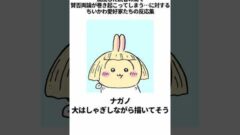
In a recent episode of Chiikawa, the titular character engages in a combat sequence that culminates in the protagonist becoming covered in whipped cream. The scene opens with an abrupt shift from the show’s typically lighthearted tone into an intense battle, followed by a jarring return to mundane activities—specifically, Chiikawa practicing tail-wagging movements with Usagi. The whipped cream appears to serve as a visual substitute for more graphic content that would be inappropriate for morning broadcast television.
Why It Matters
This episode exemplifies a significant shift in how Japanese television networks approach morning-slot programming. Traditionally, morning anime was exclusively children’s content, but Chiikawa demonstrates that the boundaries between daytime and late-night anime are increasingly blurred. The scene generated substantial viewer discussion because it challenges the implicit contract between broadcasters and audiences: morning television is supposed to be safe and predictable. By deliberately violating this expectation, the show creates a unique viewing experience that resonates differently with different audience segments.
Background
The anime industry has undergone significant transformation over the past 15 years. When late-night anime became established in the early 2000s, a clear hierarchy existed: morning slots were for children, late-night slots were for adult audiences. However, the rise of streaming services and changing viewer demographics have destabilized this framework. Chiikawa, which airs on TV Asahi in the morning, represents a new category of programming that deliberately exploits the cognitive dissonance created by placing mature thematic content in a time slot associated with innocence.
The source material is a manga series that already contained these abrupt tonal shifts. The anime adaptation chose to preserve this jarring quality rather than smooth it out for broadcast television, suggesting an intentional creative decision to maintain the work’s essential character.
Key Points
- The episode opens with an unexpected combat sequence inappropriate for typical morning programming, immediately subverting viewer expectations
- The whipped cream scene appears to be a censorship workaround, substituting for more graphic depictions of violence or consumption
- Chiikawa’s character is defined as a “positive berserker”—someone who maintains optimism regardless of circumstances, which paradoxically makes dangerous situations feel normalized
- The episode contrasts intense action with mundane activities (tail-wagging practice), creating tonal whiplash that mirrors the show’s core appeal
- Viewer reactions split between those who found the scene entertaining and those who found it inappropriate for morning broadcast
- The show deliberately exploits the “morning slot = safe content” expectation to create emotional impact
Viewer Reactions
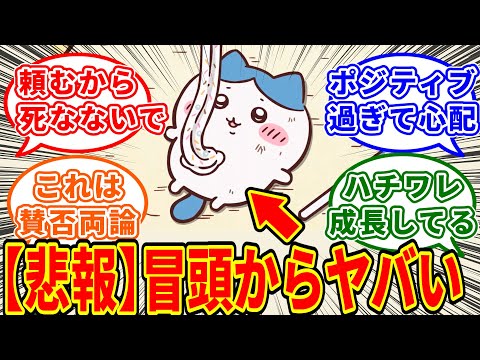
YouTube comments revealed sharply divided responses. Positive reactions included “This scene perfectly captures Berserker Chiikawa” and “Steady growth throughout,” while negative responses ranged from “Morning whipped cream content is inappropriate” to expressions of shock and discomfort. Notably, one commenter observed that the scene transcended typical approval/disapproval categories, instead occupying a space of pure strangeness that defied conventional evaluation.
A recurring theme in comments was confusion about the show’s tonal shifts: “I don’t understand the situation at all.” This wasn’t a complaint about narrative clarity but rather an expression of disorientation caused by the abrupt genre shift. Some viewers noted that the show had become a form of “meme contamination,” suggesting it had transcended traditional entertainment to become a cultural phenomenon affecting how people process information.
Perspectives
The Expectation-Violation Theory: Viewers who had read the original manga were psychologically prepared for the tonal shift and found it acceptable. Anime-only viewers, conditioned by the “morning broadcast” label to expect safe content, experienced genuine disorientation. This suggests the show’s impact depends heavily on whether audiences have been inoculated against its surprises.
Censorship as Creative Tool: The whipped cream substitution for more graphic imagery isn’t merely a limitation imposed by broadcast standards—it functions as an intentional creative choice. The absurdity of the substitution itself becomes part of the comedic and unsettling effect, similar to how Fist of the North Star uses sound design to imply violence without showing it.
Character Psychology: Chiikawa’s “positive berserker” nature isn’t simply optimism—it may represent an absence of fear-based judgment. In the show’s universe, the ability to act without hesitation (even consuming suspicious substances offered by enemies) becomes a survival mechanism. This reframes Chiikawa’s cheerfulness as potentially pathological rather than wholesome.
Comparative Analysis
Chiikawa employs similar techniques to other works that hide darkness within cute aesthetics. Kemono Friends (aired late-night) presented cute animal characters in a world containing hidden dangers, but viewers were primed to expect mature content. Grand Blue similarly mixed comedy with violence and sexual content, but aired in late-night slots where such content was expected. Chiikawa‘s innovation is achieving the highest ratio of unsettling content while maintaining the lowest broadcast time slot, maximizing the cognitive dissonance.
Insights
Chiikawa represents a fundamental shift in how broadcast television can function. Rather than treating the morning slot as a constraint to work within, the show weaponizes it. The “safety” of morning television becomes a tool for creating surprise and discomfort. This strategy only works as long as audiences maintain their expectation that morning content is safe; once that expectation dissolves, the show’s impact diminishes.
The show also demonstrates how streaming services and changing media consumption patterns have destabilized traditional broadcast hierarchies. The concept of “morning anime” no longer means “children’s anime”—it now means “anime that airs in the morning,” a seemingly minor distinction with major implications for content strategy.
For viewers seeking to maximize their Chiikawa experience, approaching each episode as containing distinct “daily life” and “crisis” segments reveals the production’s intentional design. The show’s power derives not from individual scenes but from their jarring juxtaposition. Comparing the anime to its manga source material also illuminates how the adaptation deliberately preserves rather than smooths the original’s tonal instability.
The whipped cream scene ultimately functions as a microcosm of Chiikawa‘s entire project: taking the familiar format of morning anime and corrupting it from within, creating a viewing experience that is simultaneously comforting and deeply unsettling.