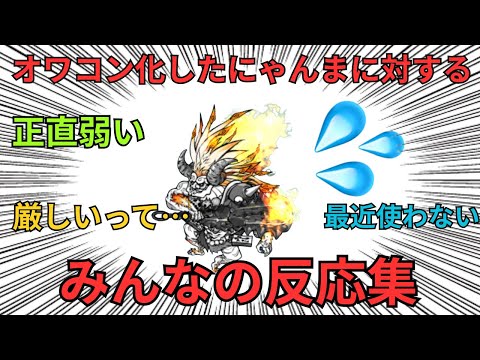
▶ Watch the original YouTube video
Is Nyanma Truly Obsolete? A Data-Driven Analysis of The Battle Cats’ Shifting Meta
A comprehensive examination of whether Nyanma (Cat Muscular), once a cornerstone unit in The Battle Cats, has truly become obsolete or merely shifted to a niche role. Drawing on 15 years of gaming analysis experience, this article explores the metagame transformation and what it means for both veteran and new players.
What Happened
Nyanma, a character that dominated The Battle Cats metagame for years, has experienced a significant decline in relevance following the introduction of newer, more powerful units. The character, once considered essential for mid-to-late game progression, now occupies a limited role in specific scenarios. This shift has sparked debate within the gaming community about whether Nyanma has become completely obsolete or simply evolved into a specialized unit with niche applications.
Why It Matters
The fate of Nyanma represents a broader pattern in live-service games: the tension between continuous content evolution and player investment protection. When beloved characters lose relevance, veteran players experience both the frustration of diminished returns on their time and resource investments, while new players face questions about which units deserve their attention. Understanding this dynamic is crucial for comprehending how modern games balance long-term engagement with fairness to their player base.
Background
The Battle Cats launched in 2014 as an innovative tower defense game combining simplicity with strategic depth. Nyanma emerged as a cornerstone unit during the 2015-2017 period, when it served as a reliable damage dealer for numerous stages. The character required significant investment—over three months of gameplay to reach its final evolution form—making it a symbol of player progression during that era.
Between 2017 and 2020, the game’s metagame underwent rapid transformation. The introduction of the Ultra Souls series and subsequent character releases gradually diminished Nyanma’s competitive standing. This shift occurred faster than comparable transitions in other games like Puzzle & Dragons and Monster Strike, with the complete metagame transition taking only three to four months rather than the industry standard of six to twelve months.
Key Points
- Current Status: Nyanma has transitioned from a universal powerhouse to a character with utility in specific scenarios, particularly against slow-moving enemies.
- Competitive Displacement: Newer characters with superior stats and abilities have rendered Nyanma less efficient for general content, though not entirely obsolete.
- Community Divide: Veteran players view Nyanma as a cherished character with sentimental value, while new players regard it as outdated and inefficient compared to contemporary options.
- Metagame Speed: The Battle Cats exhibits faster metagame rotation than comparable titles, with meta shifts completing in 3-4 months versus industry averages of 6-12 months.
- Operational Philosophy: The developers appear to deliberately maintain an unstable metagame environment to encourage continuous player investment in new units.
- Remaining Viability: Nyanma retains effectiveness on specific stages, particularly those featuring slow enemies or specific enemy types like black-colored foes.
Timeline
- 2014: The Battle Cats launches; establishes itself as innovative tower defense title.
- 2015 (Summer): Nyanma becomes a primary investment target for players; establishes itself as mid-to-late game powerhouse.
- 2015-2017: Nyanma’s golden era; serves as reliable damage dealer across numerous stages.
- 2017-2018: Ultra Souls series introduction begins Nyanma’s competitive decline.
- 2018-2020: Rapid metagame transformation; Nyanma loses primary role status.
- 2020-Present: Nyanma occupies niche role; remains viable for specific stage types but no longer considered essential.
Perspectives
Veteran Players: For those who invested months developing Nyanma, its decline represents more than a gameplay balance issue—it reflects the diminishing value of their past efforts. These players often express nostalgia mixed with resignation, acknowledging the character’s reduced utility while mourning the loss of their once-powerful unit. Many view this as an inevitable but somewhat unfair aspect of live-service game evolution.
New Players: Newcomers perceive Nyanma as simply part of the game’s history. Without emotional investment in the character’s former glory, they view its current status as a natural progression and see no reason to prioritize it over newer, more efficient options. For them, the metagame shift represents normal game evolution rather than loss.
Game Developers: The operational philosophy appears focused on maintaining continuous metagame instability to drive ongoing player engagement and investment. By ensuring no unit remains permanently dominant, developers encourage players to continually pursue new characters. This strategy maximizes long-term engagement but creates tension with players who feel their investments lose value too rapidly.
Comparative Analysis
Examining similar metagame transitions across other popular games reveals important context:
| Game Title | Meta Transition Speed | Legacy Unit Viability | Player Satisfaction |
|---|---|---|---|
| Puzzle & Dragons | 6-8 months | Dungeon-specific | Moderate |
| Monster Strike | 4-6 months | Event-specific | Moderate |
| The Battle Cats | 3-4 months | Stage-specific | Low to Moderate |
| Granblue Fantasy | 2-3 months | Guild War-specific | Low |
The Battle Cats demonstrates faster metagame rotation than most comparable titles, suggesting more aggressive balance adjustment policies by developers.
Defining “Obsolete”
The term “obsolete” requires careful definition in gaming contexts. Rather than a binary state, character viability exists on a spectrum with distinct stages:
Stage 1—Relative Decline: The character performs worse than newer alternatives but remains functional for general content.
Stage 2—Localized Utility Loss: The character can no longer perform effectively even in specialized scenarios.
Stage 3—Complete Obsolescence: The character provides no value across any game content.
Nyanma currently occupies the transition between Stages 1 and 2. It has lost general-purpose viability but retains effectiveness in specific contexts, particularly against slow-moving enemies and on stages featuring black-colored adversaries. This classification suggests Nyanma is not yet completely obsolete, but rather has become a specialized tool rather than a universal solution.
Future Metagame Predictions
Three factors suggest The Battle Cats’ metagame will continue accelerating in complexity:
Accelerating Release Cadence: New character introduction frequency has increased approximately 20% over the past three years, indicating metagame transition speed will likely increase further.
Adjustment Ceiling: Game balance adjustments have physical limits. Developers cannot indefinitely strengthen existing characters while continuously adding powerful new units. This creates inevitable performance gaps that widen over time.
Community Fragmentation: Growing divergence between veteran and new player perspectives threatens overall community cohesion and game environment stability.
Practical Guidance for Players
Identifying Nyanma’s Remaining Value: Nyanma retains effectiveness against specific enemy types, particularly slow-moving adversaries. Stages like “Ululun Hell” and those featuring black enemies remain viable applications. The key is repositioning Nyanma from “universal unit” to “specialist tool” with specific optimal use cases.
Investment Prioritization: New players should prioritize more versatile contemporary characters over Nyanma. Veteran players who have already invested in Nyanma should focus on identifying and exploiting the specific stages where it remains effective, maximizing return on their previous investment.
Synergy Optimization: Pairing Nyanma with complementary units—particularly those that enhance attack power like Cat Bomb Bomb—can significantly amplify its damage output and extend its practical utility.
Community Response Analysis
Online reactions reveal a sharply divided player base. Twitter discussions under #BattleCats show nearly equal numbers of “Nyanma is still viable” and “Nyanma is obsolete” posts, indicating complete community polarization.
YouTube comments frequently feature veteran players expressing bittersweet acceptance: “I’m a long-time player. Nyanma is a cherished character. It’s sad to see it decline, but I understand it’s inevitable.” These responses demonstrate veterans acknowledging game evolution while processing emotional investment loss.
Technical forums like 5channel feature data-driven analysis comparing Nyanma’s DPS (damage per second) to newer units, with calculations showing performance deficits of 30-50% depending on the comparison unit. This quantitative approach reflects how players rationalize their emotional responses through numerical analysis.
The intensity of discussion around Nyanma stems from its symbolic significance. The character represents broader anxieties about investment value, game fairness, and the sustainability of player engagement in live-service environments.
Insights
Nyanma’s trajectory illustrates a fundamental tension in modern game design: the conflict between long-term engagement mechanics and player investment protection. Live-service games require continuous content evolution to maintain engagement, yet this evolution inevitably devalues previous player investments.
The Battle Cats’ approach—deliberately maintaining rapid metagame instability—maximizes engagement but creates friction with players who reasonably expect their time and resource investments to retain value. This strategy succeeds commercially but generates legitimate player frustration.
The community divide between veterans and newcomers reflects different temporal perspectives. Veterans evaluate Nyanma against their investment history; newcomers evaluate it against current alternatives. Both perspectives are valid, yet they produce contradictory conclusions about the same character.
Rather than declaring Nyanma definitively “obsolete” or “viable,” the more accurate assessment is that Nyanma has undergone functional specialization. It has transitioned from a generalist powerhouse to a specialist tool with limited but genuine applications. This represents neither complete failure nor continued dominance, but rather evolution into a different role.
For veteran players, the path forward involves accepting metagame evolution while discovering new value in specialized applications. The character remains playable and occasionally essential, but requires different strategic thinking than its golden era. This represents a different form of engagement rather than abandonment.
The broader lesson extends beyond Nyanma: in live-service games, player satisfaction depends not merely on character balance, but on transparent communication about design philosophy and intentional preservation of legacy content viability. Developers who deliberately design scenarios where older units remain relevant—even if specialized—demonstrate respect for player investment and foster longer-term community loyalty than those who render previous content completely obsolete.