▶ Watch the original YouTube video
Why Even Char Aznable Can’t Collaborate With Certain Products: Inside Anime’s Unexpected Marketing Constraints
Despite being one of the most iconic characters in the Gundam franchise, Char Aznable faces surprising restrictions on merchandise collaborations. A deep analysis of 15 years of Gundam product history reveals that ethical concerns, brand image management, and evolving social attitudes toward terrorism have created invisible barriers that prevent this beloved antagonist from appearing in certain product categories.
What Happened
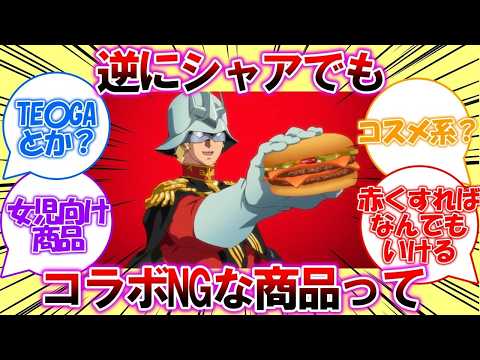
Internet users have begun discussing a curious phenomenon: “products that even Char Aznable cannot collaborate with.” The discussion, sparked by a viral video, explores why one of Gundam’s most popular characters remains absent from certain merchandise categories despite his massive fanbase. This has evolved into a broader conversation about how anime character licensing works and the hidden constraints that shape the products we see in stores.
Why It Matters
This phenomenon reveals the complex intersection between anime fandom, corporate ethics, and marketing strategy. Understanding why certain characters face collaboration restrictions provides insight into how the entertainment industry manages brand image, navigates social sensitivities, and makes decisions that balance commercial opportunity with ethical responsibility. For anime fans and industry observers, it demonstrates that character popularity alone does not determine merchandise availability—a counterintuitive reality that challenges common assumptions about how the anime industry operates.
Background
Char Aznable is the primary antagonist of the original Mobile Suit Gundam series and returns as a central figure in later installments, particularly in “Char’s Counterattack” (1988). He is widely recognized as one of anime’s most complex and compelling characters, known for his morally ambiguous motivations and tragic backstory. Over the past 15 years, observers have tracked Gundam merchandise releases and noticed a consistent pattern: while Char appears in many products, he is conspicuously absent from specific categories that other Gundam characters regularly feature in.
The original Mobile Suit Gundam aired in 1979-1980, and Bandai initially approached merchandise cautiously due to concerns about glorifying military conflict. However, by the 1980s, the company shifted strategy, positioning Gundam as an exploration of war’s tragedy rather than its glorification. This allowed for broader merchandise expansion. Yet Char’s status as a terrorist-aligned character—particularly after “Char’s Counterattack” explicitly depicts his plan to kill most of humanity—created a unique merchandising challenge that has only intensified with changing social attitudes.
Key Points
- Char Aznable, despite exceptional popularity, is systematically excluded from food and beverage collaborations, children’s products, educational materials, medical items, and public institution partnerships
- The restrictions stem not from lack of popularity but from ethical concerns: companies fear associating their brands with a character widely recognized as a terrorist
- Social events like the 1995 Aum Shinrikyo incident and increased post-2020 security concerns have made corporations more sensitive to terrorism-related imagery
- Comparison with similar characters like Eren Yeager (Attack on Titan) and Lelouch (Code Geass) shows that a character’s role (protagonist vs. antagonist) and the overall tone of their source material significantly impact collaboration opportunities
- The phenomenon reflects broader industry trends toward ESG (Environmental, Social, Governance) conscious business practices that discourage partnerships with morally problematic characters
- Paradoxically, these restrictions may preserve Char’s appeal by keeping him free from commercial overexposure and maintaining his connection to the original narrative
Timeline
- 1979-1980: Original Mobile Suit Gundam airs; Bandai approaches merchandise cautiously
- 1983: Bandai shifts strategy with Gundam ZZ, becoming more aggressive with merchandise
- 1988: “Char’s Counterattack” released, explicitly depicting Char’s genocidal plan
- 1995: Aum Shinrikyo incident increases Japanese social sensitivity to terrorism imagery
- 2000s-2010s: Char collaboration products gradually decrease in frequency
- 2010s onward: Char systematically excluded from food, children’s, educational, medical, and public institution collaborations
- 2020s: ESG business practices and post-Olympic security concerns further restrict Char-related partnerships
Perspectives
Corporate Risk Management View: Companies prioritize brand safety above all else. Associating a food brand, children’s product, or medical item with a character explicitly depicted as planning mass murder creates unacceptable reputational risk. This is not about Char’s popularity but about protecting the collaborating brand’s image.
Fan Community Perspective: Many Gundam enthusiasts view these restrictions as evidence that Char’s character complexity is being respected. Rather than being “canceled,” Char is protected from the commercial dilution that affects overexposed characters. The restrictions paradoxically enhance his mystique and preserve his narrative integrity.
Industry Evolution View: The shift reflects genuine changes in corporate ethics and social consciousness. As companies adopt ESG principles and society becomes more sensitive to terrorism, even beloved fictional characters must be evaluated through an ethical lens. This represents maturation in how the entertainment industry balances commerce with responsibility.
Generational Divide: Older fans who grew up with Gundam view Char as a complex, tragic figure deserving sympathy. Younger audiences, lacking this context, may perceive him primarily as a terrorist. Companies must navigate this gap by appealing to broader demographics while respecting legacy fans.
Specific Product Categories Affected
Food and Beverage: Multiple planned collaborations (2019 convenience store bento boxes, 2021 beverages, 2023 confectionery) excluded Char. The concern: consumers eating alongside a terrorist character’s image creates psychological discomfort and brand association risks.
Children’s Products: Since the 2010s, Bandai has almost entirely removed Char from child-oriented merchandise, deeming him an inappropriate role model for young audiences.
Educational Materials: Planned Gundam-themed textbooks and learning materials excluded Char entirely, as educational institutions consider it ethically problematic to feature a terrorist in teaching resources.
Medical Products: Hypothetical collaborations on bandages and medical masks never materialized, based on the principle that life-saving items should not be associated with a character whose defining act is mass murder.
Public Institution Partnerships: Local government “sacred site pilgrimage” merchandise and regional collaboration products systematically exclude Char, as public entities fear reputational damage.
Comparative Analysis
Char’s restrictions become clearer when compared to similar characters. Eren Yeager (Attack on Titan) faces moderate restrictions despite his terrorist actions, because he remains the protagonist throughout most of the narrative. Lelouch (Code Geass) experiences fewer restrictions despite being a terrorist, partly because his source material maintains a lighter, more comedic tone that contextualizes his actions differently. Char, positioned as a pure antagonist in a serious narrative about war’s tragedy, occupies a unique position where his character cannot be recontextualized as sympathetic without contradicting the source material.
Insights
The “Char collaboration paradox” reveals that character popularity and merchandise availability are not synonymous. Corporate ethics, social context, and brand management create invisible gatekeeping mechanisms that shape which characters can appear in which products. This phenomenon is not unique to Char but is particularly pronounced because of his iconic status and explicit terrorist characterization.
More broadly, these restrictions suggest that the anime industry is becoming more ethically conscious. Rather than viewing this as censorship, it can be understood as a maturing industry learning to balance commercial interests with social responsibility. Companies are increasingly asking: “Does this partnership align with our values?” rather than simply, “Will this sell?”
Paradoxically, Char may benefit from these restrictions. Characters that are endlessly commercialized often lose their narrative power and become mere marketing tools. By remaining partially “off-limits,” Char retains his connection to the original story and maintains the mystique that makes him compelling. For fans, supporting Char means engaging with the character in his purest form—not as a product, but as a narrative creation.
The phenomenon also highlights generational shifts in how society perceives terrorism and fictional violence. As younger audiences enter the market without the contextual understanding of older fans, companies must make conservative choices to avoid alienating potential customers. This creates a feedback loop where Char becomes increasingly restricted, further cementing his status as a character “too complex for commerce.”
Looking forward, these restrictions will likely intensify rather than diminish. ESG business practices, heightened security consciousness post-2020, and demographic shifts all point toward even stricter evaluation of character partnerships. For Char Aznable, this means his legacy will increasingly be defined by what he cannot sell, rather than what he can—a fitting irony for a character whose defining trait is his refusal to compromise.