▶ Watch the original YouTube video
Does Char Have a Self? A 15-Year Analysis of Gundam’s Most Enigmatic Character
A comprehensive examination of whether Char Aznable, one of anime’s most complex antagonists, possesses a coherent sense of self reveals a character deliberately designed with philosophical ambiguity. Drawing from 15 years of Gundam research and comparative analysis with other major anime characters, this deep dive explores how Char’s fractured identity and conflicting motivations continue to captivate audiences and spark debate across fan communities.
What Happened
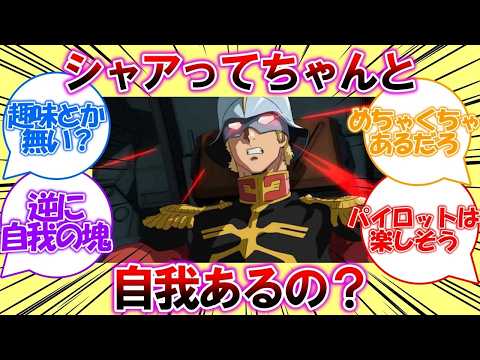
A YouTube video titled “Reactions to the Question: Does Char Have a Self?” sparked renewed discussion about one of Mobile Suit Gundam’s most enduring mysteries. The video compiles fan reactions and interpretations regarding whether Char Aznable, the series’ iconic red-suited antagonist, operates with genuine free will or remains entirely bound by destiny. This question has persisted since the original 1979 series and continues through subsequent Gundam installments, particularly in “Char’s Counterattack” (1988).
Why It Matters
Char Aznable represents more than a single character—he embodies a fundamental philosophical inquiry into the nature of identity, free will, and self-determination. The ambiguity surrounding his motivations reflects broader themes in Gundam about the human condition during warfare and societal conflict. Understanding Char’s character reveals how anime can use narrative ambiguity as a tool for philosophical exploration rather than character development. Furthermore, Char’s influence on subsequent anime antagonists demonstrates how unresolved character psychology can create lasting cultural impact and continued audience engagement decades after initial release.
Background
Char Aznable first appeared in Mobile Suit Gundam (1979) as a skilled Zeon pilot whose true identity—Casval Rem Deikun, son of the Zeon founder—remained hidden for much of the original series. Throughout his appearances across multiple Gundam timelines and spin-offs, Char operates under multiple personas: Casval (his birth name), Char Aznable (his adopted identity), and “The Red Comet” (his military epithet). This multiplicity of identities forms the core of the self-identity question. Director Tomino Yoshiyuki deliberately maintained ambiguity regarding Char’s inner motivations, neither fully explaining his psychological state nor providing clear answers about whether his actions stem from personal ambition, inherited destiny, or something between the two.
Key Points
- Intentional Ambiguity by Design: Director Tomino Yoshiyuki explicitly stated in 1979 interviews that Char was designed to make viewers question “what is he really thinking?” This ambiguity was not accidental but a deliberate creative choice.
- Multiple Personas, Fragmented Self: Char’s three distinct identities—Casval, Char Aznable, and the Red Comet—suggest a fractured rather than unified sense of self, with each persona representing different psychological states and motivations.
- Destiny Versus Free Will: Char remains perpetually caught between his inherited role as Deikun’s son and his personal ambitions, never fully resolving whether his actions reflect genuine choice or predetermined fate.
- Lack of Self-Awareness: In “Char’s Counterattack,” Char appeals to Amuro to understand his feelings through Newtype abilities, yet appears unable to fully comprehend his own psychological state, suggesting incomplete self-knowledge.
- Comparative Character Analysis: Unlike later anime protagonists such as Lelouch (Code Geass), Senketsu (Kill la Kill), or Tanjiro (Demon Slayer) who achieve self-actualization, Char never resolves his identity crisis and disappears without confronting his fractured self.
- Diverse Fan Interpretations: The fanbase divides into three primary camps: those believing Char possesses self-awareness but cannot articulate it, those convinced he is entirely destiny-bound, and those arguing the question itself is philosophically invalid.
Timeline
- 1979: Mobile Suit Gundam airs; Char introduced as mysterious Zeon pilot with hidden identity.
- 1985-1986: Mobile Suit Zeta Gundam and Mobile Suit Gundam ZZ expand Char’s character through his role as a major antagonist.
- 1988: “Char’s Counterattack” film released, presenting the final confrontation between Char and Amuro; Char’s ultimate fate remains ambiguous.
- 2007: Mobile Suit Gundam UC begins exploring Char’s legacy and influence on subsequent events.
- 2011: Mobile Suit Gundam: The Origin manga and later anime adaptation provide detailed backstory of Casval’s psychological development.
- 2015-Present: Continued Gundam releases and fan analysis maintain active discourse about Char’s nature and influence.
Perspectives
The Self-Aware Interpretation: This perspective argues that Char possesses genuine self-awareness and agency, but his sense of self is so fragmented and contradictory that he cannot articulate or act upon it coherently. Proponents point to moments where Char demonstrates clear personal desires (his rivalry with Amuro, his ambitions for power) as evidence of authentic selfhood, even if that self is psychologically unstable.
The Destiny-Bound Interpretation: Adherents of this view contend that Char is entirely controlled by his inherited role as Deikun’s son and the expectations placed upon him by Zeon. They argue that his repeated behavioral patterns—seeking conflict with Amuro, pursuing power through military means—demonstrate predetermined action rather than genuine choice. This interpretation emphasizes how Char never escapes the psychological prison of his past.
The Philosophical Rejection Interpretation: A third group argues that the binary question “does Char have a self?” is itself philosophically flawed. They contend that Char’s value as a character lies precisely in his refusal to resolve this question, and that demanding a definitive answer diminishes his complexity. This perspective treats Char as a meditation on the impossibility of fully knowing oneself.
The Voice Actor’s Perspective: Seiichirou Ikeda, Char’s original voice actor, revealed in interviews that he frequently questioned what Char was truly thinking while performing the role, suggesting that even the production team maintained intentional uncertainty about the character’s inner state.
Comparative Analysis with Other Characters: Contrasting Char with Kaworu Nagisa (Neon Genesis Evangelion), Lelouch vi Britannia (Code Geass), and Setsuna F. Seiei (Gundam 00) reveals that these characters ultimately confront their identity crises and make conscious choices about their nature, whereas Char never achieves this resolution. This distinction highlights how Char represents an earlier narrative approach to character psychology, one that valued ambiguity over resolution.
Insights
The enduring fascination with Char’s identity reflects a fundamental shift in how audiences and creators approach character psychology. In 1979, ambiguity regarding a character’s inner state was narratively sophisticated and philosophically provocative. By the 2000s, audiences increasingly expected characters to achieve self-actualization and take responsibility for their choices. Char’s refusal to do so—his disappearance without confronting his fractured identity—now reads as either a profound statement about the impossibility of self-knowledge or a limitation of his era’s narrative conventions.
The character’s continued relevance suggests that audiences find in Char a mirror for their own existential uncertainties. Many fans report that contemplating Char’s identity crisis prompts reflection on their own sense of self, particularly regarding the tension between inherited social roles and personal desires. This psychological resonance explains why Char generates more sustained analytical engagement than characters with more clearly defined motivations.
From a creative standpoint, Char demonstrates that narrative ambiguity, when deliberately constructed and thematically coherent, can create more lasting impact than explicit character development. Director Tomino’s decision to leave Char’s psychology unresolved has proven more generative of meaning than a definitive answer could have been. Subsequent Gundam creators attempting to clarify Char’s nature through spin-offs and prequels have found that explanation diminishes rather than enhances his mystique.
The question “Does Char have a self?” ultimately cannot be answered definitively because it was designed not to be. This is not a flaw but the character’s essential feature. Char’s value lies not in resolving the question but in forcing audiences to confront what the question itself reveals about the nature of identity, choice, and consciousness. In this sense, Char possesses not a unified self but a self defined by perpetual self-interrogation—a self that exists precisely in the act of questioning whether it exists at all.