▶ Watch the original YouTube video
Xbox Price Hike Sparks Backlash: What 15 Years of Gaming Industry Trends Reveal
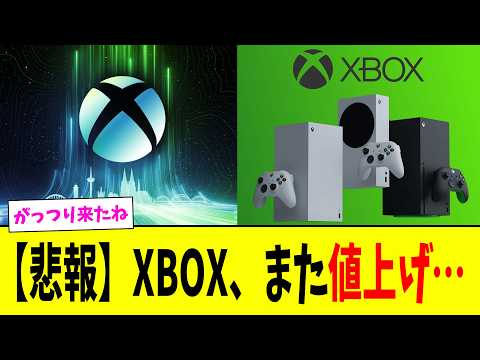
Microsoft has raised prices on Xbox Series X|S across multiple regions, triggering widespread user backlash on social media. The move reflects deeper structural challenges in the gaming industry, including hardware cost inflation, the shift toward subscription services, and intensifying competition from PC and mobile gaming platforms.
What Happened
Microsoft has implemented price increases on Xbox Series X|S consoles across multiple regions, including North America, Europe, and Australia. The Xbox Series X price rose from $499 to $599 (a 20% increase), while the Series S saw comparable adjustments. This marks a significant shift in Microsoft’s pricing strategy just two years after the console’s November 2020 launch, when it was positioned as a competitively priced alternative to PlayStation 5.
Why It Matters
The Xbox price increase is not an isolated event but rather a symptom of broader industry-wide challenges. Gaming hardware manufacturers are facing unprecedented cost pressures from semiconductor shortages, manufacturing inflation, and supply chain disruptions. Simultaneously, the industry is experiencing a fundamental shift in business models—from hardware-centric to subscription-based services. For consumers, these compounding price increases across hardware, software, and subscription services are creating a critical affordability crisis that threatens to push users toward alternative platforms like PC gaming and mobile gaming.
Background
The gaming console market has undergone significant transformation over the past 15 years. When PlayStation 3 launched in 2006 at $599, it was positioned as a premium device offering Blu-ray functionality alongside gaming capabilities. Nintendo’s Wii U (2012) attempted to justify higher pricing through its touchscreen controller but ultimately failed commercially. PlayStation 5’s 2023 price increase from $499 to $549 faced such severe user backlash that Sony eventually reversed the decision in some markets.
The current pricing environment is shaped by multiple converging factors: semiconductor manufacturing costs rose 15-20% between 2021-2022; Game Pass and competing subscription services have undergone multiple price increases; and new gaming platforms—including Steam Deck and cloud gaming services—now compete directly with traditional consoles.
Key Points
- Simultaneous Price Increases Across the Industry: Beyond Xbox, PlayStation Plus, Game Pass, Nintendo Switch Online, and next-generation game software (now $69.99 instead of $59.99) have all increased in price during 2021-2023, creating cumulative affordability pressure on consumers.
- Hardware Cost Pressures: Semiconductor shortages and manufacturing inflation drove hardware production costs up significantly. Microsoft’s value proposition—offering competitive pricing at launch—became unsustainable as component costs rose.
- Market Share Reality: Xbox Series X|S cumulative sales (approximately 17 million units by 2022) lag significantly behind PlayStation 5 (20+ million) and Nintendo Switch (100+ million), suggesting the price increase may reflect efforts to maximize profit from existing users rather than expand market share.
- Subscription Service Strategy Contradiction: Microsoft’s Game Pass strategy depends on hardware adoption to drive subscription growth. Raising hardware prices creates a barrier to entry that contradicts this long-term vision, suggesting internal strategic conflict between short-term profit maximization and ecosystem growth.
- Consumer Psychology Shift: Unlike previous console generations, users now perceive gaming as competing with other entertainment and living expenses. Social media responses indicate users are not viewing the price increase as justified by new features or value additions, but rather as pure cost-shifting.
- Platform Diversification: Modern gamers have unprecedented alternatives: PC gaming (Steam), cloud gaming services (Xbox Cloud Gaming, PlayStation Now, GeForce Now), mobile gaming, and previous-generation hardware. This fragmentation reduces the necessity of purchasing new consoles at premium prices.
Timeline
- 2006: PlayStation 3 launches at $599, establishing high-price precedent for new console generations
- 2011: PlayStation 3 receives significant price cut after four years, signaling shift toward affordability
- 2012: Nintendo Wii U launches at $299-$349 but fails commercially despite premium features
- 2020 (November): Xbox Series X ($499) and Series S ($299) launch with competitive pricing strategy
- 2020-2021: Semiconductor shortages begin impacting manufacturing costs across the industry
- 2021-2022: Game software prices increase from $59.99 to $69.99 for next-generation titles
- 2022: Xbox Series X|S price increases implemented globally; Game Pass undergoes multiple price hikes
- 2023: PlayStation 5 price increase announced then partially reversed; Nintendo Switch Online increases prices
Perspectives
Microsoft’s Position: The company faces genuine cost pressures from semiconductor inflation and supply chain disruption. Manufacturing costs for game consoles increased 15-20% during 2021-2022. Additionally, Microsoft’s strategic pivot toward Game Pass as a primary revenue driver requires sustained investment in content acquisition and infrastructure. The price increase may reflect a calculated decision to prioritize profitability from the existing installed base while accepting slower growth in new hardware sales.
Consumer Perspective: Social media responses reveal frustration that extends beyond the Xbox price increase alone. Users report that cumulative price increases across hardware, software, and subscription services have exceeded their entertainment budgets. Twitter and Reddit discussions indicate that consumers view the price increase as unjustified because no new features or functionality were added to the hardware. Many users report plans to shift toward PC gaming, mobile gaming, or previous-generation consoles rather than accept the higher price point.
Industry Analysis: The broader gaming industry faces a structural challenge: traditional console manufacturers built their business models on hardware sales and software licensing, but are now competing with subscription services, cloud gaming, and free-to-play mobile games. The simultaneous price increases across PlayStation, Xbox, and Nintendo suggest the entire industry is struggling to adapt to higher manufacturing costs while maintaining profitability—a challenge that may be fundamentally incompatible with consumer expectations in an era of economic uncertainty.
Insights
The Xbox price increase reveals a gaming industry in transition between two business models. Traditional console manufacturers built decades of success on selling hardware at competitive prices to maximize installed base, then profiting from software sales. However, the shift toward subscription services (Game Pass, PlayStation Plus, Nintendo Switch Online) requires a different approach: lower hardware barriers to entry and higher recurring revenue per user.
Microsoft’s price increase contradicts this subscription-first strategy. By raising hardware prices, the company creates barriers to Game Pass adoption precisely when it should be removing them. This suggests Microsoft is prioritizing short-term profit extraction from existing users over long-term ecosystem growth—a choice that may prove strategically costly.
The broader implication is that gaming hardware may be entering a mature market phase where price competition intensifies rather than diminishes. With PC gaming, cloud services, and mobile platforms offering viable alternatives, traditional console manufacturers can no longer rely on exclusive hardware advantages to justify premium pricing. The industry’s simultaneous price increases indicate that all major players face similar cost pressures, but none has yet discovered a consumer-acceptable solution.
For consumers, the current environment demands strategic decision-making. Rather than committing to a single ecosystem at premium prices, users increasingly adopt multi-platform approaches: combining subscription services selectively, purchasing previous-generation hardware at discounted prices, and leveraging free-to-play and subscription alternatives. This fragmentation may ultimately prove more damaging to console manufacturers than any individual price increase, as it erodes the ecosystem lock-in that has historically driven industry profitability.
The fundamental challenge facing the gaming industry is that consumer entertainment budgets are finite and increasingly constrained by broader economic pressures. When hardware, software, and subscription services all increase prices simultaneously, consumers do not increase their total spending—they reallocate it toward perceived value. In this environment, the company that successfully delivers perceived value will capture market share, while those relying on price increases to maintain margins risk accelerating user migration to alternative platforms.