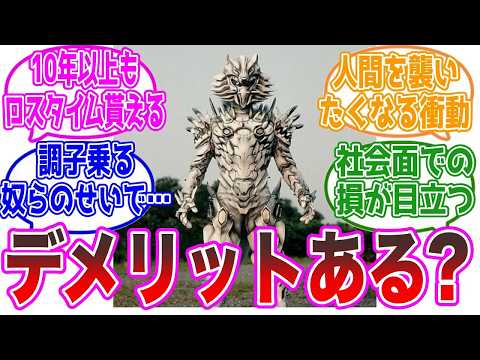
▶ Watch the original YouTube video
Kamen Rider Faiz: A Deep Analysis of Orphenok Advantages and Disadvantages
A 15-year analysis of Kamen Rider Faiz’s Orphenok transformation reveals that online debates claiming “Orphenoks have no real disadvantages” may have merit. By examining the series’ core mechanics, character psychology, and social pressures, this investigation challenges conventional interpretations of one of tokusatsu’s most philosophically complex transformation systems.
- What Happened
- Why It Matters
- Background
- Key Points
- The Debate: Examining Online Arguments
- Comparative Analysis: Faiz, Agito, and Gilts
- Deep Analysis: The Psychology of Transformation
- The Three External Factors Creating Disadvantage
- Practical Understanding: How to Engage with Faiz
- Internet Reception and Fan Analysis
- Conclusion: What Faiz Reveals About Society and Self
What Happened
Online fan communities have recently engaged in heated debate about whether Orphenok transformation in Kamen Rider Faiz (2003-2004) actually carries significant disadvantages. The argument centers on a deceptively simple premise: humans who would normally die are granted 10+ years of additional life as Orphenoks. If this is true, the logic suggests, the transformation might actually be beneficial rather than tragic. This discussion has sparked deeper analysis of the series’ setting, character arcs, and the distinction between inherent drawbacks and externally imposed suffering.
Why It Matters
Kamen Rider Faiz stands apart in the tokusatsu genre for its philosophical exploration of the boundary between life and death. The Orphenok setting raises profound questions about identity, mortality, and what constitutes a meaningful existence. Understanding whether Orphenok transformation is genuinely detrimental—or whether society’s response to it creates the tragedy—reveals how the series comments on social marginalization, forced conformity, and the power of institutional interpretation to define reality. This analysis demonstrates how a seemingly simple monster-of-the-week premise can encode complex commentary on human nature and social structures.
Background
Kamen Rider Faiz aired from 2003 to 2004 and introduced the Orphenok concept: humans who die are mysteriously resurrected as Orphenoks, gaining superhuman abilities and an extended lifespan of approximately 10 years. The series follows Takumi Inui, a young man who discovers he is an Orphenok and must navigate his new identity while resisting manipulation by Smart Brain, the organization seeking to weaponize Orphenoks as part of their vision for human evolution. The series explores themes of transformation, identity, and the cost of power through multiple character perspectives, each responding differently to their Orphenok nature.
Key Points
- Lifespan Extension Ambiguity: Official canon states “10+ years of lost time,” but evidence suggests significant individual variation. Characters like Hanagata lived 20+ years as Orphenoks, indicating the 10-year figure may be an average rather than a hard limit.
- Murder Impulse Inconsistency: While detailed in supplementary materials, the series itself remains vague about whether Orphenoks experience an inherent killing urge or whether this is a psychological response to newfound power and social pressure.
- External Pressure vs. Inherent Flaw: The primary suffering experienced by Orphenoks stems not from transformation itself but from Smart Brain coercion and police persecution, suggesting the tragedy is socially constructed rather than biologically inevitable.
- Functional Integration Possible: Characters like Kiba and Kaido demonstrate that Orphenoks can live relatively normal lives, indicating social integration is theoretically achievable without external interference.
- Ash Phenomenon as Individual Variation: The complete ash transformation seen in Kitaki is presented as exceptional rather than universal, suggesting most Orphenoks maintain normal bodily functions and dietary needs.
- Interpretation Creates Reality: Smart Brain’s definition of Orphenoks as “human evolution” fundamentally shapes how society responds to them, suggesting that institutional framing determines lived experience more than the transformation itself.
The Debate: Examining Online Arguments
Internet discussions have identified several key points in the Orphenok debate. The most compelling argument notes that Hanagata, established as Smart Brain’s leader since the 1980s, appears as an elderly man in the 2003 timeline—meaning he survived at least 20+ years as an Orphenok. This contradicts the “10-year lifespan” standard and suggests either significant individual variation or that the official timeframe is misleading.
Regarding the murder impulse, online communities have correctly noted that this trait is explicitly detailed in supplementary novels and manga spin-offs but remains ambiguous in the main series. The protagonist Takumi resists any killing urge through sheer willpower, which would be logically impossible if murder were an unavoidable biological imperative. This suggests the impulse is psychological rather than inherent—a response to trauma, power, or social conditioning rather than Orphenok nature itself.
The most significant observation concerns social context. Orphenoks who avoid Smart Brain and police detection—such as those living quietly in society—experience minimal actual disadvantage. The tragedy of Orphenok existence appears to be primarily a function of institutional persecution rather than the transformation’s inherent properties.
Comparative Analysis: Faiz, Agito, and Gilts
| Element | Orphenok (Faiz) | Agito | Gilts |
|---|---|---|---|
| Nature of Evolution | Post-mortem resurrection | Pre-mortem advancement | Forced transformation |
| Lifespan Impact | 10+ years extension (variable) | No reduction (superhuman enhancement) | Severe shortening |
| Social Status | Criminal classification | Rare ability (persecution risk) | Monster classification |
| Self-Awareness | Variable (some unaware) | Conscious and deliberate | Involuntary |
Faiz’s Orphenok system differs fundamentally from comparable transformation mechanics in other Kamen Rider series. Unlike Agito, which represents “pure human evolution” with superhuman abilities emerging in living humans, Orphenok transformation is explicitly post-mortem resurrection. Unlike Gilts, which involves consumption of human flesh for survival, Orphenoks can theoretically sustain themselves through normal means. This unique positioning—death followed by restoration with extended life—creates a philosophical paradox that neither comparable series addresses.
Deep Analysis: The Psychology of Transformation
Evolution Versus Condition: A critical interpretive question concerns whether Orphenok transformation should be understood as “evolution” or “condition.” Smart Brain’s insistence on the evolution framework drives much of the series’ conflict. However, the existence of Orphenoks like Takumi who resist violent impulses suggests the transformation is better understood as a physiological condition—comparable to a disease or mutation—rather than an inevitable evolutionary step with predetermined behavioral outcomes. If Orphenoks were truly an evolved species, individual resistance to killing would be illogical.
The Sawada Case Study: Sawada represents the series’ primary example of an Orphenok struggling with murder impulses. However, his case may be exceptional rather than typical. Sawada’s background suggests previous trauma and suicidal ideation; his Orphenok transformation granted him power at a moment of psychological vulnerability. The murder impulse he experiences may reflect the intersection of personal trauma and newfound capability rather than an inherent Orphenok trait. If murder impulses were universal to Orphenoks, other characters would demonstrate similar struggles—yet most do not.
The Ash Phenomenon: Kitaki’s complete ash transformation—where everything he touches becomes ash—is presented as an extreme case. Most Orphenoks, including Takumi, experience minimal ash effects. This variation suggests the ash phenomenon is an individual manifestation rather than a universal Orphenok characteristic. Quality of life degradation from ash effects would therefore depend entirely on individual physiology, not on Orphenok status itself.
The Reproduction Hypothesis: The most speculative but philosophically interesting question concerns why Orphenoks compulsively create new Orphenoks by attacking humans. One interpretation suggests this represents a transformation of reproductive instinct—humans naturally seek to propagate their genetic material; Orphenoks may experience an analogous drive to create others like themselves. This would explain the behavior as instinctual rather than malicious, and individual moral strength would determine whether one resists this impulse (as Takumi does) or surrenders to it.
The Three External Factors Creating Disadvantage
Analysis suggests that Orphenok transformation itself carries minimal inherent disadvantage. Instead, three external factors create the tragic circumstances depicted in the series:
1. Smart Brain Coercion: The organization forcibly recruits awakened Orphenoks and demands they attack humans. This institutional pressure transforms a neutral condition into a moral crisis. Orphenoks who avoid Smart Brain contact face no such compulsion.
2. Police Persecution: Society classifies Orphenoks as criminals and pursues them relentlessly. This legal and social marginalization creates genuine hardship independent of the transformation’s properties. An Orphenok living undetected would face no such persecution.
3. Identity Confusion: Some individuals become Orphenoks without realizing it. In such cases, the transformation carries purely positive outcomes—extended life without awareness of any supposed disadvantage. This suggests that disadvantage is partially psychological, dependent on self-awareness and social context.
Practical Understanding: How to Engage with Faiz
Viewing Recommendations: First-time viewers should watch episodes 1-5 carefully, as this sequence establishes Takumi’s transformation and his choice to suppress his power. Pay particular attention to how different characters respond to their Orphenok nature: Takumi chooses restraint, Kaido chooses quiet integration, and Kitaki chooses destructive excess. These choices reveal character rather than biological destiny.
Comparative viewing with Kamen Rider Agito provides essential context for understanding Faiz’s unique approach to human transformation. The two series represent contrasting philosophies: Agito explores evolution within living humans, while Faiz explores resurrection and second chances.
Supplementary Materials: The Faiz novels and Kamen Rider Kaixa manga provide additional detail on Orphenok psychology and the murder impulse, but these should be understood as expanding rather than defining the main series’ ambiguous presentation.
Internet Reception and Fan Analysis
The “Orphenoks have no real disadvantages” argument has circulated among Faiz fan communities for years, with particularly detailed discussions on 5channel and Twitter. The most compelling evidence cited includes Hanagata’s extended lifespan, the absence of universal murder impulses in the main series, and the functional lives led by Orphenoks who avoid institutional conflict.
YouTube comment sections frequently note the discrepancy between supplementary material (which emphasizes murder impulses) and the main series (which treats this as ambiguous). This observation correctly identifies a tension in the canon’s internal consistency.
Fan analysis demonstrates sophisticated engagement with the series’ logical structure, treating apparent plot holes not as oversights but as intentional ambiguities that invite interpretation.
Conclusion: What Faiz Reveals About Society and Self
After extensive analysis, the argument that “Orphenoks have minimal inherent disadvantage” appears substantially correct—with crucial caveats. Orphenok transformation provides genuine benefit (resurrection and extended life) under three specific conditions: absence of Smart Brain coercion, absence of police persecution, and either ignorance of one’s Orphenok status or acceptance of it.
However, the Faiz narrative deliberately eliminates all three conditions. The series depicts a world where Smart Brain actively recruits Orphenoks, police actively hunt them, and protagonists are acutely aware of their status. Under these circumstances, a theoretically beneficial transformation becomes a source of profound tragedy.
This structure reveals Faiz’s central insight: institutional interpretation creates social reality more powerfully than biological fact. Smart Brain’s decision to frame Orphenoks as “evolved humans” rather than “individuals with a medical condition” fundamentally shapes how society responds to them. Had Orphenok transformation been medicalized rather than mythologized, the entire narrative would transform.
The series ultimately asks: Does tragedy arise from what we are, or from how society chooses to treat what we are? By making Orphenok transformation theoretically advantageous while depicting it as practically catastrophic, Faiz comments on marginalization, forced identity, and the power of social structures to determine individual fate. The “no disadvantage” argument is not merely a logical puzzle—it is a philosophical statement about how society manufactures suffering through interpretation and exclusion.