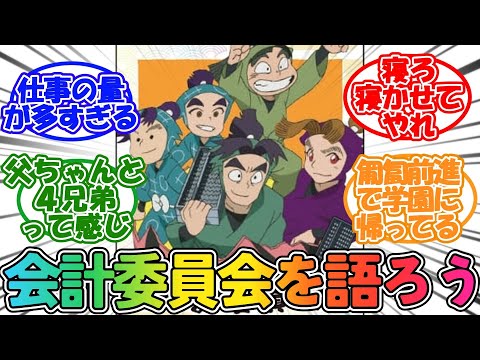
▶ Watch the original YouTube video
Why Fans Are Obsessed With the Accounting Committee in Ninja Boy Rantaro
A grassroots fan movement centered on the “Accounting Committee” from the long-running anime series Ninja Boy Rantaro has gained significant traction online. What was once a background character group has evolved into a focal point of fan discussion, reflecting broader changes in how audiences engage with supporting characters in anime.
What Happened
A social media movement with the hashtag “#IWantToTalkAboutTheAccountingCommittee” has emerged among fans of Ninja Boy Rantaro, a long-running anime that began broadcasting in 1993. The Accounting Committee—a group responsible for managing the finances of the ninja academy in the series—has transitioned from a peripheral background element to a subject of serious fan analysis and discussion. Online platforms including Twitter, YouTube, and 5channel have seen sustained engagement with content analyzing the committee’s character dynamics, problem-solving approaches, and narrative significance.
Why It Matters
This phenomenon reveals important trends in anime fandom and storytelling. The shift in fan attention toward supporting character groups demonstrates how long-running series can evolve beyond their original scope, and how audiences increasingly value complex themes like responsibility, management, and practical problem-solving alongside traditional anime themes of friendship and adventure. The movement also illustrates the maturation of anime fan communities, which now engage in sophisticated textual analysis of secondary characters and their thematic contributions to larger narratives.
Background
Ninja Boy Rantaro is a comedy-adventure anime spanning over two decades. The series originally aired as children’s entertainment but has evolved into a more complex work exploring deeper character development and thematic substance. The Accounting Committee, tasked with managing the ninja academy’s finances, was initially conceived as a minor background element. However, over the course of the series, individual committee members have developed distinct personalities and have become involved in significant plot developments, particularly episodes involving the academy’s financial crises and management challenges.
The series’ longevity has allowed for organic character growth similar to patterns seen in other long-running anime such as One Piece and Detective Conan, where initially minor characters eventually accumulate substantial fan followings.
Key Points
- The “#IWantToTalkAboutTheAccountingCommittee” movement has generated consistent trending activity on Twitter and sustained discussion across multiple online platforms
- The Accounting Committee represents a shift from action-based character differentiation to ideology-based and problem-solving-based characterization
- Committee members embody themes of responsibility and practical management that resonate with contemporary audiences more than traditional adventure narratives alone
- The group demonstrates complex interpersonal dynamics distinct from the protagonist group, characterized by cooperative professionalism rather than adventure-based camaraderie
- Recent episodes have positioned the Accounting Committee as central to significant plot developments rather than purely background elements
- Fan engagement includes sophisticated textual analysis comparing the committee’s characterization to supporting groups in other major anime series
Comparative Analysis
The Accounting Committee’s appeal becomes clearer when compared to supporting character groups in other anime. In Attack on Titan, various military units are differentiated primarily through combat style and action sequences. In Haikyuu!!, supporting characters are developed through sports-specific skills and team dynamics. In Demon Slayer, the Pillars are distinguished by individual strength and unique techniques.
The Accounting Committee, by contrast, is differentiated through ideological frameworks, problem-solving methodologies, and interpersonal relationships. This represents a more abstract and philosophically grounded form of character development. The committee operates within a framework of shared responsibility and practical governance—themes that align with contemporary audience interests in realistic, management-focused narratives rather than purely fantastical or combat-oriented storytelling.
| Anime Series | Supporting Group | Differentiation Method | Fan Engagement Level |
|---|---|---|---|
| Attack on Titan | Military Units | Combat style and tactics | Moderate |
| Haikyuu!! | Team Members | Athletic skills and teamwork | High |
| Demon Slayer | The Pillars | Individual strength and techniques | Very High |
| Ninja Boy Rantaro (Accounting Committee) | Accounting Committee | Ideology, problem-solving, relationships | Rapidly Increasing |
Online Reception and Fan Perspectives
Twitter discussions under the relevant hashtag reveal fans conducting detailed analysis of the committee’s internal relationships and strategic approaches to institutional challenges. YouTube comments show appreciation for the committee’s character development, though some viewers express concern that focus on the committee diminishes screen time for protagonist storylines.
On 5channel forums, dedicated threads examine the committee’s management strategies and institutional role with serious analytical rigor. These discussions transcend simple preference statements, instead engaging in substantive examination of why the committee functions as a compelling narrative element.
The reception reflects a broader shift in fan priorities. Contemporary anime audiences demonstrate increased interest in themes of responsibility, institutional management, and resource allocation—concerns that parallel real-world adult experiences. The committee’s focus on financial stewardship and organizational problem-solving provides a point of identification for viewers navigating similar challenges in their own lives.
Thematic Significance
The Accounting Committee embodies a contrast with the protagonist group that resonates with audiences. While the main characters pursue visible, dramatic adventures, the committee members engage in unglamorous, essential work supporting the institution. This dynamic mirrors real-world labor structures where foundational work often occurs outside public visibility. The committee’s dedication to institutional maintenance, despite lacking the narrative prominence of adventure narratives, appeals to viewers who recognize their own professional experiences in this characterization.
The committee also represents a form of “mature friendship” distinct from the adventure-based camaraderie of the protagonist group. Rather than bonding through shared quests, committee members cooperate through shared institutional responsibility—a relationship model that reflects adult professional environments more accurately than traditional anime friendship narratives.
Future Narrative Potential
Current fan speculation centers on potential story developments where the committee’s institutional challenges escalate into crises affecting the entire academy, necessitating collaboration between the committee and protagonist groups. Such a narrative development would elevate the committee from supporting status to central importance within the larger story structure. This progression would represent the natural evolution of a long-running series, where initially peripheral elements gradually acquire greater narrative weight.
Insights
The Accounting Committee phenomenon demonstrates how long-running anime series can organically develop supporting elements into significant fan interests through sustained character development and thematic evolution. The movement reflects not merely a shift in character preferences, but a maturation of fan communities capable of recognizing and articulating the value of complex, non-action-based characterization.
This trend suggests that contemporary audiences increasingly value narratives addressing practical, institutional, and philosophical themes alongside traditional adventure and combat narratives. The committee’s appeal lies not in spectacular action sequences but in its representation of unglamorous, essential labor and its exploration of how individuals maintain institutions and solve complex problems collaboratively.
The movement also indicates that the distinction between “main characters” and “supporting characters” has become less rigid in fan consciousness. As anime communities develop more sophisticated analytical frameworks, the narrative contributions of supporting groups receive recognition equivalent to protagonist storylines. This represents a meaningful evolution in how audiences engage with serialized storytelling, suggesting that future anime may increasingly develop supporting character groups with equivalent depth to protagonist ensembles.