▶ Watch the original YouTube video
Chainsaw Man’s Fire Devil Mystery: Fan Theories and Why the Enigma Matters
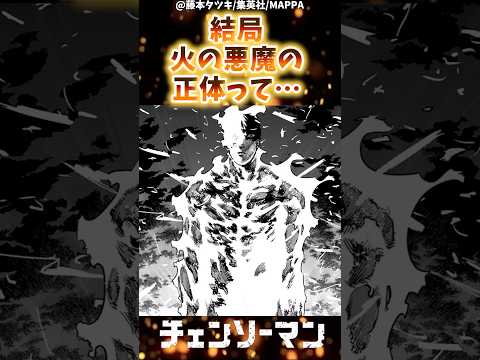
The Fire Devil in Chainsaw Man remains one of anime’s most compelling unsolved mysteries, sparking intense fan speculation across social media platforms. Rather than revealing the character’s true identity, the series strategically maintains ambiguity—a deliberate creative choice that has transformed the mystery into a cultural phenomenon driving community engagement and deeper analysis of the show’s narrative structure.
What Happened
The Fire Devil, a central antagonist in Chainsaw Man, has become the subject of extensive fan theories and online discussion. Despite numerous appearances throughout the series, the character’s true motivations, backstory, and ultimate purpose remain deliberately obscured. This ambiguity has generated widespread speculation across fan communities, with viewers proposing competing theories about the character’s identity and role in the larger narrative.
Why It Matters
The Fire Devil’s unresolved mystery exemplifies a significant shift in modern anime production strategy. Rather than providing definitive answers, contemporary series increasingly employ strategic ambiguity to sustain viewer engagement and encourage active fan participation. This approach transforms passive consumption into collaborative interpretation, strengthening community bonds and extending the cultural lifespan of a series far beyond its broadcast window. The Fire Devil case demonstrates how narrative mystery functions as both storytelling technique and marketing strategy in the social media age.
Background
Chainsaw Man, adapted from Tatsuki Fujimoto’s manga, has garnered significant attention for its distinctive approach to character development and narrative structure. The Fire Devil emerges early in the series as an enigmatic force whose actions defy simple categorization as purely antagonistic. Unlike conventional villain archetypes, this character exhibits behavioral patterns and motivations that resist straightforward interpretation. The anime adaptation amplifies this mystery through deliberate directorial choices—ambiguous framing, layered dialogue, and strategic information withholding—that intensify viewer curiosity rather than resolve it.
Key Points
- Fan theories about the Fire Devil’s identity span multiple interpretations: potential ally rather than pure enemy, connection to past traumatic events, and possible delayed revelation until the series finale
- The character’s mysterious nature stems from four core elements: unexplained motivations, unclear relationships with other demons, ambiguous connection to the protagonist, and limited information about ability origins
- Fan analysis demonstrates sophisticated interpretive methodology, drawing logical conclusions from dialogue nuances, behavioral patterns, and visual storytelling rather than mere speculation
- The anime adaptation introduces new interpretive possibilities through voice acting, musical scoring, and cinematographic choices that enhance the character’s enigmatic quality
- Strategic mystery maintenance serves multiple functions: sustaining narrative tension, encouraging fan-generated content, creating information asymmetry between manga and anime audiences, and activating community discussion
- Comparison with similar works (Attack on Titan, Jujutsu Kaisen, Demon Slayer) reveals Chainsaw Man’s distinctive commitment to prolonging ambiguity rather than providing staged revelations
Timeline
- Manga serialization begins: Fire Devil introduced as mysterious antagonistic force with unclear objectives
- Anime adaptation announced: New directorial interpretations amplify character’s enigmatic qualities
- Anime broadcast: Fan speculation intensifies through social media platforms and online communities
- Ongoing present: Mystery remains unresolved; theories continue evolving as new episodes release
Perspectives
The Ally Theory: Some fans argue the Fire Devil functions as a potential ally rather than pure antagonist, based on interaction patterns with the protagonist that transcend simple opposition. This interpretation emphasizes moments suggesting hidden cooperation or shared objectives.
The Trauma Connection Theory: Other viewers propose the Fire Devil’s current actions stem from involvement in significant past events, with present behavior reflecting psychological consequences of historical trauma. This perspective emphasizes ability uniqueness and other characters’ reactions as supporting evidence.
The Delayed Revelation Theory: A third faction contends the Fire Devil’s true identity will remain concealed until the narrative’s final stages, arguing that premature revelation would diminish character complexity and narrative tension.
The Production Strategy Perspective: Industry observers note that maintaining mystery aligns with contemporary anime production philosophy, where strategic ambiguity generates sustained engagement, encourages fan-created content, and extends cultural relevance through social media discourse.
Insights
The Fire Devil mystery reveals fundamental transformations in how modern serialized media engages audiences. Rather than treating narrative resolution as the primary objective, Chainsaw Man’s creators recognize that sustained ambiguity—when strategically deployed—generates more profound engagement than definitive answers. This approach acknowledges that contemporary viewers possess sophisticated analytical capabilities and actively desire interpretive participation rather than passive consumption.
The character’s unresolved status serves multiple simultaneous functions: it maintains narrative tension, stimulates fan community activity, creates discussion-generating asymmetries between different audience segments, and encourages repeated engagement with source material. Compared to similar works that stage gradual revelations, Chainsaw Man commits more fully to prolonged ambiguity, suggesting a deliberate creative philosophy prioritizing interpretive engagement over narrative closure.
The Fire Devil case demonstrates that mystery itself possesses cultural and commercial value. Fan theories, community discussions, and collaborative interpretation generate substantial content ecosystem activity that extends far beyond the original broadcast. This phenomenon suggests that future serialized media may increasingly employ strategic ambiguity not as narrative weakness but as intentional design strategy.
However, this approach carries inherent risk: the eventual revelation must satisfy accumulated audience expectations, or the extended mystery may generate disappointment rather than satisfaction. The Fire Devil’s ultimate identity—whenever revealed—will significantly impact overall series reception, making the delayed revelation strategy a high-stakes creative gamble.