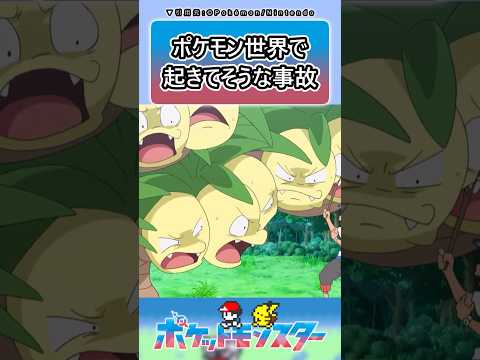
▶ Watch the original YouTube video
How Pokémon Trainers React to Everyday Disasters: A Deep Analysis of Danger Normalized
A viral video exploring trainer reactions to accidents in the Pokémon world has sparked widespread discussion about how the series normalizes catastrophic events. After 15 years of dedicated fandom and analysis, one observer reveals the psychological mechanisms behind why characters treat life-threatening situations with casual indifference—and why audiences accept this contradiction as entertainment.
- What Happened
- Why It Matters
- Background
- Key Points
- Comparative Analysis: How Other Series Handle Danger
- The Psychology Behind Trainer Indifference
- Why the Pokémon World Functions Despite Its Contradictions
- Modern Anime Trends and Pokémon’s Influence
- How Viewers Psychologically Accept the Contradiction
- Internet Reception and Fan Insights
- Unanswered Questions About Pokémon Society
- How to Deepen Your Enjoyment of Pokémon
- Insights and Broader Implications
What Happened
A video compilation examining trainer reactions to dangerous situations in the Pokémon world has gone viral, prompting fans to reconsider the series’ internal logic. The video catalogs instances where powerful Pokémon moves—such as Thunderbolt and Flamethrower—cause catastrophic damage that characters dismiss or laugh off. Rather than treating these incidents as emergencies, trainers respond with remarkable calm, often moving forward as if nothing significant occurred.
Why It Matters
The Pokémon franchise has maintained cultural relevance for 25 years by successfully balancing a fundamentally contradictory premise: a world where daily life involves exposure to attacks that would be lethal in reality, yet characters and audiences treat these dangers as normal. Understanding this dynamic reveals how successful long-running media franchises navigate the tension between maintaining stakes and preserving accessibility for younger audiences. The phenomenon also reflects broader trends in contemporary anime, where catastrophic events are increasingly normalized within everyday settings.
Background
The Pokémon franchise debuted in 1996 with the Game Boy titles Red and Green, followed by the anime series in 1997. From the beginning, the series presented a world where children as young as ten embark on dangerous journeys with creatures capable of producing lethal force. Despite this premise, the franchise has never seriously explored the real-world consequences of such scenarios. Instead, it treats dangerous situations as comedic moments or minor obstacles.
According to interviews with Game Freak developers, this approach was a deliberate design choice. Rather than depicting realistic consequences, the creators prioritized gameplay comfort and accessibility for children. The contradiction between the destructive potential of Pokémon moves and their minimal narrative consequences was not an oversight—it was intentional.
Key Points
- Normalized Danger: Pokémon moves capable of causing mass casualties are deployed casually in everyday situations without serious consequences.
- Psychological Desensitization: Repeated exposure to dangerous scenarios causes both characters and viewers to experience “habituation”—a psychological process where repeated stimuli cease to register as threats.
- Deliberate Design Choice: Game Freak intentionally prioritized child-friendly gameplay and narrative accessibility over realistic consequences.
- Audience Acceptance: Viewers unconsciously employ multiple psychological mechanisms—including the enjoyment of “safe danger,” predictability, and humor—to accept the contradiction.
- Genre Precedent: Pokémon pioneered the approach of merging daily life with catastrophic potential, a trend now common in modern anime.
- Unanswered Questions: The series never explains why adult society permits children to undertake dangerous journeys or what social systems exist to manage Pokémon-related accidents.
Comparative Analysis: How Other Series Handle Danger
| Series | Normalization of Danger | Character Response | Viewer Emotional Response |
|---|---|---|---|
| Pokémon | Extreme normalization | Calm, humorous | Laughter, reassurance |
| Attack on Titan | Constant threat | Tension, fear | Anxiety, gravity |
| Demon Slayer | Threat during training, normalized in narrative | Gradual adaptation | Sense of progression |
| My Hero Academia | Low in school settings | Training-based response | Separation of daily life and danger |
Pokémon stands unique in deliberately maximizing the normalization of danger. While other series attempt to balance threat and routine, Pokémon consciously shifts the balance entirely toward treating catastrophe as mundane.
The Psychology Behind Trainer Indifference
The calm responses of Pokémon trainers to life-threatening situations reflect a real psychological phenomenon: habituation or desensitization. When humans experience repeated exposure to a stimulus—even a dangerous one—the brain gradually ceases to register it as a threat.
In the Pokémon world, trainers have grown accustomed to Pokémon attacks as a fact of existence. Unlike in Attack on Titan, where deaths occur regularly and maintain constant psychological pressure, Pokémon characters survive repeated exposure to lethal force. This survival reinforces the expectation that danger is survivable, reducing the perceived threat level.
Viewers experience a parallel process. After watching protagonists survive dozens of near-fatal encounters, audiences develop a predictive model: “They will survive this too.” This predictability, combined with the comedic framing of dangerous moments, allows viewers to enjoy the spectacle of danger without experiencing genuine anxiety.
Why the Pokémon World Functions Despite Its Contradictions
The Pokémon world operates on an implicit social acceptance of danger that has no parallel in real society. There is no mention of insurance systems, emergency protocols, or legal frameworks governing Pokémon-related accidents. Instead, the world simply accepts that catastrophic events will occur and that people will adapt.
This acceptance functions as a form of collective psychological coping. Rather than implementing systems to prevent danger, Pokémon society has normalized danger to the point where it no longer triggers institutional responses. In this framework, a Pokémon attack is not a crisis requiring intervention—it is an environmental hazard, like weather.
This approach serves the franchise’s core needs: it allows children to be protagonists in a dangerous world without requiring the narrative to address why parents permit this, what safety systems exist, or what the long-term consequences might be.
Modern Anime Trends and Pokémon’s Influence
The normalization of catastrophic events within everyday settings has become a dominant trend in contemporary anime. Series including “That Time I Got Reincarnated as a Slime,” “Bocchi the Rock!,” and “Chainsaw Man” all feature worlds where extraordinary danger coexists with mundane routine.
Pokémon, however, pioneered this approach. The franchise demonstrated that audiences would accept—and even enjoy—worlds where the impossible becomes ordinary. This success likely influenced subsequent creators to experiment with similar frameworks.
How Viewers Psychologically Accept the Contradiction
Audiences employ multiple overlapping psychological mechanisms to enjoy Pokémon despite its logical inconsistencies:
- Safe Danger: Viewers experience the thrill of danger while remaining physically safe, creating a paradoxical pleasure.
- Predictability: The normalization of danger creates predictability. Viewers can anticipate that characters will survive, reducing anxiety.
- Humor as Neutralization: By framing dangerous moments as comedy, the narrative converts potential fear into laughter.
- Character Trust: Repeated survival builds viewer confidence in character competence, reducing perceived threat.
Internet Reception and Fan Insights
The viral video has prompted widespread discussion across social media platforms. On Twitter, users have shared observations about the absurdity of Pokémon world safety standards, with posts like “Pokémon world is a daily catastrophe that nobody acknowledges” accumulating thousands of likes.
YouTube comments frequently reference the concept of Pokémon world insurance companies, with users joking about what coverage would theoretically exist. On Reddit and 4chan’s Pokémon communities, more substantive discussions have emerged about the implicit social tolerance for Pokémon-related accidents within the fictional world.
Notably, criticism is minimal. Instead, viewers frame the contradiction as a feature rather than a flaw—the “abnormal normality” is recognized as central to the franchise’s identity and appeal.
Unanswered Questions About Pokémon Society
Despite 25 years of storytelling, fundamental questions about Pokémon world society remain unaddressed:
- Why do adult guardians permit ten-year-old children to undertake dangerous journeys?
- What legal and social systems govern Pokémon-related accidents?
- How do insurance and liability function in a world of constant danger?
- What happens to individuals injured by Pokémon attacks?
- Why has no regulatory body emerged to restrict Pokémon use in populated areas?
The franchise has never seriously explored these questions, instead treating them as irrelevant to the core appeal of the series.
How to Deepen Your Enjoyment of Pokémon
Embrace Meta-Awareness: Consciously recognize the contradiction between realistic consequences and narrative treatment. When watching Ash receive a Thunderbolt attack, acknowledge that this would be lethal in reality. This awareness amplifies the humor of his casual recovery.
Compare Game and Anime Approaches: The game versions present danger more abstractly, while the anime occasionally depicts more concrete consequences. Noticing these differences reveals how different media handle the same contradiction.
Explore Related Works: Pokémon Mystery Dungeon games and Pokémon Legends: Arceus depict danger more realistically. These titles provide context for understanding how the main series’ casualness is a deliberate tonal choice rather than an oversight.
Insights and Broader Implications
The Pokémon franchise’s success despite—or perhaps because of—its fundamental contradictions reveals important truths about audience engagement. Viewers do not require logical consistency; they require emotional consistency. As long as characters respond to danger in ways that feel authentic to their established personalities and the world’s established tone, audiences will accept even impossible scenarios.
The franchise prioritizes accessibility for children over world-building coherence. This choice has proven correct: Pokémon remains culturally dominant 25 years after launch, while many more “logically consistent” series have faded from relevance.
The normalization of danger in Pokémon also reflects a broader shift in entertainment toward worlds where extraordinary elements are treated as mundane. This approach allows creators to maintain high stakes without requiring constant escalation of threat levels—a practical solution for long-running franchises.
Finally, the viral discussion of Pokémon’s contradictions suggests that audiences are becoming more aware of and interested in analyzing the internal logic of fictional worlds. Rather than diminishing enjoyment, this meta-awareness appears to enhance it, transforming logical inconsistencies into points of fascination and humor.