▶ Watch the original YouTube video
Attack on Titan Chapter 130, titled “Humanity’s Dawn,” marks a pivotal turning point in the series as Eren’s true intentions are finally revealed. The chapter depicts Eren’s ultimate transformation and his commitment to global annihilation, shocking readers and sparking widespread debate about the protagonist’s moral descent and the story’s thematic complexity.
What Happened
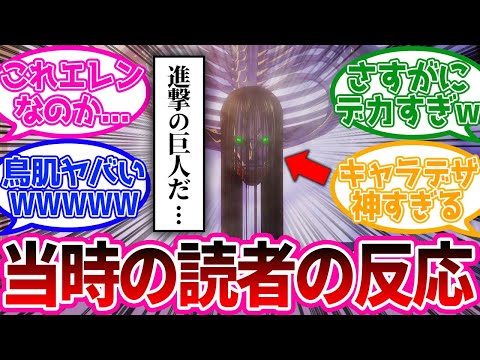
In Chapter 130 of Attack on Titan, Eren initiates independent action, controlling colossal titans to destroy the world’s allied fleet. The chapter explicitly reveals that Eren’s ultimate goal is nothing short of complete global destruction through the Rumbling. This revelation exposes the psychological foundation of Eren’s actions: his deep-seated hatred stemming from his mother’s death in the series’ opening chapter has evolved into a desire for total world annihilation. The visual design of Eren’s final form—a skeletal, rib-exposed titan—emphasizes the grotesque nature of his transformation and symbolizes the complete exposure of his inner psychological state.
Why It Matters
Chapter 130 represents a fundamental shift in how modern anime and manga approach protagonist characterization. Rather than presenting a morally clear hero, Attack on Titan forces readers to confront a protagonist who has become humanity’s greatest threat. This chapter exemplifies a broader industry trend toward depicting protagonists’ moral deterioration and psychological complexity. The chapter raises critical questions about the nature of revenge, the rationalization of mass destruction, and whether personal trauma can justify global-scale atrocities. For fans and critics alike, it challenges conventional storytelling by refusing to provide easy moral answers, instead demanding that readers engage in their own ethical analysis.
Background
Attack on Titan began serialization in 2009 and has evolved into one of the most narratively complex works in anime and manga history. The series is built on carefully layered psychological development, with Eren’s character arc beginning from the moment his mother is consumed by a titan in Chapter 1. Over more than a decade, the narrative has systematically revealed how this singular traumatic event has shaped every major decision Eren makes. The series draws thematic parallels to other “world-altering protagonist” narratives such as Code Geass: Lelouch of the Rebellion (2006) and Death Note (2006), where protagonists pursue destructive goals rooted in personal loss. Chapter 130 represents the culmination of this long-form character development, finally making explicit what has been implicit throughout the series: Eren’s ultimate goal is not defense but destruction.
Key Points
- Eren’s Independent Action: Eren begins operating independently, controlling massive titans to systematically destroy the world’s military forces and infrastructure.
- The Rumbling’s True Purpose Revealed: The chapter confirms that Eren’s objective is complete global annihilation, not merely regional defense or strategic advantage.
- Psychological Foundation: Eren’s hatred, rooted in his mother’s death, is identified as the fundamental driver of all his actions, suggesting his goal is liberation from traumatic memory rather than rational strategic planning.
- Conflicted Allies: Characters including Mikasa, Armin, and Reiner struggle with the moral and emotional weight of opposing Eren, their former comrade and friend.
- Visual Symbolism: Eren’s final form—skeletal and exposed—represents the complete externalization of his internal psychological state, suggesting he has abandoned all social pretense.
- Moral Ambiguity: The chapter deliberately avoids presenting a clear moral framework, instead forcing readers to grapple with questions of justification, empathy, and accountability.
Analysis: Eren’s Transformation and Narrative Parallels
Comparison with Similar Protagonists
Eren’s trajectory mirrors other “world-altering” protagonists in anime and manga history. Like Lelouch from Code Geass, Eren’s motivation stems from parental loss and evolves into a desire to fundamentally restructure society. Like Light Yagami from Death Note, Eren pursues his vision through increasingly destructive means while rationalizing his actions as necessary. However, Attack on Titan distinguishes itself by refusing to present Eren’s choice as either justified or unjustifiable. Instead, the narrative acknowledges the psychological validity of Eren’s trauma while simultaneously condemning the scale of his response.
| Series | Protagonist | Core Motivation | Method | Outcome |
|---|---|---|---|---|
| Code Geass | Lelouch | Mother’s death | Geass-based mind control | Self-sacrifice for world peace |
| Death Note | Light Yagami | Distorted sense of justice | Death Note mass killing | Pursuit of personal dominion |
| Attack on Titan | Eren Yeager | Mother’s death | Rumbling-induced destruction | Complete global reset |
Visual Design and Psychological Symbolism
The skeletal, rib-exposed design of Eren’s final form is not merely aesthetic but deeply symbolic. In human society, individuals maintain psychological boundaries and social masks that enable functional coexistence. The exposed ribcage represents the complete dissolution of these boundaries—Eren’s internal state is now externalized and visible. This design choice suggests that Eren has transcended the need for social pretense or psychological self-protection. He is no longer attempting to hide his intentions or rationalize his actions within socially acceptable frameworks. The grotesque nature of the design emphasizes that this transformation represents not strength or heroism, but rather a fundamental break from human social and psychological norms.
Perspectives
The Question of Justification
Chapter 130 presents a narrative that resists simple moral judgment. Readers experience conflicting responses: they understand Eren’s psychological motivation (the trauma of losing his mother) while simultaneously recognizing the monstrosity of his chosen response (global annihilation). This ambiguity is intentional. The narrative does not ask whether Eren is right or wrong, but rather forces readers to confront the question of whether understanding motivation constitutes justification. Can empathy for Eren’s pain coexist with condemnation of his actions? The chapter suggests that it must.
The Role of Mikasa
Chapter 130 introduces a critical dynamic: Eren appears to deliberately alienate Mikasa, suggesting he fears her influence more than any external threat. This detail carries significant narrative weight. If Eren’s true enemy is not the external world but his own traumatic memories, then Mikasa—who represents connection, love, and an alternative to isolation—becomes the only potential counterforce to his destruction. The narrative hints that Mikasa may be the sole individual capable of reaching Eren, not through force but through emotional connection. This suggests that the series’ resolution may depend not on military victory but on whether Mikasa can convince Eren to choose a different path.
Industry Trends in Protagonist Morality
Chapter 130 exemplifies a significant shift in anime and manga storytelling. Since the late 2010s, there has been a marked increase in narratives depicting protagonists’ moral deterioration. This represents a departure from traditional “good versus evil” frameworks toward more psychologically complex narratives. Modern audiences appear to value psychological realism over moral clarity. They prefer protagonists whose actions emerge logically from their psychological states, even when those actions are morally indefensible. Attack on Titan capitalizes on this preference by presenting Eren not as a villain but as a tragic figure whose understandable pain has led to unconscionable choices.
Reader Reception and Online Discourse
Following Chapter 130’s release, online communities displayed remarkably consistent interpretations. Comments such as “Eren is actually going to destroy the world” reflected readers’ shock at the explicit confirmation of Eren’s intentions. Notably, the most common response was not moral condemnation but rather recognition of narrative inevitability: “There’s no right answer here.” This consensus suggests that readers understand the chapter’s refusal to provide moral clarity as intentional. Rather than debating whether Eren is justified, readers engaged in meta-discussion about the narrative’s structure and the author’s thematic intentions. This response indicates sophisticated audience engagement with complex storytelling.
Insights
Chapter 130 of Attack on Titan represents a culmination of over a decade of narrative development. The chapter’s power derives not from surprise but from inevitability—readers recognize that Eren’s trajectory has been established since the series’ opening. What makes the chapter significant is its refusal to resolve the moral tension it presents. The narrative acknowledges that Eren’s pain is real and his motivation comprehensible, while simultaneously depicting his chosen response as monstrous. This duality is not a narrative flaw but rather the series’ central thematic achievement.
The chapter also marks a turning point in how the series will be remembered and interpreted. Prior to Chapter 130, readers could maintain some ambiguity about Eren’s true intentions. After Chapter 130, that ambiguity is eliminated. The remaining narrative question is not whether Eren will destroy the world, but whether he can be stopped—and more importantly, whether he should be. This shift from “what will happen” to “what should happen” transforms the series from a plot-driven narrative into a philosophical inquiry about the relationship between understanding and accountability, between empathy and justice.
The ultimate resolution of Attack on Titan will depend on whether Mikasa can reach Eren through emotional connection, whether the alliance can stop him through force, or whether the narrative will present a third option that transcends both possibilities. Regardless of the outcome, Chapter 130 has established that Attack on Titan is fundamentally a story about how personal trauma can metastasize into global catastrophe, and whether love and connection can provide an alternative to destruction.