▶ Watch the original YouTube video
The Night King’s True Identity and the Round Table’s Secret: A Deep Analysis of Elden Ring’s Nightreign Lore
A complex video analysis exploring Elden Ring’s Nightreign DLC content has uncovered a compelling theory about the Night King’s identity and the nature of the Round Table, suggesting a tragic loop between parallel worlds where siblings sacrifice themselves to save each other across alternate timelines.
What Happened
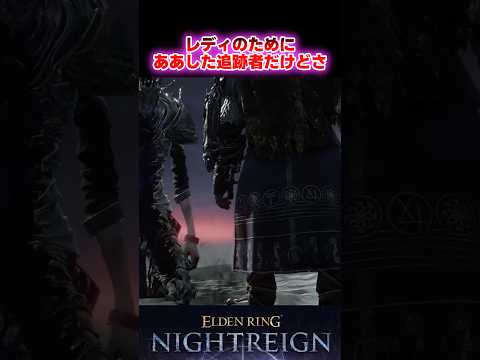
A detailed YouTube video examining Elden Ring’s Nightreign content has proposed a multi-layered interpretation of the DLC’s lore, focusing on the relationship between the Night King, a character known as the Lady, and the mysterious Round Table. The analysis suggests that the Night King may be a “Pursuer” figure from one world attempting to save a sister from another world, creating an infinite causal loop across multiple timelines. According to the theory, when the Night King disappears, the Round Table vanishes as well, implying that the sister’s existence is fundamentally tied to the brother’s choices and sacrifices.
Why It Matters
This interpretation represents one of the most complex narrative structures in FromSoftware’s catalog, rivaling the intricate lore systems established in the Dark Souls series. Understanding Nightreign’s lore is significant because it demonstrates how FromSoftware continues to evolve its storytelling approach, embedding philosophical questions about free will, sacrifice, and the nature of existence within gameplay mechanics. For players invested in Elden Ring’s world-building and narrative depth, this analysis provides a framework for interpreting the DLC’s most enigmatic elements and their connection to the broader themes of the base game.
Background
Elden Ring’s “Shadow of the Erdtree” DLC introduced Nightreign as a significant content addition approximately two weeks after its release. The Nightreign storyline features complex temporal mechanics and character relationships that diverge from Elden Ring’s primary narrative structure. Unlike the base game’s relatively straightforward world design, Nightreign introduces the concept of multiple parallel worlds with interconnected causality. The setting evokes the atmosphere of the Dark Souls series—characterized by despair, cyclical suffering, and human determination in the face of inevitable decline—rather than Elden Ring’s typically more hopeful and grandiose tone.
Key Points
- The Night King’s Identity: The Night King may be a “Pursuer” from one world who has become a dark entity specifically to save a sister from an alternate world.
- The Round Table Connection: The Round Table appears to be a manifestation of the sister’s existence; when the Night King vanishes, the Round Table ceases to exist, suggesting her being is sustained by his choices.
- The Infinite Loop Structure: World A’s Pursuer becomes the Night King to save World B’s Lady, while World B’s Lady sacrifices herself to save World A’s Pursuer, creating an endless cycle with no escape.
- The Greater Will’s Role: A transcendent force may be influencing the siblings’ choices, blurring the line between free will and predetermined fate.
- Dark Souls Parallels: Nightreign’s atmosphere and thematic concerns align more closely with Dark Souls’ despair-driven narrative than with Elden Ring’s broader, more optimistic framework.
- Salvation Through Acceptance: The true resolution may not be escaping the loop, but rather accepting it as an act of love and protection.
Timeline
- 2011: Dark Souls released, establishing FromSoftware’s signature approach to complex, player-interpreted lore.
- 2013: Dark Souls II introduced the “Memory” mechanic, allowing players to enter past worlds and question the nature of temporal reality.
- 2016: Dark Souls III deepened temporal distortion concepts with time-warped environments and NPC interactions across different eras.
- 2022: Elden Ring released, presenting a single-world narrative with multiple ending choices rather than complex timeline mechanics.
- 2024: Shadow of the Erdtree DLC released, introducing Nightreign with its unprecedented multi-world causal structure.
Perspectives
The Multi-World Loop Interpretation: The primary theory presented in the video suggests that Nightreign’s core mechanic involves parallel worlds where the same characters exist in different timelines, each making sacrifices to save their counterpart in another world. This interpretation gains credibility from the game’s mechanics, where the Night King’s presence directly correlates with the Round Table’s existence.
The Greater Will’s Intervention: Some analysts question whether the siblings’ choices represent genuine free will or divine manipulation by the Greater Will. This perspective echoes longstanding debates within the Dark Souls community about whether characters’ decisions are truly their own or predetermined by cosmic forces. The ambiguity between agency and fate remains intentionally unresolved, consistent with FromSoftware’s narrative philosophy.
The Dark Souls Connection: Critics and supporters alike note that Nightreign’s tone and thematic concerns—isolation, futility, cyclical suffering, and human determination—align more with Dark Souls’ worldview than Elden Ring’s. Some view this as a deliberate artistic choice to embed despair within Elden Ring’s otherwise hopeful framework, while others see it as derivative of earlier FromSoftware work.
The Acceptance Theory: An alternative interpretation suggests that the true ending is not escaping the loop but accepting it as an expression of love. Rather than seeking liberation from the cycle, the siblings’ continued sacrifice within the loop represents the deepest form of salvation—choosing to protect someone eternally, even at infinite cost.
Comparative Analysis with FromSoftware’s Other Works
Nightreign’s narrative complexity exceeds that of previous FromSoftware titles in several measurable ways. Dark Souls (2011) featured a single world with limited temporal mechanics, primarily offering different endings based on player choice. Dark Souls II (2013) introduced the Memory invasion system, allowing players to enter past worlds, but these remained isolated experiences rather than causally interconnected timelines. Dark Souls III (2016) advanced temporal distortion concepts but maintained a fundamentally single-world structure with time-warped elements.
Elden Ring (2022) returned to a single-world design, emphasizing player agency through multiple ending choices rather than complex timeline mechanics. In contrast, Nightreign introduces simultaneous parallel worlds where the same characters’ choices in one timeline directly affect outcomes in another, creating a mathematical paradox rather than a simple branching narrative. This structure resembles narrative complexity found in visual novels like Steins;Gate or meta-games like The Stanley Parable, representing a significant departure from FromSoftware’s previous approaches.
Understanding Nightreign’s Complex Lore
For players attempting to comprehend Nightreign’s intricate setting, several practical approaches prove effective. First, prioritize understanding the sibling relationship above all other narrative elements. The entire temporal structure becomes comprehensible only after establishing what the brother and sister are trying to protect and why they sacrifice themselves across worlds.
Second, leverage experience with Dark Souls if available. Familiarity with Dark Souls III’s temporal distortion mechanics provides valuable context for understanding how multiple timelines can interact causally. Third, carefully read all item descriptions and environmental text, as FromSoftware traditionally embeds crucial lore information in seemingly minor details.
Finally, engage with online community discussions while maintaining critical perspective. Given Nightreign’s complexity, multiple valid interpretations likely exist, and no single “correct” reading may be definitive. The ambiguity itself may be intentional, reflecting the game’s thematic concerns about the impossibility of complete understanding in a world governed by forces beyond mortal comprehension.
Community Reception and Debate
Online responses to Nightreign’s lore have coalesced around three primary interpretations. The first group endorses the multi-world loop theory, noting that the Erdtree’s historical association with cycles and regeneration lends credibility to interpretations involving perpetual recurrence. Reddit’s r/Eldenring community has widely discussed how the Round Table’s mechanics support this reading.
The second group questions the Greater Will’s role, asking whether divine intervention negates the siblings’ agency. This represents a legitimate philosophical concern: if the Greater Will orchestrates the loop, can the siblings’ choices be considered genuinely free? The tension between determinism and autonomy remains unresolved, consistent with FromSoftware’s narrative tradition.
The third group expresses skepticism about Nightreign’s originality, suggesting it borrows too heavily from Dark Souls’ established lore and atmosphere. However, this borrowing may be intentional—embedding Dark Souls’ despair-driven worldview within Elden Ring’s framework creates thematic contrast and deepens the narrative’s philosophical complexity.
Insights and Implications
Nightreign represents a significant evolution in FromSoftware’s approach to video game narrative. By introducing multi-world causality and infinite loops as core mechanics rather than mere narrative flourishes, the DLC elevates lore interpretation from textual analysis to mathematical and philosophical inquiry. The siblings’ eternal sacrifice—choosing to protect each other across timelines despite the impossibility of escape—embodies FromSoftware’s recurring theme: human determination and love persist even in the face of cosmic indifference and inevitable suffering.
The ambiguity surrounding free will versus predetermined fate reflects broader philosophical questions about agency in a universe governed by transcendent forces. Rather than resolving this tension, Nightreign embraces it, suggesting that the meaning of the siblings’ choices lies not in whether they are truly free, but in their commitment to protecting each other regardless of cosmic constraints.
Furthermore, Nightreign’s tonal shift toward Dark Souls’ despair-driven atmosphere within Elden Ring’s framework suggests FromSoftware’s continued interest in exploring how hope and despair coexist. The DLC demonstrates that even within a world offering multiple paths to salvation, some stories remain fundamentally tragic—not because escape is impossible, but because the characters choose sacrifice over liberation.
As FromSoftware continues developing its narrative techniques, Nightreign’s multi-world structure may establish a template for future projects. If the studio further explores parallel timelines and interconnected causality, it could produce some of gaming’s most philosophically complex narratives, pushing the medium’s storytelling capabilities toward unprecedented sophistication.