▶ Watch the original YouTube video
What If Rau Le Creuset Survived? A Deep Analysis of Gundam SEED’s Most Compelling Alternate Scenario
A comprehensive exploration of how Rau Le Creuset’s survival would fundamentally reshape the narrative of Gundam SEED and Gundam SEED Destiny. This analysis examines the character’s complex nature, his potential role within ZAFT’s command structure, and the cascading consequences for the series’ central conflicts and moral framework.
What Happened
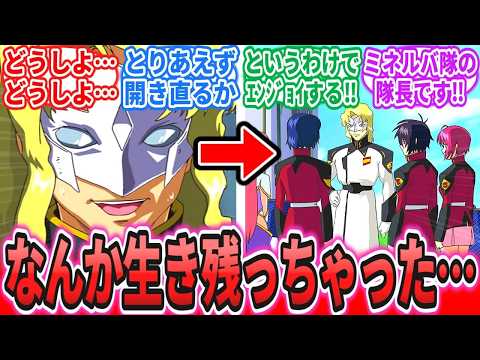
In the original Gundam SEED narrative, Rau Le Creuset perishes in a final confrontation with Kira Yamato’s Strike Gundam, his Providence Gundam exploding in the process. However, a compelling video essay has sparked renewed fan discussion about an alternate scenario: what if Creuset had somehow survived this encounter? This thought experiment has generated diverse reactions within the Gundam community, each offering unique perspectives on how the character’s survival would alter the series’ trajectory and thematic weight.
Why It Matters
Understanding this alternate scenario reveals deeper truths about Gundam SEED’s narrative structure and character psychology. Creuset is not merely a secondary antagonist—his existence embodies philosophical questions about identity, purpose, and observation versus participation. His survival would fundamentally challenge the power dynamics within ZAFT, the motivations of Chairman Durandal, and the entire premise of Gundam SEED Destiny. This analysis demonstrates how a single character’s presence can reshape an entire fictional universe’s moral and political landscape.
Background
Gundam SEED originally aired in 2004, establishing itself as a pivotal entry in the Gundam franchise. Rau Le Creuset emerges as a complex antagonist—a pilot of exceptional skill who views the world’s conflicts with detached fascination rather than ideological commitment. His white uniform, distinct from standard ZAFT military dress, symbolizes his ambiguous status within the organization. Throughout the series, Creuset operates with a philosophy of “enjoying” the spectacle of human conflict, a perspective that sets him apart from other characters driven by conviction or emotion. His relationship with Chairman Durandal suggests a deeper connection rooted in shared loss and mutual understanding, a dynamic that becomes crucial to understanding Gundam SEED Destiny’s narrative.
Key Points
- Structural Ambiguity: Creuset’s white uniform and undefined rank within ZAFT would create persistent uncertainty about his official position, whether as captain, vice-captain, or independent operative, fundamentally destabilizing the military hierarchy.
- Durandal’s Motivation Shift: Creuset’s survival would eliminate Durandal’s need for Shin Asuka as a replacement, potentially preventing the Destiny Plan’s implementation entirely and reframing the entire conflict of Gundam SEED Destiny.
- Philosophical Observer Role: Rather than fully committing to any faction, Creuset would likely maintain his position as a detached observer, providing a third perspective independent of Kira’s or Athrun’s ideological camps.
- Complex Interpersonal Dynamics: His relationship with Shin would become fraught with tension, as the young pilot would lose his mentor figure to Creuset’s reemergence, creating psychological complications absent from the original narrative.
- Moral Framework Dissolution: Creuset’s presence would undermine the series’ binary morality, introducing ambiguity and gray areas that challenge the clear-cut good versus evil structure.
- Potential Defection: Despite initial placement within ZAFT, Creuset would likely gravitate toward Kira’s faction, not from ideological alignment but from his desire to observe the conflict from a position of relative neutrality.
Narrative Implications
The survival of Rau Le Creuset presents a fascinating paradox. His character is defined by acceptance of defeat and a philosophy of observation rather than conquest. Even if he survived the Providence Gundam’s destruction, his psychological state would remain fundamentally altered. His famous declaration—”I am already a broken man. So I will continue to observe the world’s course until my life ends”—suggests that survival would not restore his will to dominate but rather deepen his detachment.
Within ZAFT’s command structure, Creuset would occupy an unprecedented position. Unlike standard military ranks, his authority would derive from personal capability, ideological influence, and his mysterious connection to Durandal rather than formal position. This ambiguity would create friction with established command, particularly with Captain Talia Gladys and other officers accustomed to clear hierarchies. His interactions with other characters would reflect this outsider status: he would neither fully integrate nor completely isolate himself.
The relationship between Creuset and Shin Asuka deserves particular attention. In the original narrative, Shin becomes Durandal’s chosen instrument, a replacement for the mentor figure Creuset represented. If Creuset survived, this dynamic would invert. Shin would face a rival for Durandal’s attention, potentially leading to psychological conflict that mirrors but inverts the original series’ emotional arcs. Creuset’s capacity to “enjoy” Shin’s emotional intensity would create a mentor relationship fundamentally different from Durandal’s manipulative guidance.
Most significantly, Creuset’s survival would render the Destiny Plan unnecessary. Durandal’s entire scheme stems from loss and compensation—he seeks to replace Creuset with a more malleable successor. With Creuset alive, Durandal’s motivation collapses, and the central conflict of Gundam SEED Destiny loses its psychological foundation. The series would require complete narrative reconstruction.
Fan Community Perspectives
The online Gundam community has generated diverse interpretations of this scenario. Several recurring themes emerge from fan discussions:
Entertainment Value: Many fans note that Creuset’s survival would create “interesting developments,” recognizing that his presence inherently generates narrative complexity. His philosophical detachment and combat prowess would provide unpredictable elements absent from the original series.
Reaction to Neo Roanoke: Fans speculate that Creuset would react with intense anger toward Neo Roanoke, the Cyber-Newtype pilot. This suggests recognition that Creuset harbored complex feelings about artificially created beings, potentially viewing them as abominations or tragic figures worthy of contempt.
Shin’s Displacement: The observation that “Durandal wouldn’t call Shin ‘Rao’ if Creuset were alive” reflects understanding that Shin’s entire role depends on Creuset’s absence. Fans recognize that Shin serves as a substitute, and substitutes become unnecessary when the original returns.
Compatibility with Shin: Several commenters suggest that Creuset and Shin would develop strong rapport, with Creuset appreciating Shin’s emotional intensity and using it as entertainment. This perspective acknowledges Creuset’s capacity to mentor while maintaining emotional distance.
Comparative Analysis
Similar scenarios exist within the broader Gundam franchise. The treatment of Char Aznable in Gundam Unicorn provides instructive parallels. Though Char dies in Char’s Counterattack, his ideological influence and legacy dominate subsequent narratives. His absence becomes a presence, shaping events through memory and philosophy. Creuset’s survival would invert this dynamic—his physical presence would paradoxically diminish his influence, as his detached observation would prevent him from driving events forward.
The Gundam SEED Astray manga series explores similar themes through characters occupying ambiguous positions within multiple factions. These works demonstrate that characters with unclear allegiances and complex motivations generate narrative depth precisely through their refusal to commit fully to any single cause.
Psychological Framework
Understanding Creuset’s psychology is essential to this analysis. His character embodies a specific archetype: the observer who has transcended personal ambition. His white uniform, distinct from ZAFT’s standard military dress, symbolizes this transcendence. He exists within the organization but not entirely of it.
If Creuset survived, this psychological framework would intensify rather than diminish. Survival would confirm his philosophy—he would interpret his continued existence as validation of his detached approach. Rather than seeking redemption or new purpose, he would deepen his commitment to observation. This stance would frustrate those around him, particularly Durandal, who would recognize that Creuset’s survival eliminates the possibility of the mentor-successor relationship that defines Durandal’s emotional needs.
Potential Narrative Trajectories
Several plausible scenarios emerge from Creuset’s hypothetical survival:
Gradual Marginalization: Creuset would initially occupy a position within ZAFT but would gradually lose influence as his refusal to commit to Durandal’s agenda becomes apparent. His “enjoyment” of conflict would be perceived as disloyalty, leading to his eventual isolation within the organization.
Defection to Kira’s Faction: Recognizing that ZAFT cannot accommodate his philosophical stance, Creuset would migrate toward Kira’s forces. This movement would not represent ideological conversion but rather a pragmatic recognition that Kira’s faction offers greater freedom for observation and participation without commitment.
Permanent Third-Party Status: Rather than fully defecting, Creuset might maintain an independent position, operating as a mercenary or neutral observer. This role would allow him to maintain contact with both factions while avoiding complete commitment to either.
Mentorship of Shin: Creuset would likely develop a complex mentor relationship with Shin, characterized by genuine appreciation for the younger pilot’s emotional intensity combined with detached amusement at his ideological fervor. This relationship would provide Shin with a more authentic mentor figure than Durandal, though one fundamentally incapable of providing the emotional validation Shin desperately seeks.
Insights and Broader Implications
This thought experiment reveals fundamental truths about narrative structure and character function. Creuset’s character demonstrates that antagonists need not be defeated to be neutralized—they can be rendered irrelevant through circumstances that preserve their physical existence while eliminating their narrative necessity.
The survival scenario also illuminates the relationship between individual agency and systemic constraint. Creuset’s philosophy of observation represents a form of freedom—freedom from the need to commit, to believe, to participate fully. Yet this freedom would prove incompatible with military organization, which demands commitment and hierarchical clarity. His survival would expose the fundamental tension between individual autonomy and institutional requirement.
Furthermore, this analysis demonstrates that Gundam SEED Destiny’s entire narrative structure depends on Creuset’s absence. Durandal’s motivation, Shin’s role, and the Destiny Plan itself all require Creuset’s death as a foundational premise. This dependency suggests that Creuset’s character possesses greater structural importance than his limited screen time might initially suggest.
The philosophical implications extend beyond narrative mechanics. Creuset embodies a specific response to existential crisis—acceptance of defeat combined with commitment to observation rather than action. His survival would represent a challenge to the series’ underlying assumption that participation and commitment are necessary for meaningful existence. Instead, Creuset would demonstrate that observation, detachment, and refusal to commit can constitute a valid form of existence, albeit one that generates perpetual tension with those around him.
Ultimately, the question “What if Creuset survived?” is not merely a fan speculation exercise. It is an interrogation of narrative necessity, character psychology, and the philosophical foundations upon which Gundam SEED and its sequel are constructed. The answer reveals that Creuset’s death is not incidental to the story—it is essential to it. His survival would not enhance the narrative but would fundamentally destabilize it, creating a work of greater ambiguity but diminished thematic coherence.