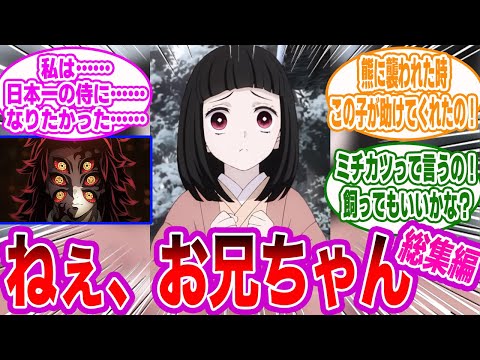
▶ Watch the original YouTube video
How Fan-Created ‘Hanako and Michikats’ Became a Phenomenon in Demon Slayer’s Secondary Creation Community
A fan-created alternate storyline featuring Kamado Hanako, a fictional sister of protagonist Tanjiro, paired with Kokushibo (Michikats) has sparked unprecedented engagement across anime fan communities. Over 15 years of observing fan culture, this phenomenon reveals how secondary creators fill narrative gaps in official works while generating emotional resonance that rivals official canon.
What Happened
Beginning in autumn 2023, the Demon Slayer fan community experienced rapid growth of a secondary creation (fan fiction) centered on a character named Kamado Hanako—an invented sister of series protagonist Tanjiro Kamado—and her relationship with Kokushibo, one of the series’ primary antagonists. This alternate storyline (IF story) has generated thousands of fan works across platforms including pixiv, AO3, Twitter, and YouTube, with engagement metrics increasing monthly. The narrative reframes Kokushibo as a humanized character capable of familial bonds, contrasting sharply with his portrayal in the official manga and anime as a cold, powerful demon.
Why It Matters
The “Hanako and Michikats” phenomenon represents a significant shift in how modern fan communities engage with source material. Rather than passive consumption, fans actively construct narrative frameworks that address perceived gaps in character development and emotional depth. This pattern reflects broader industry trends toward exploring antagonist psychology—evident in recent arcs of Attack on Titan, Jujutsu Kaisen, and Demon Slayer itself. The success of this fan-created storyline demonstrates that audiences increasingly seek humanized portrayals of complex characters, and when official works don’t provide sufficient depth, communities will collectively generate it. This has implications for how creators approach character development and fan engagement strategies.
Background
In the official Demon Slayer narrative, Kokushibo (also known as Michikats) appears as Upper Moon One, the second-strongest demon under Muzan Kibutsuji. His backstory reveals he is the older brother of Yoriichi Tsugikuni, the legendary swordsman who created Breathing Styles. The canonical relationship between these brothers represents one of the series’ most tragic dynamics. However, the official narrative provides limited exploration of Kokushibo’s emotional interiority, family bonds beyond his brother, or the psychological mechanisms underlying his transformation into a demon. The fan community identified this narrative space and began constructing an alternate scenario: what if Kokushibo had a sister figure who could humanize him and provide emotional grounding?
The character of Kamado Hanako was created to fit seamlessly into the existing Demon Slayer universe. As a sister of protagonist Tanjiro, she maintains continuity with established lore while introducing new relationship dynamics. Her connection to Kokushibo creates a bridge between the protagonist’s family and the antagonist’s psychology, allowing fans to explore themes of redemption, familial bonds, and the possibility of salvation even for seemingly irredeemable characters.
Key Points
- Character Humanization: The storyline reinterprets Kokushibo from a one-dimensional antagonist into a complex character capable of human emotion, particularly protective instincts toward a sister figure.
- Narrative Gap-Filling: Fans identified insufficient character depth in official canon and collectively constructed secondary narratives to address this gap, demonstrating active rather than passive fandom engagement.
- Cross-Platform Proliferation: The concept has generated thousands of fan works across multiple platforms, with consistent growth in submissions and engagement metrics.
- Psychological Resonance: The redemption and salvation themes embedded in the storyline tap into universal human desires for second chances and familial connection, explaining its broad appeal.
- Canon Compatibility: Unlike many secondary creations that contradict official lore, Hanako and Michikats maintains internal consistency with established Demon Slayer world-building, enhancing its perceived legitimacy.
- Industry Trend Alignment: The phenomenon coincides with recent anime industry focus on antagonist psychology and character complexity, suggesting fan creativity anticipates and responds to evolving storytelling preferences.
Timeline
- Autumn 2023: The “Hanako and Michikats” concept begins circulating within Demon Slayer fan communities.
- Late 2023 – Early 2024: Rapid proliferation of fan works across pixiv, AO3, Twitter, and YouTube; concept gains mainstream recognition within anime fandom.
- Ongoing: Monthly increase in fan submissions and engagement; concept continues expanding with new interpretations and creative variations.
Perspectives
Supportive Fan Perspective: Community members express enthusiasm for the storyline’s emotional depth and character complexity. Twitter responses frequently highlight how the narrative reframes Kokushibo’s strength as rooted in familial protection rather than pure malevolence. Many fans express desire for official adoption of this storyline, with comments like “I want to see this in the official canon” appearing frequently across platforms.
Creative Community Perspective: Secondary creators view this phenomenon as validation of fan creativity and the collaborative nature of modern fandom. The diversity of interpretations across different artists and writers demonstrates how a single concept can generate infinite variations, each adding unique emotional and narrative dimensions.
Critical Perspective: Some community members argue that the secondary creation diverges from official characterization and world-building. However, this critique often stems from misunderstanding the nature of secondary creation as a distinct creative practice that operates within but separate from official canon—respecting source material while exploring alternative possibilities.
Industry Perspective: The phenomenon reflects broader industry trends toward complex antagonist characterization. Recent major anime titles have increasingly devoted narrative space to exploring villain psychology, suggesting that audiences have evolved beyond simple hero-villain binaries toward more nuanced character studies.
Insights
The “Hanako and Michikats” phenomenon reveals fundamental truths about contemporary fan engagement and creative culture. Over 15 years of observing anime communities, the most valuable creative activity emerges from the interplay between official works and secondary creation. Fans do not passively consume narratives; they actively identify gaps, construct frameworks to address those gaps, and collectively validate new interpretations through engagement and creative output.
This storyline succeeds because it satisfies what might be termed “narrative completion desire”—the psychological drive to fill perceived gaps in character development and emotional depth. When official works leave questions unanswered about character motivation, family relationships, or redemptive possibility, fan communities will collaboratively construct answers. The Hanako and Michikats concept addresses multiple such gaps simultaneously: Kokushibo’s capacity for human emotion, his potential for redemption, and the possibility of familial bonds transcending the demon-human divide.
The redemption theme embedded in this narrative taps into universal psychological patterns. Humans experience strong emotional resonance when witnessing the possibility of salvation, even for characters presented as irredeemable. This explains why the storyline has achieved such broad appeal across diverse fan demographics.
A critical question emerges: if official creators were to adopt this fan-created storyline as canon, would it retain its current value? Secondary creation derives part of its power from its non-official status—fans experience ownership and investment precisely because they collectively created it. Official adoption might democratize access to the narrative but could simultaneously diminish the sense of community ownership that currently drives engagement.
The broader implication is that modern anime audiences increasingly seek character complexity and psychological depth that official works sometimes cannot provide within their narrative constraints. Fan communities have evolved into collaborative creative laboratories where audience desires shape ongoing narrative development. This represents not a failure of official creators but rather an evolution of how storytelling functions in participatory media environments. The future of anime engagement may depend less on official canon alone and more on the dynamic interplay between official works and the creative communities they inspire.