▶ Watch the original YouTube video
Pocket Rider’s Online Reception: The Depth of Character Selection and Monster Training Systems
Pocket Rider, a fan-created fusion of Kamen Rider and Pokémon mechanics, has generated significant online discussion revealing unexpected complexity in character selection, training systems, and party composition. Analysis of community reactions demonstrates that the game successfully integrates character personality into core gameplay mechanics, creating a sophisticated experience that balances accessibility challenges with deep character-driven design.
- What Happened
- Why It Matters
- Background
- Key Points
- Character Selection Analysis
- Training System Innovation
- Party Composition and Timeline Conflicts
- Hidden Content and Acquisition Methods
- Beginner and Advanced Character Tiers
- Mental Stability as Mechanical Value
- Unexpected Emergent Behaviors
- Form Variation and Breeding Complexity
- Community Perspectives
- Insights
What Happened
Pocket Rider, a fan game that merges Kamen Rider character mechanics with Pokémon-style gameplay systems, has attracted substantial online discussion analyzing its innovative approach to character selection and monster training. The game replaces traditional Pokémon mechanics with Kamen Rider-specific systems where character personality, ideology, and story context directly influence gameplay behavior and party dynamics.
Why It Matters
Pocket Rider represents a significant evolution in fan game design by successfully integrating narrative character elements into core gameplay systems rather than treating them as superficial additions. This approach demonstrates how existing game frameworks can be meaningfully adapted to reflect source material complexity. The game’s reception reveals player preferences for emotionally-driven character selection over pure mechanical optimization, suggesting broader trends in how modern players engage with game design.
Background
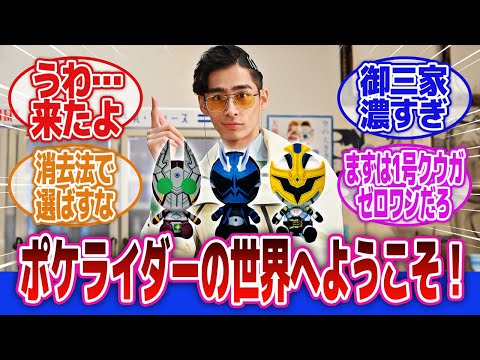
Pocket Rider emerged as a 50th-anniversary fan project for the Kamen Rider series. Rather than creating a simple character reskin of Pokémon, the developers implemented fundamental mechanical changes that reflect each Kamen Rider’s canonical personality and relationships. The game’s initial character selection offers three starter options—Specter, Gallen, and a third Rider—each with distinct personality traits that affect how they respond to player commands and interact with other party members.
Key Points
- Character-Driven Selection: Initial starter selection prioritizes emotional connection to character personality over mechanical strength, with players reporting decisions based on character compatibility rather than game balance.
- Personality-Based Training Difficulty: Unlike Pokémon’s friendship system, Kamen Rider training difficulty directly correlates to character ideology and personality, requiring players to understand canonical character traits to achieve cooperation.
- Party Composition Consequences: Mixing Riders from different story timelines or factions creates in-game conflicts, with reports of party members attacking each other or refusing commands when grouped with incompatible characters.
- Multiple Hidden Acquisition Methods: Secondary and tertiary Riders feature multiple unlocking conditions with varying difficulty levels, encouraging community information sharing and exploration.
- Clear Skill-Based Character Classification: The game explicitly differentiates beginner-friendly Riders from advanced-difficulty characters, making initial selection critically important to progression.
- Unexpected Emergent Gameplay: Reports describe unpredictable party interactions, including spontaneous fashion competitions escalating into barbecue events, reflecting deep character personality integration.
Character Selection Analysis
Online discussions reveal that Pocket Rider’s character selection functions as an emotional rather than mechanical decision point. Players selecting Gallen frequently cite his “self-proclaimed justice hero” personality as trustworthy, while Specter selections emphasize appreciation for his conditional strength mechanics despite mechanical instability. This mirrors established fan behavior in games like Persona 5 Royal, where character affinity often overrides optimal party composition.
The Specter selection particularly demonstrates how incomplete or flawed character design can generate player investment. Despite mechanical disadvantages, players report attraction to supporting an imperfect character, suggesting that vulnerability creates engagement through player support motivation rather than pure optimization.
Training System Innovation
The game’s most distinctive feature replaces Pokémon’s affection system with character personality-based mechanics. Riders may ignore commands, attack players, or talk back based on their canonical personality traits. Advanced players report that treating specific Riders according to their character context—such as approaching one Rider as a potential maternal figure—unlocks cooperative behavior unavailable through standard gameplay approaches.
While online criticism labels this an “early-game killer,” analysis suggests the system functions as character comprehension education rather than poor balance. Players who understand canonical Kamen Rider characterization gain mechanical advantages, rewarding series knowledge and creating gameplay depth tied to narrative understanding.
Party Composition and Timeline Conflicts
A significant design feature prevents mixing Riders from different story timelines or factions without consequences. Reports indicate that combining Riders from incompatible narrative contexts creates in-game conflicts, with party members behaving erratically or attacking each other. This mechanic reflects canonical story tensions rather than functioning as a bug, with players discovering that grouping Riders from the same story arc eliminates these conflicts.
Notably, Blade-series Riders reportedly display unstable behavior during training but achieve stability at maximum level, potentially reflecting the series’ narrative arc from conflict to unity. This suggests the game encodes story progression into mechanical systems.
Hidden Content and Acquisition Methods
Secondary and tertiary Rider acquisition features multiple unlock paths with distinct difficulty levels. Third-position Riders can be obtained through tournament victory, specific party composition, or environmental investigation. Fourth-position Riders require even more complex conditions, including bringing specific Riders with particular status conditions to designated locations. These layered unlock systems encourage community collaboration and reward thorough exploration.
One particularly complex condition requires pairing a specific Rider with another at zero HP (critical status) to trigger special events, suggesting that game state and character combinations carry narrative significance beyond mechanical function.
Beginner and Advanced Character Tiers
Beginner-Friendly Characters: Main protagonist Riders (generally cooperative), specific secondary Riders with reliable command compliance, and characters with manageable resource requirements.
Advanced-Difficulty Characters: Non-protagonist Riders from certain factions, most characters from specific story arcs, and Riders with extreme personality traits that create gameplay complications.
This explicit difficulty classification allows players to make informed initial selections while maintaining challenge for experienced players. Reports indicate that beginner selection of advanced-difficulty characters results in significantly increased progression difficulty, though this reflects character incompatibility rather than balance issues.
Mental Stability as Mechanical Value
Online discussions emphasize the importance of selecting mentally stable Riders for reliable party performance. Specific character groupings reportedly provide stability benefits, with players noting that emotionally balanced Riders maintain consistent behavior throughout training. Conversely, Riders with canonical psychological complexity display erratic behavior until reaching maximum level, mirroring their narrative character arcs.
This system prioritizes reliability and predictability as valuable mechanical properties, contrasting with traditional game design that emphasizes raw statistical power.
Unexpected Emergent Behaviors
Community reports describe spontaneous party interactions that appear unscripted, including fashion competitions that escalate into unrelated activities. These emergent moments reflect deep personality integration into party AI systems. Additionally, reports indicate that including certain Riders causes game instability or crashes, with this mechanic potentially reflecting that character’s canonical role as a series-wide disruptor.
Such unpredictable interactions suggest simulation-like complexity where character personalities create genuinely emergent gameplay rather than predetermined sequences.
Form Variation and Breeding Complexity
The game implements form variation mechanics comparable to Pokémon individual value optimization. Specific Rider forms display extremely low acquisition rates, requiring extensive trial-and-error to obtain ideal variants. Community reports indicate that obtaining specific form combinations demands significant time investment, creating long-term engagement goals similar to competitive Pokémon breeding.
Community Perspectives
Twitter discussions emphasize emotional character selection reasoning, with players prioritizing personal character preference over mechanical optimization. Reddit and forum communities share detailed strategy guides and beginner recommendations. YouTube comments frequently note the successful fusion of Pokémon’s mechanical simplicity with Kamen Rider’s narrative complexity, suggesting the game achieves its design goals of meaningful integration rather than superficial combination.
Insights
Pocket Rider demonstrates that fan games can successfully integrate source material complexity into core gameplay systems without sacrificing mechanical coherence. The game’s reception reveals that modern players value emotionally-driven decision-making and character-authentic mechanics over pure optimization, suggesting a market for games that reward narrative understanding as mechanical advantage.
The primary design challenge involves balancing character-driven complexity with accessibility for players unfamiliar with extensive Kamen Rider canon. While current implementation creates progression barriers for uninformed players, this reflects design philosophy prioritizing character authenticity over universal accessibility rather than fundamental balance failure.
The game’s success in encoding narrative relationships into mechanical systems—where incompatible characters create genuine gameplay complications rather than arbitrary restrictions—represents significant advancement in how fan projects can meaningfully adapt existing intellectual property. This approach suggests future potential for games that treat character personality as primary mechanical driver rather than cosmetic variation.
Future development could enhance accessibility through expanded tutorial systems explaining character personalities and recommended beginner party compositions, potentially broadening appeal while maintaining the character-driven design philosophy that generates current player engagement.