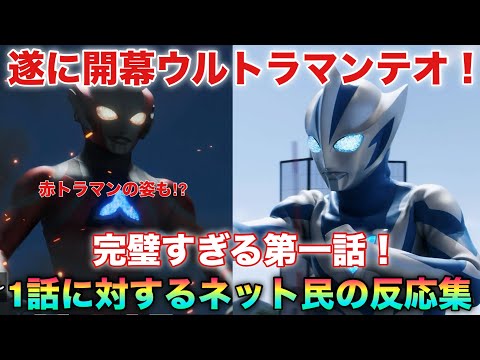
▶ Watch the original YouTube video
Ultraman Teo Episode 1 Analysis: Homeworld Destruction and Combat Evolution
Ultraman Teo’s debut episode opens with an unprecedented narrative choice: the complete destruction of the protagonist’s homeworld. This marks a significant departure from traditional Ultraman series storytelling, presenting a new generation of hero defined by loss, inexperience, and the psychological weight of civilization-scale tragedy.
- What Happened
- Why It Matters
- Background
- Key Points
- Narrative Structure and Character Analysis
- Comparative Analysis: Evolution of Ultraman Protagonists
- Thematic Implications
- Audience Reception and Interpretation
- Predictive Analysis: Series Direction
- Technical and Directorial Achievement
- Broader Industry Context
- Critical Evaluation Framework
- Recommendations for Viewers
- Conclusion
What Happened
Ultraman Teo’s first episode opens with a devastating sequence: the protagonist’s homeworld is systematically destroyed by the hostile force Biarogas. The red-colored Ultraman leader—a seasoned warrior who has already defeated multiple monsters—is overwhelmed by concentrated enemy fire and falls in battle. Teo, an inexperienced warrior, engages a kaiju in combat, struggling with recoil and demonstrating both surprising combat potential and clear tactical inexperience. Witnessing his homeworld’s explosion, Teo escapes to Earth, setting the stage for the series.
Why It Matters
This opening represents a watershed moment in the Ultraman franchise. Rather than introducing the hero after establishing them on Earth, the series confronts viewers immediately with systemic loss and collective tragedy. The narrative choice to depict homeworld annihilation in visceral, concrete detail—rather than through abstract exposition—signals a fundamental shift in how the franchise approaches protagonist psychology and thematic depth. For longtime Ultraman viewers, this represents the culmination of a five-year trend toward depicting heroes as psychologically complex beings shaped by genuine trauma, rather than archetypal champions of justice.
Background
The Ultraman franchise has evolved significantly since 2018’s Ultraman Geed, which introduced father-son conflict as a central narrative element. Ultraman Leo (1974) pioneered the “lost homeworld” concept, but presented it as backstory revealed after the hero’s arrival on Earth. Teo inverts this structure entirely, making homeworld destruction the inciting incident rather than exposition. Director Tsujimoto’s approach synthesizes techniques from predecessors Sakamoto and Taguchi while introducing refined combat choreography that emphasizes physical consequence and character vulnerability. The series represents the franchise’s most direct engagement with themes of loss, displacement, and the psychological burden of being the sole survivor of civilization collapse.
Key Points
- Homeworld Annihilation: Teo’s civilization is systematically destroyed by Biarogas in the opening sequence, with allies falling in succession and no possibility of rescue or return.
- Leadership Loss: The red Ultraman leader—a symbol of experience and authority—is killed by concentrated enemy fire, removing Teo’s mentor figure and support structure in a single, irreversible moment.
- Paradoxical Strength: Teo demonstrates significant combat power despite inexperience, suggesting latent potential constrained by psychological factors and limited tactical training rather than raw ability.
- Physical Vulnerability: Combat choreography emphasizes recoil, fatigue, and the physical toll of energy projection, with Teo using his left hand to stabilize against blast feedback—a detail that communicates both inexperience and the genuine cost of power.
- Directorial Innovation: Director Tsujimoto realizes new combat expression techniques while honoring the visual language established by previous Ultraman directors, advancing the franchise’s technical capabilities.
- Psychological Complexity: Teo is characterized by kindness and restraint even in combat, suggesting that his struggles stem not from insufficient power but from the psychological and emotional burden of his circumstances.
Narrative Structure and Character Analysis
The Homeworld Destruction Sequence
The opening’s relentless depiction of civilization collapse serves a specific narrative function: it establishes that Teo’s world contains no safety net, no possibility of return, and no external salvation. Unlike Ultraman Leo, who lost his homeworld but found refuge on Earth, Teo faces the prospect of losing Earth as well—a doubling of vulnerability that creates psychological stakes unprecedented in the franchise.
The red Ultraman’s death is particularly significant. By establishing this character as a leader through visual language (red coloration, advanced combat techniques, strategic authority), the series creates emotional investment in his presence before immediately negating it. This technique—emphasizing absence through prior establishment—generates deeper emotional resonance than simple exposition of loss.
Combat Choreography as Character Expression
Teo’s struggle against the kaiju communicates multiple truths simultaneously: he possesses genuine combat capability (the monster adapts its tactics to counter his energy attacks), yet his inexperience manifests in physical form (recoil displacement, hesitation in commitment). The left-hand stabilization technique is not decorative—it communicates that Teo’s power has real physical consequences he has not yet learned to manage efficiently.
The kaiju’s rotational defense pattern implicitly confirms Teo’s attack power is substantial; the monster would not require such tactics against a weak opponent. This creates narrative irony: Teo struggles not because he is weak, but because he is psychologically unprepared for the responsibility of power.
Comparative Analysis: Evolution of Ultraman Protagonists
| Series | Year | Central Theme | Protagonist Characteristic | Narrative Approach |
|---|---|---|---|---|
| Ultraman X | 2015 | Light and Darkness Coexistence | Abstract Psychological Conflict | Metaphorical, Viewer-Interpreted |
| Ultraman Geed | 2018 | Paternal Conflict | Family-Based Trauma | Relational, Specific |
| Ultraman Teo | 2024 | Homeworld Loss and Reconstruction | Civilization-Scale Tragedy | Visceral, Immediate, Concrete |
This progression reveals a clear trend: Ultraman protagonists are increasingly defined by specific, concrete trauma rather than abstract struggle. Teo represents the culmination of this evolution—his suffering is not metaphorical or relational, but existential and civilizational.
Thematic Implications
The Paradox of Strength and Helplessness
Teo’s characterization presents a psychological paradox central to the series’ thematic project: genuine power does not guarantee agency or control. The red Ultraman, despite superior experience and demonstrated strength (having defeated multiple monsters), cannot prevent his own death or his civilization’s annihilation. Teo, despite possessing latent power, cannot save his homeworld or his leader.
This structure rejects the traditional superhero narrative in which power correlates with the ability to prevent tragedy. Instead, it suggests that some losses are inevitable regardless of strength—a fundamentally tragic worldview that resonates with mature audiences who have experienced genuine loss.
Kindness as Constraint
Viewer commentary notes that Teo “encourages the monster’s spirit before clenching his fist”—a detail suggesting Teo’s fundamental kindness even in combat. This characterization implies that Teo’s struggles are not failures of power but expressions of his nature. His reluctance, his hesitation, his physical strain—these are not weaknesses to overcome but essential aspects of his identity that will define his journey.
Audience Reception and Interpretation
Social media response to the episode has been overwhelmingly positive, with viewers highlighting specific elements: the unsparing depiction of homeworld destruction, the tragic death of the red Ultraman, the detailed combat choreography, and Teo’s characterization as simultaneously powerful and vulnerable.
Twitter commentary emphasizes emotional resonance: viewers report being moved by the homeworld destruction sequence and the red Ultraman’s fate. YouTube comments focus on technical achievement: the quality of combat choreography and visual storytelling. Forum discussions reveal viewers recognizing Teo’s latent strength while acknowledging his psychological and tactical inexperience.
A minority of viewers raised legitimate questions about the motivation for Biarogas’s attack and the circumstances of homeworld destruction. These gaps in exposition suggest intentional narrative withholding rather than oversight—information likely to be revealed as the series progresses.
Predictive Analysis: Series Direction
Based on established Ultraman narrative patterns and the episode’s thematic setup, several developments appear probable:
Combat Growth Through Experience: Teo will develop tactical sophistication and psychological confidence through extended Earth-based combat, transforming from reluctant survivor to committed warrior.
Psychological Integration of Loss: The red Ultraman’s death will function as a catalyst for Teo’s maturation, similar to how Ultraman Leo’s brother’s death motivated his growth. Teo will transform from “merely kind” to “courageously determined.”
Escalating Threat Revelation: As Biarogas’s objectives become clear, Teo will transition from passive refugee to active protector of Earth, creating new stakes and moral complexity.
Potential Survivor Discovery: Viewer comments suggest possible additional survivors from Teo’s civilization, which could introduce new character dynamics and complicate Teo’s sense of isolation.
Technical and Directorial Achievement
Director Tsujimoto’s approach demonstrates technical mastery while advancing the franchise’s visual language. The combat sequences balance multiple objectives simultaneously: they communicate character psychology (Teo’s inexperience and kindness), establish threat credibility (the kaiju’s tactical adaptation), and showcase technical innovation (refined recoil choreography and energy effect design).
The synthesis of techniques from predecessors Sakamoto and Taguchi while introducing novel elements suggests a director working within established tradition while expanding its possibilities. This balance—honoring franchise heritage while advancing technical capability—is essential for long-running series sustainability.
Broader Industry Context
Teo’s approach reflects broader trends in contemporary tokusatsu and anime production: increased psychological complexity for protagonists, willingness to depict large-scale tragedy without redemptive resolution in the opening episode, and technical sophistication in action choreography that communicates character rather than merely displaying spectacle.
The series positions itself at the intersection of traditional Ultraman franchise values and contemporary storytelling expectations, suggesting that established franchises can evolve without abandoning core identity.
Critical Evaluation Framework
Character Psychological Depth (9/10): Teo’s contradictions—strength paired with inexperience, kindness paired with combat necessity, power paired with helplessness—are expressed with sophistication and nuance.
Narrative Structure Originality (8/10): Opening with homeworld destruction rather than post-arrival exposition represents genuine structural innovation within franchise conventions.
Combat Sequence Quality (8/10): Action choreography serves narrative and character functions rather than existing as spectacle, with physical detail communicating psychological state.
Thematic Universality (9/10): Homeworld loss and displacement resonate across cultural and demographic boundaries, accessing archetypal human experiences of loss and displacement.
Visual Innovation (8/10): Technical advancement in effect design, choreography, and directorial technique represents measurable progress in franchise visual language.
Overall Assessment: 8.4/10
Recommendations for Viewers
Begin with Episode 1: Teo’s character cannot be understood without experiencing the homeworld destruction sequence. Subsequent episodes will reference and build upon this foundation; skipping the premiere would undermine comprehension of Teo’s psychological state and motivation.
Attend to Combat Detail: Watch fight sequences with attention to physical choreography. Teo’s left-hand stabilization, hesitation patterns, and energy management communicate character information as clearly as dialogue.
Contextual Viewing: Ultraman Leo provides thematic precedent for homeworld loss and survival. Ultraman Geed demonstrates the franchise’s contemporary approach to psychological complexity. Ultraman Taiga explores different forms of inherited burden. Viewing these series illuminates Teo’s innovations.
Thematic Patience: The episode raises questions about Biarogas’s motivation and the circumstances of homeworld destruction without providing complete answers. This withholding appears intentional; answers will likely emerge across the series rather than in exposition.
Conclusion
Ultraman Teo’s premiere episode represents a significant moment in the franchise’s evolution. By opening with homeworld annihilation rather than post-arrival establishment, the series commits to depicting loss as the defining condition of its protagonist’s existence. Teo is not a hero who lost his home and found a new one; he is a hero who lost his home and must now protect another’s, creating psychological complexity absent from traditional Ultraman narratives.
The episode’s technical achievement—particularly in combat choreography that communicates character psychology—demonstrates that action sequences can serve narrative functions beyond spectacle. Director Tsujimoto’s synthesis of franchise tradition with contemporary technique suggests the Ultraman series remains capable of meaningful evolution.
For longtime franchise viewers, Teo represents the culmination of five years of increasing psychological sophistication. For new viewers, the episode provides accessible entry into a character defined by universal experiences of loss, displacement, and the struggle to find purpose after tragedy. The series’ success will depend on whether it can sustain this thematic depth across a full season while delivering the action and spectacle franchise audiences expect.