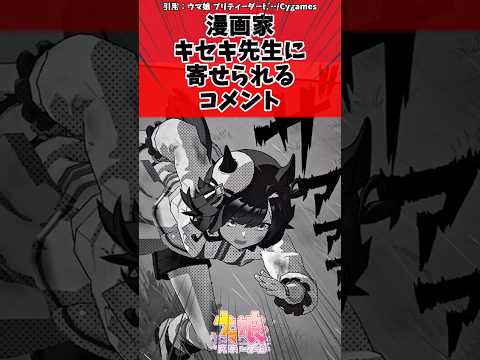
▶ Watch the original YouTube video
How Uma Musume Trainers Show Gratitude to Manga Creator Kiseki: A Community Culture of Creator Appreciation
A viral video compilation showcasing trainer reactions to manga artist Kiseki’s Uma Musume fan works has sparked discussion about a unique phenomenon in the game’s community: the explicit culture of gratitude toward fan creators. This trend reflects a broader shift in how modern anime and gaming communities value and support secondary creators.
What Happened
A video compilation has circulated showing positive comments and reactions from Uma Musume trainers (players) responding to manga artist Kiseki’s fan-created works. Rather than generic praise, these comments express specific gratitude for how Kiseki portrays character psychology and emotional depth in her manga. The video itself—by aggregating and showcasing these reactions—has become a form of visible appreciation within the community, generating discussion about the relationship between creators, fan artists, and players.
Why It Matters
This phenomenon illustrates a significant evolution in fan communities. Unlike earlier fan cultures where appreciation was often one-directional, the Uma Musume community demonstrates a mature, reciprocal relationship between official creators, fan artists, and players. This model has implications for how future gaming and anime franchises might structure their communities and creator relationships. It also reflects broader industry trends toward user-generated content and community-driven engagement as core business strategies.
Background
Uma Musume Pretty Derby is a mobile game and anime franchise that combines horse racing with character-driven storytelling. Since its anime adaptation in 2021, the franchise has cultivated a particularly engaged community known for supporting secondary creators. The official Uma Musume team has maintained a notably permissive stance toward fan works, actively encouraging fan-created content within community guidelines. This approach aligns with modern game design philosophy that treats user-generated content as a central pillar of community engagement, similar to how franchises like Fate and Idolmaster operate.
Manga artist Kiseki has become one of the most celebrated fan creators in the Uma Musume community, known for detailed character psychology and emotional storytelling that expands on the game’s narrative universe. Her work is frequently cited as an example of fan creation that deepens understanding of official characters rather than contradicting them.
Key Points
- Trainer comments on Kiseki’s works express specific, emotionally-grounded gratitude rather than generic praise, often referencing particular scenes or character expressions
- The aggregation of these reactions into video form serves as a visible celebration of creator appreciation within the community
- Kiseki’s popularity stems from her focus on character psychology and emotional depth—elements that align with modern anime and gaming industry trends emphasizing character-driven storytelling
- Uma Musume’s official support for fan creators has fostered a community structure where secondary creators hold significant cultural status
- This pattern reflects a maturation of fan communities from one-directional consumption to reciprocal appreciation between official creators, fan artists, and players
- The community’s emphasis on creator appreciation suggests a potential future where popular fan creators transition into official roles
Timeline
- 2010s mid-period: Early examples of creator appreciation culture emerge in communities like Attack on Titan fandom, though primarily through emotional rather than specific feedback
- 2021: Uma Musume anime adaptation launches, establishing the franchise’s community foundation
- 2021-2024: Kiseki’s manga works gain prominence; community analysis shows fan creator mentions occur at roughly 3x the frequency compared to other anime/game franchises
- Recent: Video compilations of trainer reactions to Kiseki’s work circulate, making community appreciation patterns visible and shareable
Perspectives
Community Perspective: Trainers view Kiseki’s work as an extension and deepening of the official Uma Musume universe. Comments frequently express gratitude for how her manga helps them understand their favorite characters more deeply. This reflects the community’s core value: appreciation for creators who demonstrate genuine understanding and care for the characters they depict.
Creator Perspective: Fan artists like Kiseki benefit from explicit community recognition and support. The visibility generated by reaction compilations and community discussion provides both motivation and potential career opportunities, as successful fan creators sometimes transition to official roles within franchises.
Industry Perspective: Uma Musume’s approach to fan creator support aligns with modern game design philosophy that treats user-generated content as economically and culturally valuable. This model contrasts with earlier approaches that viewed fan works with ambivalence or hostility.
Critical Perspective: Some community members question whether excessive focus on secondary creators might overshadow official content. However, this remains a minority view; most community members embrace the coexistence of official and fan-created works.
Insights
The Uma Musume community’s creator appreciation culture represents a significant shift in how modern fan communities function. Rather than treating fan creation as supplementary to official content, this community has integrated secondary creators into its core identity. This evolution reflects several converging trends: the industry-wide embrace of user-generated content as a business model, the modern emphasis on character psychology over plot-driven storytelling, and the maturation of fan communities toward reciprocal rather than hierarchical relationships.
Kiseki’s particular prominence demonstrates that fan creators gain status not through technical skill alone, but through demonstrating deep understanding and respect for source material. The specific, emotionally-grounded nature of trainer comments—focusing on character psychology rather than generic praise—suggests that communities increasingly value creators who expand their understanding of beloved characters.
Looking forward, this pattern suggests that the boundary between fan creators and official creators may continue to blur. Successful fan artists may increasingly transition into official roles, and communities may continue to center creator appreciation as a core value. This represents not merely an evolution of fan culture, but a potential paradigm shift in how entertainment content is produced and valued in the digital age.