▶ Watch the original YouTube video
Why The Fable Parts 2 and 3 Lost Their Appeal: A Structural Analysis
After 15 years of anime analysis, a professional editor examines why The Fable’s acclaimed first part gave way to declining reception in subsequent installments. The core issue lies not in reduced quality, but in the loss of narrative tension, compelling antagonists, and the comedic balance that defined the original story.
What Happened
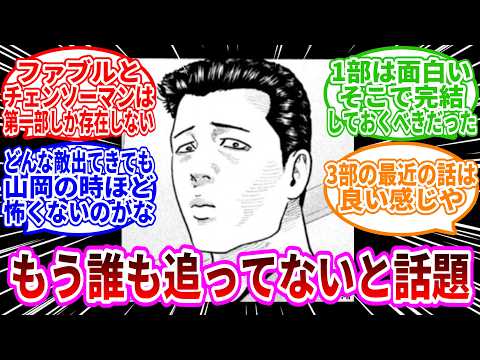
The Fable, a manga series about an assassin learning to live as an ordinary person, achieved critical acclaim with its first installment. However, Parts 2 and 3 experienced a significant drop in audience reception. Fan communities widely express the sentiment that “only Part 1 exists,” indicating a stark divergence in quality perception between the original narrative arc and its sequels.
Why It Matters
The Fable’s trajectory offers valuable lessons about narrative continuation and creative sustainability. When a story achieves exceptional completion, sequels face an inherent challenge: they must either provide genuine narrative evolution or risk appearing redundant. The series’ struggle reflects a broader pattern in serialized storytelling, where the pressure to continue a successful franchise can undermine the very elements that made the original compelling. Understanding these structural failures helps both creators and audiences recognize the difference between genuine continuation and forced extension.
Background
The Fable Part 1 follows Satou, a professional assassin who abandons his career to experience ordinary life. The narrative tension derives from the fundamental contrast between his lethal profession and his desire for normalcy—a duality that drives character development and creates compelling dramatic moments. The first installment successfully resolves Satou’s core internal conflict, establishing him as a character who accepts his past while embracing his humanity.
Part 2 begins with Satou returning to his hometown, ostensibly to live the ordinary life he sought. Part 3 continues this domestic narrative thread. However, this shift in setting and premise fundamentally altered the story’s foundational appeal.
Key Points
- The Curse of Perfection: Part 1’s exceptional quality created an impossibly high comparative standard. Subsequent installments inevitably suffer from direct comparison rather than being evaluated on independent merit.
- Loss of Central Conflict: Once Satou achieves his goal of becoming human, the primary narrative tension dissolves. Parts 2 and 3 lack a comparable driving force for character development.
- Antagonist Degradation: Part 1’s enemies served as catalysts for Satou’s growth and possessed human complexity. Later antagonists function merely as obstacles without comparable depth or thematic relevance.
- Comedic Balance Collapse: The original series balanced dark subject matter with humor derived from contrasting an assassin’s skills against mundane problems. Parts 2 and 3 shift toward heavier drama, losing this distinctive tonal signature.
- Narrative Stagnation: The decision to ground the story in a single location eliminated opportunities for fresh scenarios. A “road movie” approach could have maintained narrative momentum while preserving the original’s core appeal.
- Timing and External Factors: Part 2’s release during pandemic lockdowns presented a strategic misstep—audiences seeking escapism received a story about characters unable to venture outside, reducing emotional resonance.
Structural Analysis: Why Parts 2 and 3 Failed
The Perfection Paradox
Part 1’s completion of Satou’s character arc—from emotionless killer to fully realized human—represents a narrative achievement. However, this success creates a structural problem for continuation. The character has already answered his fundamental question: “Can I be human?” With that question resolved, subsequent stories must establish new questions of comparable weight. Parts 2 and 3 fail to do so convincingly.
This mirrors the reception pattern seen in Attack on Titan, where the first season’s shocking revelations and constant danger created expectations that later seasons struggled to match. The comparison becomes inevitable and often unfavorable.
The Antagonist Problem
Part 1 featured enemies like Yamao, who served dual purposes: as obstacles and as mirrors reflecting Satou’s transformation. These antagonists possessed clear motivations, human vulnerability, and thematic relevance to the protagonist’s journey.
By contrast, Part 2’s enemies appear functionally interchangeable. They lack personal history, comprehensible motivation, or meaningful connection to Satou’s character arc. Audiences struggle to understand why these conflicts matter beyond plot mechanics. This represents a critical failure in character design—antagonists must be understood and evaluated by audiences, not merely defeated by protagonists.
The Loss of Tonal Identity
Part 1’s distinctive appeal stemmed from its tonal balance: a deadly professional navigating absurdly ordinary situations. This juxtaposition generated both humor and pathos. The comedy arose not from jokes, but from the fundamental incongruity of the premise.
Parts 2 and 3 abandon this balance in favor of conventional drama. While drama is narratively easier to construct than comedy, this shift eliminates the series’ unique identity. The story becomes a standard action narrative rather than a genre-hybrid exploration of identity and belonging.
The Setting Mistake
When Satou returns to his hometown, the creative team faced a critical choice: maintain narrative momentum through constant movement (a road narrative) or establish a fixed location. The decision to anchor the story in one place eliminated the natural story generation that comes from new environments, new characters, and new situations.
A road narrative would have preserved the original’s appeal—Satou encountering ordinary life in varied contexts—while providing structural freshness. Instead, the fixed setting led to pacing complaints and narrative stagnation.
Perspectives
Fan Community View: The overwhelming consensus frames Parts 2 and 3 as unnecessary continuations. The phrase “only Part 1 exists” reflects not dismissal but protective affection—fans preserve their memory of the original by mentally excluding the sequels.
Narrative Analysis Perspective: From a structural standpoint, Parts 2 and 3 represent a common creative failure: the inability to identify what made the original work and what new story could justify continuation. The creative team appears to have confused “continuing the character” with “continuing the story,” a fundamental distinction.
Redemption Signals: Some viewers report that Part 3’s recent chapters show improvement, suggesting the creative team recognized the problems and attempted corrections. This indicates awareness of the issues, though whether corrections sufficiently address structural problems remains debated.
Practical Guidance: How to Approach The Fable
For New Readers: Experience Part 1 as a complete, standalone work. Its narrative arc is fully realized and requires no continuation. The story ends at a natural, satisfying conclusion.
For Those Considering Parts 2 and 3: Approach them as separate works rather than sequels. This mental reframing allows appreciation of their individual merits without constant comparison to the original. Additionally, focus on character relationships—particularly the dynamic between Satou and supporting characters—which provide continuity and occasional moments of the original’s charm.
Comparative Study: Reading The Fable alongside works like Assassination Classroom or Haikyu!! illuminates what distinguishes successful character-driven narratives. These comparisons reveal how The Fable Part 1 achieved its excellence and why Parts 2 and 3 diverged from those principles.
Insights
The Fable’s trajectory demonstrates that commercial success and narrative completion are not synonymous. A story can be so thoroughly completed that continuation becomes structurally impossible without fundamental reinvention. The series’ decline is not a failure of execution but a failure of conception—the creative team did not identify what new story justified continuation after Part 1’s resolution.
The loss of the original’s tonal balance, the degradation of antagonist complexity, and the removal of narrative tension through setting changes all stem from a single root cause: the absence of a new central question compelling enough to drive the narrative forward. Part 1 asked, “Can an assassin become human?” Parts 2 and 3 never posed an equally compelling question.
For future creators, The Fable serves as a cautionary tale about the dangers of continuation without reinvention. The most successful sequels either provide genuine narrative evolution (as seen in JoJo’s Bizarre Adventure, where each part introduces fundamentally new premises) or acknowledge their limitations and conclude gracefully.
Ultimately, The Fable Part 1 will endure as a complete masterwork. Parts 2 and 3, despite their flaws, may eventually find appreciation among audiences willing to engage with them on their own terms rather than as extensions of the original. However, the series’ legacy will remain anchored to its first installment—a testament to the power of a perfectly realized narrative arc.