▶ Watch the original YouTube video
Why Shanks’ ‘I Can’t Laugh Yet’ Scene Became One Piece’s Most Brilliant Comedy Moment
A pivotal scene featuring Shanks desperately trying to suppress his laughter has captivated One Piece fans worldwide, demonstrating the series’ masterful ability to balance character gravitas with comedic timing. The moment reveals how skilled voice acting and narrative tension can elevate a simple gag into a character-defining scene that deepens our understanding of one of the story’s most important figures.
What Happened
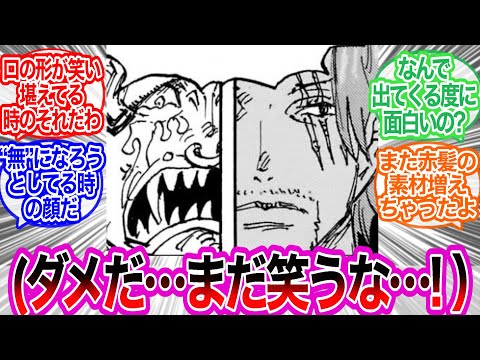
In a recent One Piece episode, Shanks—the Red-Haired Pirates captain and one of the series’ most pivotal characters—is shown struggling to contain his laughter, repeatedly telling himself “I can’t laugh yet.” The scene captures the character in a moment of vulnerability, desperately fighting to maintain composure while something clearly amuses him. This brief but impactful moment has generated widespread discussion among fans, spawning countless reactions and analyses across social media platforms including Twitter, YouTube, and online forums.
Why It Matters
This scene represents a significant achievement in anime storytelling: the ability to make an important, serious character genuinely funny without compromising their narrative weight or credibility. Shanks is not a minor character—he is the man who set Luffy on his path to becoming a pirate and has remained a crucial figure throughout the entire series. For such a character to deliver comedy effectively requires exceptional execution. The scene demonstrates One Piece’s sophisticated understanding of comedic timing and character development, showing that humor and gravitas are not mutually exclusive. This approach has become increasingly central to the series’ recent direction, blending serious moments with unexpected comedic beats that enhance rather than diminish the overall narrative impact.
Background
Shanks first appeared in One Piece’s opening chapter, where he gave his straw hat to a young Luffy, fundamentally shaping the protagonist’s destiny. Throughout the series, Shanks has been portrayed as a composed, responsible leader and a figure of immense power and influence. His appearances are typically marked by tension and significance, as his involvement in any situation carries major narrative weight. This established characterization makes his sudden struggle with laughter particularly striking—it reveals a human side to a character often seen as nearly perfect, adding depth and relatability to his persona. The scene occurs during a moment when viewers would typically expect serious developments, making the comedic beat all the more unexpected and effective.
Key Points
- Character Integrity Preserved: Shanks maintains his dignity and importance as a character while delivering genuine comedy, proving that humor and character gravitas can coexist effectively.
- Voice Acting Excellence: The scene’s success hinges on the voice actor’s ability to convey both the surface-level struggle to suppress laughter and the underlying tension of whatever serious situation prompted this reaction.
- Psychological Impact Through Contrast: The juxtaposition of a serious character in a comedic situation creates a psychological tension that amplifies the humor through the principle of “forbidden laughter”—the audience laughs harder because the character is trying not to.
- Narrative Sophistication: One Piece demonstrates its evolution by weaving comedy into serious moments rather than compartmentalizing them, creating a more nuanced viewing experience.
- Fan Resonance: The scene has generated overwhelmingly positive responses across multiple platforms, with fans praising both the comedic execution and the humanizing effect on Shanks’ character.
- Broader Series Trend: This scene exemplifies One Piece’s recent direction toward blending tonal elements, suggesting a deliberate creative choice to deepen character complexity through unexpected moments.
Timeline
- Episode Broadcast: Scene aired during recent One Piece anime episodes, immediately generating social media discussion.
- Social Media Response: Twitter, YouTube, and forum discussions proliferated within hours of broadcast, with fans sharing reactions and analyses.
- Ongoing Discussion: The scene continues to generate engagement as fans revisit and analyze the moment’s technical and narrative elements.
Perspectives
Fan Interpretation: Across social media platforms, viewers have expressed that this scene humanizes Shanks in a meaningful way. Twitter users frequently noted that seeing Shanks struggle to maintain composure made him feel more relatable and real. YouTube commenters highlighted that this moment revealed a previously unseen vulnerability in a character typically portrayed as nearly infallible. Many fans appreciated discovering this “human side” to a character they’ve followed for years.
Technical Analysis: Animation and voice acting professionals have praised the scene’s execution. The voice actor’s performance is particularly noteworthy—conveying not just the struggle to suppress laughter but also hinting at some underlying serious situation through vocal tension. This layered performance prevents the scene from becoming a simple gag, instead creating a complex emotional moment that functions on multiple levels simultaneously.
Narrative Significance: Some analysts view this scene as foreshadowing or hinting at significant upcoming plot developments. The fact that Shanks is struggling to maintain composure suggests something important is happening or about to happen, adding narrative intrigue to what might otherwise be purely comedic.
Comparative Context: When compared to similar moments in other anime series, this scene stands out for its effectiveness. While other shows occasionally attempt to make serious characters funny, few achieve the balance that One Piece demonstrates here. Series like Gintama have mastered this technique, and One Piece’s success with this scene suggests the series is operating at a similar level of comedic sophistication.
Insights
This scene illuminates several important aspects of One Piece’s evolution as a storytelling medium. First, it demonstrates that character depth and humor are complementary rather than contradictory elements. By showing Shanks’ struggle to maintain composure, the series simultaneously reinforces his importance (whatever is happening is serious enough that he must suppress his reaction) while making him more human and relatable.
Second, the scene reflects a broader trend in One Piece’s recent direction: the deliberate blending of tonal elements. Rather than separating serious and comedic moments into distinct scenes, the series increasingly weaves them together, creating moments that exist in the space between comedy and drama. This approach generates more complex emotional responses from viewers, who find themselves laughing while simultaneously sensing underlying tension.
Third, the scene’s success underscores the importance of voice acting and direction in anime. The moment works not because of what happens, but because of how it’s performed. The voice actor’s ability to convey multiple emotional layers simultaneously—amusement, effort to suppress it, and underlying seriousness—elevates what could have been a simple gag into a character moment.
Finally, the overwhelming positive response suggests that audiences are increasingly sophisticated in their appreciation of nuanced comedy. Fans are not simply laughing at the surface-level humor; they’re responding to the technical execution, the character implications, and the narrative context. This indicates that One Piece’s audience values and recognizes quality storytelling that respects both character integrity and comedic effectiveness.
The scene raises intriguing questions about what situation prompted Shanks’ struggle to maintain composure, suggesting that the narrative payoff for this moment may come in future episodes. This combination of immediate comedic satisfaction with longer-term narrative intrigue exemplifies sophisticated storytelling that keeps audiences engaged on multiple levels.