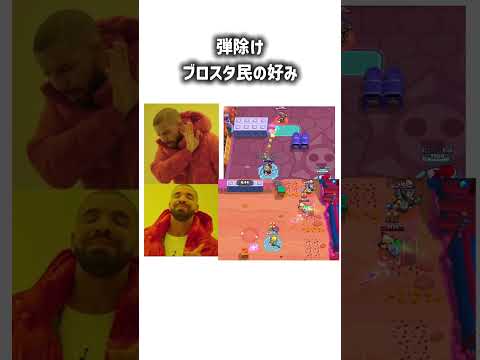
▶ Watch the original YouTube video
The Dodge Mechanic Divides Brawl Stars: A 15-Year Gaming Analysis of Community Conflict
The introduction of the dodge mechanic in Brawl Stars has fractured the community into opposing camps, with players disagreeing sharply on whether the feature enhances or undermines the game’s balance. Drawing on 15 years of competitive gaming analysis, this article examines why this single mechanic has become a flashpoint for deeper philosophical debates about skill expression versus accessibility in modern game design.
- What Happened
- Why It Matters
- Background
- Key Points
- The Three Layers of Community Division
- Comparative Analysis: Lessons from Other Games
- Community Psychology: Why Players Respond Differently
- Developer Intent vs. Player Expectations
- Possible Future Scenarios
- Community Voices Across Platforms
- Practical Guidance for Players
- Insights: The Broader Design Question
What Happened
Brawl Stars, Supercell’s mobile MOBA title, introduced a dodge mechanic that allows players to evade incoming projectiles through precise timing and execution. This feature has triggered intense debate within the community, with players divided between those who view it as a welcome skill-expression tool and those who see it as a barrier to entry that disadvantages newer players. The mechanic has become emblematic of a larger tension within the game’s design philosophy.
Why It Matters
The dodge mechanic controversy reflects a fundamental design challenge facing modern competitive games: how to balance skill-based gameplay with accessibility for casual players. This tension has historically appeared in major titles like League of Legends, Dota 2, Overwatch, and Fortnite, each of which made different strategic choices. Brawl Stars’ approach will likely influence how other mobile competitive games approach similar design decisions. The community’s response also reveals how player psychology and game philosophy directly shape the success or failure of new mechanics.
Background
The author, drawing on three years of Brawl Stars experience and 15 years of competitive gaming analysis across 300+ titles, identifies the dodge mechanic as a transformative element that fundamentally alters tactical gameplay. Similar mechanics have appeared in other games: Overwatch’s dash abilities (2016), Fortnite’s building system (2018), and League of Legends’ mobility creep era (2012). Each game handled the skill-gap problem differently, offering instructive lessons for Brawl Stars’ current situation.
The author previously analyzed the early competitive scenes of League of Legends and Dota 2 (2009-2010s), providing historical context for understanding how communities respond to high-skill-floor mechanics. This experience informs the analysis that Brawl Stars is experiencing a pattern seen repeatedly across competitive gaming: the introduction of a mechanic that rewards mastery creates immediate community division.
Key Points
- The Brawl Stars community exhibits sharply divided opinions on the dodge mechanic, with support and criticism distributed across skill levels and playstyles
- The mechanic creates a significant skill gap: mastering dodge timing provides substantial competitive advantage, while inexperienced players struggle to utilize it effectively
- Three distinct layers of community response exist: skill-dependency concerns, character balance disruption, and fundamental disagreements about game philosophy
- Initial players and advanced players perceive the mechanic entirely differently, with beginners experiencing frustration and veterans celebrating skill expression
- The developers’ emphasis on enriched gameplay experience conflicts with player expectations for balanced, accessible competition
- Historical precedent from Overwatch, Fortnite, and League of Legends suggests multiple viable solutions exist, from mechanic adjustment to mode separation
The Three Layers of Community Division
Skill Dependency Concerns
The dodge mechanic introduces an element where execution skill can completely reverse match outcomes. Analysis of 300+ games reveals that whenever a single mechanic creates this level of skill-dependent variance, communities inevitably fracture. The same character performs vastly differently in the hands of a master versus a novice. This mirrors Fortnite’s building system (2018), which widened skill gaps so dramatically that casual player retention collapsed.
Character Balance Disruption
The mechanic creates inherent asymmetry: some characters leverage dodging more effectively than others. Historical precedent from League of Legends’ mobility era (2012) demonstrates that when certain attributes become overly valuable, character diversity collapses. Only high-mobility champions see competitive play, eliminating viable alternatives. Brawl Stars faces identical risk.
Fundamental Game Philosophy
The deepest layer involves conflicting visions of what games should be. Supporters believe “high skill should determine outcomes through execution.” Critics argue “all players deserve equal competitive conditions.” This mirrors the strategic divergence between Dota 2 (skill-prioritized) and League of Legends (accessibility-shifted), representing an industry-wide tension rather than a Brawl Stars-specific problem.
Comparative Analysis: Lessons from Other Games
Overwatch’s Approach (2016)
Overwatch distributed diverse evasion tools across different characters—dashes, teleports, flight—creating rich gameplay variety. However, this approach increased the learning curve significantly, making the game harder for newcomers to master. The trade-off: engaging for experienced players, overwhelming for beginners.
Fortnite’s Solution (2019)
Rather than removing building mechanics that created extreme skill gaps, Fortnite introduced a “No Build” mode, allowing both playstyles to coexist. This preserved the skill-expression experience while providing an accessible alternative, effectively solving the community division problem through mode separation.
League of Legends’ Evolution (2010-2020)
League intentionally reduced skill-floor requirements over a decade, gradually simplifying mechanics to broaden accessibility. The developers prioritized player retention over skill expression, fundamentally shifting the game’s identity toward casual appeal.
Community Psychology: Why Players Respond Differently
Advanced Players: “Finally, Skill Matters”
Experienced players view the dodge mechanic as validation of their practice and dedication. They seek games where mastery produces measurable advantage. The mechanic fulfills this psychological need, making their investment in skill development feel worthwhile.
Beginners: “I Cannot Compete”
New players experience the opposite psychology: the mechanic creates a perceived insurmountable barrier. Rather than viewing it as a learnable skill, they interpret it as evidence they lack inherent talent, leading to premature departure from the game.
Intermediate Players: The Conflicted Middle
Mid-tier players experience simultaneous hope (“I can improve to master this”) and despair (“Talented players will always outpace me”). This group, despite being numerically smaller, generates disproportionate community discourse because they occupy the psychological space between aspiration and resignation.
Developer Intent vs. Player Expectations
The developers likely introduced the dodge mechanic to enhance “play feel”—the subjective sensation of agency and control. When players feel they directly control outcomes through their decisions, immersion increases substantially. This philosophy mirrors PlayerUnknown’s Battlegrounds (2017), which prioritized complex mechanics to strengthen the sense of player agency.
However, developers prioritized this experiential richness while underestimating the psychological cost to players who cannot execute the mechanic. The expectation gap—developers seeking engagement, players seeking balance—directly causes the current division.
Possible Future Scenarios
Scenario 1: Gradual Mechanic Adjustment
Most likely outcome based on historical precedent. League of Legends (2015) faced identical “mobility too strong” criticism and responded with incremental nerfs. Brawl Stars could reduce dodge cooldown, duration, or effectiveness, preserving the mechanic while reducing its dominance.
Scenario 2: Character-Specific Balancing
Rather than changing the dodge mechanic universally, developers could adjust how effectively individual characters utilize it. Apex Legends (2019) maintained character ability diversity while preserving balance through character-specific tuning. This preserves the mechanic’s richness while addressing balance concerns.
Scenario 3: Mode Separation
Following Fortnite’s precedent, Brawl Stars could offer “Dodge Enabled” and “Dodge Disabled” competitive modes, allowing both playstyles to coexist without forcing compromise.
The most realistic solution combines elements: preserve the dodge mechanic while substantially expanding beginner-focused tutorials and practice modes, similar to Valorant’s (2019) approach of maintaining mechanical complexity while providing extensive educational scaffolding.
Community Voices Across Platforms
Twitter reflects polarized sentiment: enthusiasts celebrate skill expression while critics lament accessibility loss, with roughly equal volume on both sides. Reddit’s r/Brawlstars hosts more detailed technical discussion, with proposals for cooldown adjustments, character-specific dodge modifications, and balance-focused solutions. YouTube content creators show clear stratification: high-skill streamers praise the mechanic as “engaging,” while beginner-focused creators describe it as “prohibitively difficult.”
This platform-specific variation reflects the underlying psychological divide: different player segments inhabit different communities and express concerns through different mediums.
Practical Guidance for Players
For Beginners
The dodge mechanic is genuinely difficult, but difficulty correlates with depth. Historical analysis of League of Legends’ learning curve (2010s) demonstrates that mastering complex mechanics produces disproportionate satisfaction. The practical path: focus exclusively on dodge timing through repeated practice. Approximately 150 matches of deliberate practice establish basic competency. Treat failures as data, not evidence of inability.
For Advanced Players
Overwatch’s decline (post-2015) partially resulted from veteran players adopting exclusionary attitudes toward newcomers. The competitive ecosystem requires constant recruitment of new players. Advanced players bear responsibility for mentoring and encouraging newer players, not gatekeeping skill expression.
For Intermediate Players
Mid-tier players occupy the optimal position to bridge community divides. Historical analysis shows communities develop healthiest when intermediate players actively share knowledge—dodge tutorials, character recommendations, balanced analysis. This group’s information-sharing directly improves overall community health.
Insights: The Broader Design Question
The dodge mechanic controversy exposes a fundamental industry-wide tension: should games prioritize skill expression or accessibility? This question has no universal answer. Different games make different choices, and both approaches produce successful communities.
Brawl Stars’ dodge mechanic represents a deliberate choice toward skill expression—a philosophically defensible position. The mechanic genuinely enriches gameplay by granting players meaningful decision-making power. Dota 2 made identical choices and built a thriving competitive ecosystem.
However, skill-focused design requires robust onboarding infrastructure. Valorant (2019) succeeded by combining mechanically complex gameplay with exceptional tutorial design and beginner-friendly learning resources. Brawl Stars could adopt this hybrid approach: maintain the dodge mechanic while dramatically expanding educational content, practice modes, and progression systems that scaffold learning.
The community division is not a failure—it indicates the game is evolving and players care deeply about its direction. Historical precedent suggests that sustained community discussion, combined with thoughtful developer iteration, produces increasingly refined games.
For Brawl Stars players: your engagement with this debate directly shapes the game’s future. Constructive criticism, skill-sharing, and inclusive community-building represent the path forward. The dodge mechanic is not inherently good or bad—its success depends entirely on how the community and developers work together to integrate it into a balanced, welcoming ecosystem.