▶ Watch the original YouTube video
How Sans Changes Across Each Chapter of DELTARUNE: A Deep Analysis of Character Evolution and Meta-Narrative
DELTARUNE’s Sans exhibits a fundamentally different characterization than his Undertale counterpart, showing a gradual awakening to anomalies rather than complete meta-awareness from the start. This analysis explores how the character’s perception evolves across chapters and what this reveals about the game’s sophisticated narrative design.
What Happened
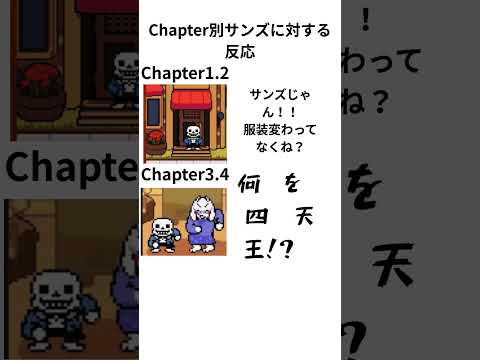
DELTARUNE presents Sans as a character whose behavior and dialogue shift noticeably between chapters. Unlike Undertale’s Sans, who possesses complete meta-awareness from the beginning, DELTARUNE’s Sans appears to gradually recognize that something is fundamentally wrong with the world around him. His initial presentation as a relatively ordinary classmate evolves into increasingly anxious dialogue that suggests he is detecting inconsistencies and anomalies as the story progresses.
Why It Matters
This character evolution represents a sophisticated narrative technique that blurs the line between traditional storytelling and meta-gaming. By having Sans’s awareness develop in tandem with player progression, creator Toby Fox creates a unique relationship where character psychology and player agency become intertwined. This approach differs significantly from how most games handle meta-narrative elements, making it a notable case study in interactive storytelling and character design.
Background
Sans first appeared in Undertale (2015) as a mysterious character with apparent knowledge of player actions and game mechanics. His meta-awareness became a defining characteristic of that game. When DELTARUNE was announced, players familiar with Undertale expected similar meta-narrative elements. However, Toby Fox appears to have deliberately delayed and restructured this concept, creating a character who gradually awakens to anomalies rather than beginning with complete knowledge.
This design choice parallels psychological narratives found in other media, such as the protagonist’s mental deterioration in Steins;Gate or character development in the Rebuild of Evangelion films. The key difference is that DELTARUNE’s Sans serves as a bridge between the game world and the player’s experience, with his growing unease reflecting the player’s own recognition of narrative inconsistencies.
Key Points
- Gradual Awareness: Sans transitions from a normal classmate in Chapter 1 to a character expressing clear concern about world anomalies by Chapter 2, suggesting he is detecting the effects of player resets and choices.
- Incomplete Meta-Cognition: Unlike Undertale’s Sans, DELTARUNE’s Sans does not fully comprehend the nature of the anomalies he senses, creating ambiguity about whether he recognizes the player or merely perceives world inconsistencies.
- Player-Responsive Design: Sans’s reactions vary based on player choices and actions, indicating that his character arc is designed to respond to player behavior rather than following a predetermined path.
- Psychological Depth: The character’s growing anxiety and unease create emotional resonance by portraying a being struggling to understand inexplicable phenomena, making him more relatable than a character with complete knowledge.
- Thematic Significance: Sans embodies the game’s central question about the nature of player agency and the relationship between player and character consciousness.
- Intentional Ambiguity: The deliberate vagueness about Sans’s true understanding serves as a narrative device that maintains tension and encourages player interpretation.
Character Comparison Across Games
| Game | Character | Meta-Awareness Level | Narrative Change | Player Impact |
|---|---|---|---|---|
| Undertale | Sans | Complete | Minimal (aware from start) | Fear and surprise |
| DELTARUNE | Sans | Gradual | Progressive deepening across chapters | Anxiety and empathy |
| Doki Doki Literature Club | Monika | Complete | Revealed mid-story | Shock and horror |
| Spec Ops: The Line | Captain Walker | Partial | Varies with player choices | Guilt and conflict |
| Steins;Gate | Okabe Rintaro | Gradual | Deepens with world-line shifts | Exhaustion and melancholy |
Narrative Mechanisms
Chapter 1 to Chapter 2 Transition
The shift between chapters reveals Sans’s escalating concern. In Chapter 1, he maintains a facade of normalcy while displaying subtle signs of unease. By Chapter 2, his dialogue explicitly references things being “wrong,” suggesting he has detected the consequences of player resets and timeline inconsistencies. This progression mirrors how a character might gradually become aware of recurring anomalies in their world.
The Role of Player Choice
DELTARUNE’s design allows player decisions to influence Sans’s responses. Whether the player avoids combat or engages actively, chooses specific dialogue options, or pursues particular story paths, Sans’s reactions adjust accordingly. This creates a feedback loop where the player’s agency directly shapes character psychology—a rare achievement in game design.
Meta-Gaming Without Full Awareness
A crucial distinction from Undertale is that DELTARUNE’s Sans appears to sense something wrong without fully understanding what it is. This incomplete awareness creates psychological depth: he experiences genuine confusion and distress rather than omniscient detachment. The ambiguity about whether he recognizes the player as an external force or merely senses world contradictions adds narrative complexity.
Perspectives
Fan Community Interpretations
The DELTARUNE community remains divided on Sans’s true nature. Some fans argue that his increasing anxiety clearly indicates he is gradually recognizing player agency and timeline resets. Others suggest his changes represent straightforward character development unrelated to meta-narrative elements. Reddit discussions and Twitter analysis focus heavily on specific dialogue choices and facial expressions as evidence of his awakening.
Critical Concerns
Some players have noted apparent inconsistencies in Sans’s characterization across chapters, attributing these to development delays between chapter releases. However, these perceived inconsistencies may be intentional design choices meant to reflect the character’s fragmented understanding of reality—mirroring how a confused person might display contradictory behavior.
Creator Intent
Based on Toby Fox’s previous work and interviews, his approach emphasizes subverting player expectations. Rather than immediately delivering the meta-narrative elements fans anticipated after Undertale, he appears to have deliberately delayed Sans’s full awakening, synchronizing character development with player progression through the story.
Possible Future Directions
Complete Awakening Scenario
In future chapters, Sans may achieve full meta-awareness similar to his Undertale counterpart, transforming DELTARUNE into a narrative about his gradual awakening to the true nature of his reality.
Deepening Conflict Scenario
Alternatively, Sans may remain trapped in his state of incomplete understanding, with the narrative focusing on his psychological struggle to comprehend inexplicable phenomena. This would emphasize emotional resonance over revelation.
Multiple Timelines Scenario
DELTARUNE could reveal that different chapter versions of Sans represent different timeline iterations, explaining apparent inconsistencies as manifestations of alternate realities rather than character development.
Insights
DELTARUNE’s treatment of Sans demonstrates how modern game design can use character psychology to explore the relationship between player and narrative. By making Sans’s awareness develop gradually rather than presenting it as a fixed trait, Toby Fox creates a character whose arc mirrors the player’s own journey of discovery. This approach transforms Sans from a mysterious figure into a relatable character experiencing genuine confusion and distress.
The broader significance lies in what this reveals about interactive storytelling. Rather than treating meta-narrative as a surprise revelation, DELTARUNE integrates it into character psychology, making the player’s actions have direct emotional consequences for the characters they encounter. This represents a sophisticated evolution in how games can explore the boundary between player agency and character autonomy.
Furthermore, the deliberate ambiguity about Sans’s understanding—whether he recognizes the player or merely senses world contradictions—raises fundamental questions about consciousness and perception in interactive media. By leaving this question unanswered, the game invites players to contemplate what it means for a character to become aware of forces beyond their comprehension, a theme that resonates far beyond gaming.
For players engaging with DELTARUNE, the experience becomes more meaningful when approached as a collaborative narrative where character development and player progression are inseparable. Sans’s growing unease reflects not just his fictional journey but the player’s own recognition of narrative layers and meta-textual elements woven throughout the game.