▶ Watch the original YouTube video
Which Prince Should Rule Kakin? Analyzing the Succession War’s Impossible Choice in Hunter x Hunter
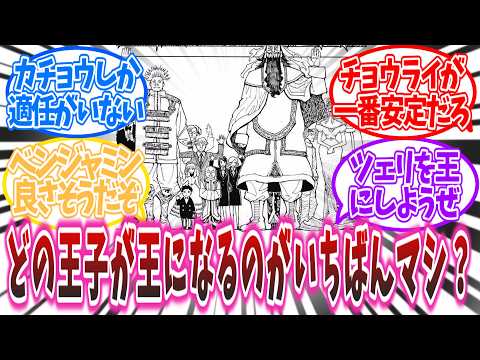
The Kakin Kingdom succession arc in Hunter x Hunter presents fans with a deceptively simple question: which of the thirteen princes would make the least terrible ruler? This philosophical dilemma has sparked intense debate across social media, revealing that the story’s true power lies not in finding a “correct” answer, but in forcing readers to confront the impossibility of choosing between competing evils.
What Happened
The Kakin Kingdom succession war arc introduces thirteen royal princes competing for the throne, each possessing distinct personalities, abilities, and moral failings. Rather than presenting a clear protagonist and antagonist, the narrative deliberately constructs a scenario where every candidate for rulership carries significant moral compromises. This structural choice has generated widespread discussion among fans attempting to determine which prince represents the “least bad” option for the kingdom’s future.
Why It Matters
The succession war arc represents a significant evolution in shonen manga storytelling. By abandoning traditional good-versus-evil frameworks, Hunter x Hunter engages with mature political philosophy and ethical complexity rarely seen in the genre. The arc forces readers to grapple with real-world governance questions: How do citizens choose leaders when no ideal candidate exists? What constitutes the “lesser evil” in politics? This thematic sophistication reflects the aging demographic of manga readers and signals a broader maturation of the medium itself.
Background
The succession war arc began serialization in 2014 and has become one of the most philosophically complex narrative sequences in Hunter x Hunter’s two-decade run. Unlike previous arcs such as the Chimera Ant saga—which featured clear moral distinctions between protagonists and antagonists—the succession war deliberately blurs ethical boundaries. Each prince possesses Nen abilities that reflect their psychological profiles, creating a system where power directly correlates with individual pathology. The arc’s complexity has invited comparisons to HBO’s Game of Thrones, suggesting that contemporary shonen manga has achieved narrative sophistication comparable to prestige Western television.
Key Points
- The Core Paradox: The question “which prince should rule?” is fundamentally unanswerable because it assumes a “least bad” option exists within a system designed to contain only varying degrees of moral compromise.
- Character Typology: Princes fall into distinct categories—those driven by domination (Benjamin, Camilla), those motivated by self-interest despite high intelligence (Chrollo, Fugetsu), and those who recognize their own limitations (Tubeppa, Nostrad).
- Nen as Character Reflection: Each prince’s Nen ability symbolizes their fundamental nature, making supernatural power an extension of psychological pathology rather than mere combat advantage.
- Fan Consensus Patterns: Online discussions reveal that Tubeppa and Nostrad receive “least objectionable” evaluations, primarily because they demonstrate self-awareness and openness to external counsel—qualities that are relative rather than absolute.
- Political Philosophy: The arc engages with concepts from Machiavelli and modern political theory, specifically the idea of selecting the “lesser evil” in democratic systems.
- Narrative Function: The succession war serves as a crucible for protagonist Gon’s moral development, forcing him to navigate ethical ambiguity rather than clear heroic choices.
Timeline
- 2014: Succession war arc begins serialization in Weekly Shonen Jump
- 2015-2020: Parallel rise of ethically complex shonen series (Attack on Titan, Demon Slayer, Jujutsu Kaisen)
- 2016 onwards: Intensified fan discourse comparing Hunter x Hunter’s political complexity to Game of Thrones
- Present: Ongoing debate among fans regarding optimal succession outcomes
Perspectives
The “Least Bad” Argument: Many fans argue that Tubeppa represents the most acceptable choice because he demonstrates humility and willingness to listen to advisors. This perspective accepts the premise that a functional ruler can emerge from the available candidates.
The Nihilist Position: Other fans contend that all princes are fundamentally unsuitable, making the question itself meaningless. This view aligns with the arc’s apparent thematic intent—that no truly “good” ruler emerges from a system designed around power accumulation.
The Comparative Analysis: Some commentators draw parallels to real-world electoral processes, noting that democratic voters regularly select candidates who are “relatively acceptable” rather than ideally qualified. This perspective reframes the succession war as a meditation on how actual governance functions.
The Psychological Reading: Analysts suggest that a reader’s choice of “best” prince reveals their own ethical framework and values. The question becomes less about objective ranking and more about individual moral philosophy.
Insights
The Kakin succession war represents a watershed moment in shonen manga’s artistic maturation. By constructing a narrative scenario where every available choice carries significant moral cost, creator Yoshihiro Togashi forces readers to confront the gap between ideal governance and practical reality. This thematic sophistication reflects broader changes in manga’s audience demographics—readers who grew up with the medium now demand narratives that engage with adult complexity.
The arc’s true power lies not in identifying the “correct” prince, but in recognizing that the question itself is unanswerable by design. This mirrors real-world political experience, where citizens must make consequential choices despite the absence of perfect candidates. The succession war thus functions as both entertainment and philosophical exercise, using the fantasy framework of Nen and royal intrigue to explore fundamental questions about power, ethics, and human nature.
The widespread fan engagement with this question—across Twitter, YouTube, Reddit, and traditional forums—demonstrates that contemporary manga audiences actively seek narratives that challenge rather than comfort them. The succession war’s refusal to provide easy moral answers has become its greatest strength, elevating Hunter x Hunter beyond conventional shonen storytelling into the realm of serious literary analysis.