▶ Watch the original YouTube video
How Fans Reacted to World Trigger’s Early-Game Antagonists: A Deep Analysis
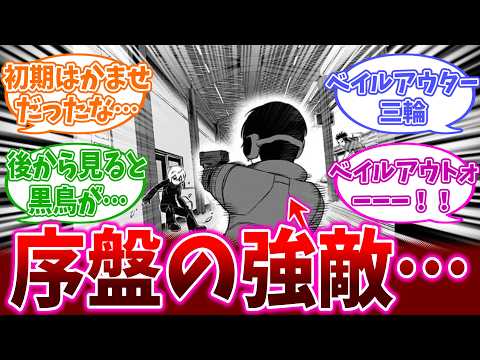
World Trigger’s early narrative introduced unexpectedly formidable enemies that challenged protagonist Osamu Mikumo from the outset—a bold departure from typical shonen manga conventions. Fan discussions reveal complex interpretations of these characters, from “jobber” dismissals to recognition of their strategic depth and lasting narrative significance.
What Happened
World Trigger, which began serialization in 2013, adopted an unconventional narrative structure by introducing powerful antagonists in its opening arc. The Black Trigger acquisition arc featured Neighbor forces that clearly outmatched the protagonists in raw combat capability. This contrasts sharply with standard shonen manga practice, where early enemies are typically weaker than the main cast. Fan communities have engaged in extensive debate about whether these early antagonists were mere “jobbers” designed to be defeated, or strategically significant characters whose apparent weakness masks deeper narrative purpose.
Why It Matters
The characterization of early-game enemies fundamentally shapes how readers perceive a series’ narrative structure and thematic depth. World Trigger’s approach—presenting genuinely dangerous foes rather than easily-defeated obstacles—establishes a world where victory requires strategy, growth, and often luck rather than inevitable protagonist triumph. This design philosophy influences how fans interpret subsequent character development, organizational politics, and the true power scaling within the series’ universe. Understanding fan reactions to these characters reveals how audiences recognize and appreciate sophisticated narrative construction.
Background
World Trigger centers on Osamu Mikumo, a high school student who becomes entangled with a Black Trigger—a powerful weapon of mysterious origin—after encountering Neighbors (interdimensional invaders). The series’ early arc involves a conflict over this Black Trigger, introducing multiple antagonistic forces with varying motivations and capabilities. The narrative simultaneously explains the Trigger system’s mechanics while demonstrating the genuine threat posed by these enemies, a technique that requires careful balance between exposition and entertainment.
The character Jin (Jinpachi Katori) plays a crucial role in this arc, appearing to protect Osamu at critical moments. His mysterious nature—his true identity and motivations remaining obscured—creates narrative tension while establishing a power hierarchy that contextualizes other characters’ abilities. The series also features a high school team composed entirely of teenage combatants who somehow compete effectively against professional adult soldiers, raising questions about the Trigger system’s design philosophy and the nature of combat aptitude in this world.
Key Points
- Early antagonists dismissed as “jobbers” by some fans are revealed through subsequent narrative development to possess significant combat capability and strategic importance
- The Black Trigger acquisition arc simultaneously serves multiple narrative functions: explaining the Trigger system, establishing enemy threat level, and introducing core conflicts
- Jin’s mysterious intervention raises questions about power scaling and suggests a hierarchy of strength far exceeding what early battles demonstrate
- High school protagonists’ ability to compete with professional soldiers stems from the Trigger system’s emphasis on aptitude over experience, not from unrealistic power scaling
- Osamu’s dependence on the Black Trigger for survival creates persistent vulnerability despite his growing combat skills
- The Hayrain battle represents a critical turning point where Osamu faces genuine danger despite accumulated experience, forcing desperate tactical decisions
Narrative Structure and Character Development
Fan analysis reveals sophisticated understanding of World Trigger’s narrative layering. The series employs a technique similar to Attack on Titan’s early structure: initial “weak” enemies are later revealed to possess greater significance than first appearances suggested. This approach requires readers to reconsider their initial judgments as new information emerges.
The Black Trigger itself functions on multiple levels. Superficially, it represents overwhelming combat power. Narratively, it symbolizes Osamu’s existential dependence—losing it means not merely defeat but literal erasure. This creates persistent stakes even as Osamu develops genuine combat competence. The weapon serves as a constant reminder that power in World Trigger’s universe exists on scales far beyond individual skill development.
Jin’s Role and Strategic Implications
Fan discussion frequently centers on Jin’s significance. Comments like “What is Jin that he can repel that entire group?” highlight how his presence fundamentally alters the narrative’s power dynamics. Without Jin’s intervention, Osamu would have lost the Black Trigger, fundamentally changing the story’s trajectory.
Jin functions as more than a protective figure. His mysterious nature—his apparent lack of killing intent despite overwhelming capability—suggests he operates as a strategic actor with undisclosed objectives rather than a simple guardian. This complexity makes him narratively unpredictable, a quality that sophisticated storytelling requires from major characters. His participation in rank battles carries political implications beyond simple combat, suggesting organizational factions and power struggles underlying the series’ surface narrative.
Team Composition and Age Dynamics
Fan commentary addresses the apparent incongruity of high school students competing effectively against professional adult soldiers. This concern reflects legitimate narrative tension. However, the series justifies this through the Trigger system’s design: aptitude matters more than experience, and the high school team benefits from continuous learning and adaptation. Notably, the team includes at least one nineteen-year-old member, introducing age diversity that complicates simple “teenagers vs. adults” framing.
The enemy team’s weapon composition—featuring multiple attackers and snipers—reflects tactical thinking rather than random selection. Fans note that handgun users are rare, suggesting these weapons lack efficiency within the Trigger system’s framework. This level of detail indicates the series’ commitment to internally consistent combat mechanics.
Organizational Politics and Command Structure
Beyond individual combat, World Trigger incorporates organizational conflict. The series hints at factional divisions within command structures, with different leaders pursuing conflicting strategies regarding the Black Trigger and Neighbor policy. Kido’s apparent aggression in early arcs may represent posturing toward hardline factions rather than personal conviction—a sophisticated reading that recognizes individual actions reflect organizational pressures.
The fact that subordinates sometimes resist orders (as when Taiji opposes instructions to kill Osamu) indicates a command structure valuing individual judgment rather than absolute obedience. This distinguishes World Trigger from series like Attack on Titan, where military hierarchy remains rigid. The difference reflects each series’ thematic concerns: World Trigger explores how organizations balance authority with individual agency.
Fan Reinterpretation Over Time
Fan commentary demonstrates how narrative revelation changes character assessment. Comments like “Once you learn that’s one of the original rank-one’s body divisions, you can’t dismiss them as weak anymore” show how backstory transforms evaluation. This pattern repeats throughout discussions: characters initially dismissed gain credibility as their histories emerge.
Fans also recognize character relationships that complicate simple antagonist/protagonist binaries. The observation that certain characters maintain personal friendships despite professional opposition reflects World Trigger’s nuanced approach to conflict—enemies remain human beings with complex motivations rather than pure obstacles.
Insights
World Trigger’s early antagonists exemplify sophisticated narrative design. Rather than serving as mere stepping stones, these characters establish the series’ thematic foundation: growth requires genuine challenge, power exists in layers beyond individual perception, and organizational complexity shapes individual action. The series rewards careful analysis by revealing that initial dismissals of characters as “weak” reflect incomplete information rather than accurate assessment.
The Black Trigger acquisition arc succeeds because it simultaneously accomplishes multiple narrative objectives: explaining mechanical systems, establishing genuine threat, introducing organizational conflict, and creating persistent vulnerability despite protagonist growth. This density of purpose distinguishes World Trigger from more straightforward battle narratives.
Fan engagement with these early characters demonstrates audience sophistication. Rather than accepting surface-level interpretations, fans recognize narrative layering, organizational dynamics, and character complexity. Their discussions reveal how World Trigger functions as more than a simple action series—it’s a work exploring how individuals navigate complex organizations, how power operates across multiple scales, and how growth emerges from genuine adversity rather than predetermined triumph.
The series’ ongoing development will likely further recontextualize these early antagonists. As Jin’s true nature emerges and Osamu’s Black Trigger’s significance becomes clear, fans’ understanding of the opening arc will deepen. This capacity for retrospective reinterpretation—where earlier events gain new meaning through later revelation—marks World Trigger as a work of considerable narrative ambition.