▶ Watch the original YouTube video
Why This Gundam Line About Losing to an Old Type Became an Internet Phenomenon
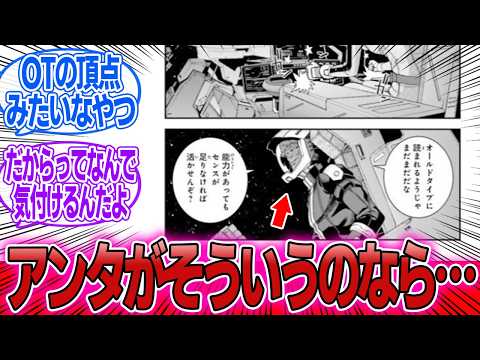
A seemingly throwaway line from Mobile Suit Gundam—”If my movements are being read by an Old Type…”—has evolved into a cultural touchstone that reveals deeper contradictions in the franchise’s core mythology. The phrase has transcended its original context to become a template for discussing the gap between expectations and reality across anime culture and beyond.
What Happened
A single line of dialogue from Mobile Suit Gundam—in which a New Type character expresses shock at having their movements read by an Old Type opponent—has become one of anime culture’s most shared and remixed moments. The phrase encapsulates a fundamental contradiction in Gundam’s core premise: New Types are supposed to possess superhuman intuitive and predictive abilities, yet throughout the franchise’s 45-year history, they repeatedly find themselves outmaneuvered by ordinary humans.
What began as a character moment has evolved into a meta-commentary on the franchise itself. Internet users have adopted the line as a universal template for discussing moments when powerful entities are defeated by weaker opponents—whether in anime, sports, gaming, or other contexts. The phrase has become detached from its original narrative context and transformed into a standalone cultural artifact.
Why It Matters
This phenomenon reveals significant shifts in how modern audiences engage with anime. Rather than passively accepting narrative contradictions, viewers now actively identify, discuss, and find humor in the logical inconsistencies within beloved franchises. The line’s popularity demonstrates how fan culture has matured from simple appreciation to sophisticated critical analysis—often expressed through humor and memes.
The phrase also illustrates a broader trend in internet culture: the “decontextualization” of media moments. Individual lines and scenes are extracted from their original narratives and repurposed as universal expressions, creating new layers of meaning independent of authorial intent. This represents a democratization of media interpretation, where audiences collectively reshape cultural texts.
Background
Mobile Suit Gundam premiered in 1979 and introduced the concept of “New Types”—humans evolved to possess superhuman intuitive and predictive abilities suited to space warfare. Characters like Amuro Ray and Char Aznable were positioned as vastly superior to ordinary soldiers due to their New Type powers. However, across the franchise’s numerous sequels and spin-offs spanning nearly five decades, New Types repeatedly encounter situations where their supposed advantages fail to materialize.
The specific line in question encapsulates this recurring contradiction. A New Type character, confident in their superiority, suddenly discovers that an Old Type opponent has managed to predict or counter their movements—the exact opposite of what the franchise’s mythology suggests should be possible. This moment of shock and disbelief became the focal point for years of accumulated fan frustration with the franchise’s inconsistent application of its own rules.
The line gained particular traction in online spaces around 2019, when reaction videos and clips began circulating on YouTube and social media. What made it resonate was not the dramatic moment itself, but rather how perfectly it articulated a question many long-time fans had been asking: “What exactly is a New Type supposed to be?”
Key Points
- The line represents a New Type character’s shock at being outmaneuvered by an Old Type, contradicting the franchise’s core premise about New Type superiority
- The phrase has become a universal template for discussing moments when powerful entities are defeated by weaker opponents across all media and contexts
- Internet audiences have shifted from passive consumption to active critical analysis, finding humor in narrative contradictions rather than ignoring them
- The line exemplifies the “decontextualization” phenomenon, where media moments are extracted from original narratives and repurposed with new meanings
- The phrase’s popularity reveals a maturation of fan culture, where sophisticated meta-commentary and logical critique are valued alongside traditional appreciation
- Different audience segments—longtime Gundam fans versus casual viewers—interpret the line’s humor differently, reflecting varying levels of franchise familiarity
Timeline
- 1979: Mobile Suit Gundam premieres, introducing the New Type concept
- 1979–2010s: Gundam franchise expands across multiple series, with New Type contradictions accumulating
- 2015: Early online discussions emerge about inconsistencies in New Type power scaling
- 2019: The specific line gains viral traction through YouTube reaction videos and social media sharing
- 2020s: The phrase becomes a standard template for discussing expectation-versus-reality gaps across all media
Perspectives
Longtime Gundam Fans: For viewers who have followed the franchise for decades, the line represents a moment of cathartic recognition. These fans have long noticed that New Type abilities function inconsistently—sometimes overpowered, sometimes irrelevant—depending on narrative convenience. The line validates their accumulated observations and allows them to laugh at contradictions they’ve silently noticed for years.
Casual Anime Viewers: Those unfamiliar with Gundam’s mythology may not immediately grasp why the line is funny. The humor requires understanding that New Types are supposed to be superior, making the reversal surprising. For these viewers, the line’s appeal lies more in the general concept of powerful characters being unexpectedly defeated.
Critical Analysts: Some observers view the line as evidence of how fan culture has evolved toward sophisticated meta-commentary. Rather than dismissing narrative inconsistencies, modern audiences identify them, discuss them, and create new cultural meaning from them. This represents a shift from passive consumption to active critical engagement.
Franchise Defenders: Others argue that the focus on contradictions misses the deeper point: the inconsistencies in New Type abilities actually enable richer storytelling. By refusing to make New Types invincible, the franchise allows for character development, moral complexity, and genuine dramatic tension. The contradictions are not flaws but features that sustain the narrative.
Insights
The viral success of this single line reveals fundamental changes in how audiences interact with media. Rather than accepting narratives at face value, modern viewers simultaneously enjoy stories while critiquing their internal logic. This dual engagement—appreciation and critical analysis—has become the dominant mode of fan culture.
The phrase’s transformation into a universal template demonstrates how internet culture operates. Individual moments are extracted from their original contexts, stripped of specific references, and repurposed as general expressions. This process creates new layers of meaning and allows audiences to collectively reshape cultural texts. The line no longer belongs exclusively to Gundam; it has become a shared tool for discussing power dynamics and narrative reversals across all contexts.
The phenomenon also illustrates the maturation of the Gundam franchise itself. After 45 years, the series has accumulated enough history and complexity that fans can engage with it on multiple levels simultaneously. They can enjoy the stories as entertainment while also analyzing their logical inconsistencies. This maturity allows for a richer, more nuanced fan culture where humor and critique coexist.
However, there remains a tension worth noting: the focus on contradictions and meta-humor risks overshadowing the deeper narrative functions these contradictions serve. The inconsistency of New Type abilities, while logically problematic, actually enables the franchise’s exploration of human struggle, character development, and moral ambiguity. The line’s popularity as a meme might inadvertently reduce complex storytelling to simple logical inconsistency.
Looking forward, the challenge for Gundam culture—and anime fandom more broadly—is maintaining the balance between critical engagement and appreciative understanding. The line’s humor is most meaningful when it emerges from genuine familiarity with the franchise, not from dismissal of it. The best fan culture recognizes that contradictions can be both funny and functionally important to storytelling.