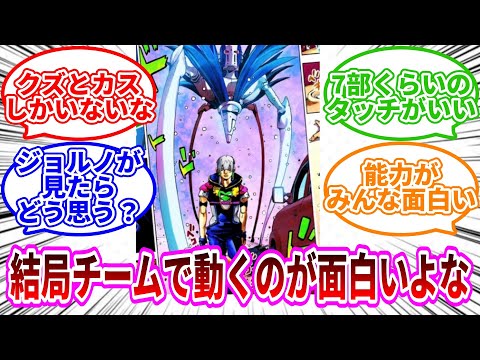
▶ Watch the original YouTube video
JoJo’s Bizarre Adventure Part 9 ‘Cube’ Review: Why Fans Love Its Characters and Stand Abilities
After 15 years following the JoJo franchise, Part 9 ‘Cube’ represents a significant evolution in Hirohiko Araki’s storytelling approach. The series returns to team-based combat, introduces morally complex protagonists, and delivers Stand abilities that prioritize creative problem-solving over raw power—marking a departure from recent installments while honoring the franchise’s core appeal.
- What Happened
- Why It Matters
- Background
- Key Points
- Character Analysis
- Comparative Analysis: Part 9 vs. Part 8
- Industry Context and Trends
- Visual and Stylistic Evolution
- Fan Reception and Critical Response
- Narrative Predictions and Future Direction
- Practical Viewing Recommendations
- Insights and Broader Implications
What Happened
JoJo’s Bizarre Adventure Part 9 ‘Cube’ has emerged as a critically acclaimed new installment that shifts the series’ direction significantly. The story follows Jodio, Dragona, Usagi, and Charming Man—a team of morally questionable characters attempting to survive criminal circumstances in Hawaii while battling enemy Stand users. Unlike Part 8 ‘JoJolion,’ which emphasized mystery and protagonist introspection, Part 9 prioritizes team dynamics and action-driven narratives.
Why It Matters
Part 9 signals a strategic recalibration of the JoJo franchise at a critical moment. The series had grown increasingly complex in recent installments, with convoluted narratives that sometimes obscured core storytelling elements. By returning to simpler, more cohesive objectives—saving a sister, surviving dangerous encounters—Araki demonstrates his ability to evolve while maintaining the franchise’s fundamental appeal. This approach also positions JoJo within the contemporary “crime action” genre boom, alongside works like Chainsaw Man and Attack on Titan’s final arc, proving the franchise remains culturally relevant.
Background
The JoJo franchise has evolved significantly across nine parts spanning decades. Part 5 ‘Golden Wind’ (2001) established team-based combat as a narrative strength, featuring collaborative Stand abilities and ensemble casts. Parts 6-8 gradually shifted toward individual protagonist perspectives and increasingly complex mythologies. Part 6 ‘Stone Ocean’ centered on Jolyne’s personal struggle, Part 7 ‘Steel Ball Run’ emphasized a two-character dynamic, and Part 8 ‘JoJolion’ featured multiple characters but maintained a single protagonist viewpoint. Part 9 represents a conscious return to the collaborative structure that defined earlier, widely beloved installments.
Key Points
- Team Combat Returns: Part 9 features four protagonists with complementary Stand abilities, echoing the ensemble dynamics of Parts 3 and 5 rather than the solo-focused narratives of recent installments.
- Morally Complex Characters: Protagonists are criminals and ethically questionable individuals, yet their motivations—saving a sister, survival—generate genuine reader empathy despite their flaws.
- Stand Ability Design: Abilities like ‘November Rain’ and ‘Glory Days’ are deliberately limited in application, forcing characters to employ creative problem-solving rather than relying on raw power.
- Simplified Narrative Structure: Part 9 abandons the mystery-heavy approach of Part 8 in favor of a clear, action-focused premise that remains accessible to new readers.
- Visual Evolution: Araki’s artwork returns to the expressive character work and visual clarity of Part 7, with enhanced emotional expression in character faces.
- Contemporary Genre Alignment: The ‘crime action’ framework positions JoJo within current industry trends while maintaining its distinctive identity.
Character Analysis
The Appeal of Flawed Protagonists
Jodio presents a psychological paradox that drives reader engagement. Psychological testing identifies him as clinically sociopathic, yet he desperately grips his sister’s hand to save her life. This contradiction—cruelty paired with genuine familial devotion—mirrors the character design philosophy applied to Rohan Kishibe in Part 4 ‘Diamond is Unbreakable.’ Rohan commits ethically questionable acts driven by creative obsession; Jodio commits crimes driven by familial obligation. Both characters transcend simple moral categorization, becoming “human” precisely through their contradictions.
Dragona, Usagi, and Charming Man follow similar patterns. None qualify as traditional heroes, yet each possesses clear motivations that justify their actions within the narrative framework. This approach acknowledges contemporary storytelling trends—seen in Chainsaw Man and Attack on Titan—where protagonists operate outside conventional morality while remaining sympathetic.
Stand Ability Design Philosophy
Part 9’s Stand abilities deliberately eschew the straightforward power scaling of earlier parts. November Rain operates within limited spatial parameters; Glory Days advances projectiles at unsettling slowness. These constraints force characters to innovate tactically, transforming combat encounters into problem-solving exercises. This design philosophy emerged in Part 5 and has matured significantly by Part 9, where ability limitations become narrative strengths rather than weaknesses.
Comparative Analysis: Part 9 vs. Part 8
| Element | Part 8 ‘JoJolion’ | Part 9 ‘Cube’ |
|---|---|---|
| Protagonist Objective | Discover personal identity | Save sister / ensure survival |
| Team Structure | Multiple characters, single protagonist focus | Multiple characters with equal agency |
| Narrative Genre | Mystery-driven | Crime action-driven |
| Stand Complexity | Complex, difficult to explain | Restrictive but comprehensible |
| Character Ethics | Ambiguous and contradictory | Clearly defined as “flawed but sympathetic” |
Part 9’s clarity represents a strategic simplification. Where Part 8 layered multiple mysteries—Josuke’s identity, the Rock Humans, the Locacaca fruit—Part 9 maintains singular focus. This structural choice benefits both accessibility and narrative momentum.
Industry Context and Trends
The past five years have witnessed explosive growth in the “crime action” genre across anime and manga. Attack on Titan’s final arc, Chainsaw Man, and Jujutsu Kaisen all feature protagonists operating as social outsiders or criminals. Part 9 enters this landscape not as a follower but as a sophisticated participant. Araki has historically positioned JoJo at the industry’s creative frontier—Part 1’s aristocratic intrigue, Part 3’s international adventure, and Part 5’s mafia narrative were all genre-defining when published. Part 9’s crime action framework continues this tradition of leading rather than following industry trends.
Visual and Stylistic Evolution
Araki’s artistic approach has evolved distinctly across parts:
- Parts 1-3: Bold, dynamic linework emphasizing physical impact
- Parts 4-6: Refined detail work prioritizing psychological expression
- Part 7: Western-influenced aesthetic establishing new visual language
- Part 8: Part 7 style continuation with enhanced background complexity
- Part 9: Return to Part 7’s visual clarity with amplified character expressiveness
This stylistic regression reflects narrative priorities. Part 9’s crime action focus demands clear character emotion and readable action sequences. Araki’s choice to emphasize facial expression and visual simplicity directly supports the story’s emotional and tactical demands.
Fan Reception and Critical Response
Positive Reception
- “Team dynamics feel refreshing compared to recent parts. Multiple active combatants create better pacing.”
- “All four characters generate genuine attachment.”
- “Cube recaptures the shonen manga spirit of earlier installments.”
- “Araki continues evolving as a creator.”
Critical Concerns
- “The cast consists entirely of scoundrels and criminals—genuinely off-putting.”
- “Character designs feel uninspired except for Jodio.”
- “Stand abilities lack sufficient offensive power; Jodio carries too much combat responsibility.”
Part 9 deliberately divides opinion. Its moral ambiguity and criminal protagonists alienate some readers while attracting others precisely through these unconventional choices. This polarization indicates genuine creative risk-taking rather than safe iteration.
Narrative Predictions and Future Direction
Current antagonist Howler presents as a minor threat, yet this apparent weakness may prove strategically significant. Part 5’s final boss Diavolo similarly emerged from seemingly secondary positions. Part 9 may follow identical structural patterns, with Howler serving as a gateway to larger revelations. Alternatively, Jodio himself—psychologically identified as clinically sociopathic—could transform into the narrative’s true antagonist, with his cold cruelty evolving into genuine malevolence. The possibility of hidden antagonists among apparent allies remains open, maintaining narrative tension and unpredictability.
Practical Viewing Recommendations
Approach Initial Episodes as Exposition: Part 9’s opening—Jodio committing crimes to fund his sister’s treatment—may seem arbitrary. This apparent randomness serves intentional narrative purposes that emerge through continued engagement.
Examine Character Contradictions: Jodio’s simultaneous cruelty and familial devotion, Dragona’s illness paired with combat capability—these contradictions generate character depth. Seek the motivations underlying seemingly inconsistent behavior.
Appreciate Stand Limitation: November Rain’s restricted range initially appears disadvantageous. Recognize how this limitation forces creative tactical thinking, transforming constraint into narrative advantage.
Compare with Part 5: Golden Wind similarly emphasized team dynamics. Contrasting Part 5’s Giorno and Bucciarati with Part 9’s Jodio and Dragona reveals 15 years of creative evolution.
Contextualize Within Contemporary Trends: Viewing Chainsaw Man and Attack on Titan’s final arc alongside Part 9 illuminates why this installment resonates with current audiences and industry direction.
Insights and Broader Implications
Part 9 ‘Cube’ represents JoJo’s mature recalibration. The franchise has historically thrived when breaking established conventions—Part 1’s gothic intrigue, Part 3’s globe-trotting adventure, Part 5’s organized crime narrative. Part 9 continues this tradition by embracing moral ambiguity and crime action frameworks while maintaining the character-driven storytelling that defines the series.
The installment’s success derives from balancing simplicity with sophistication. Narrative objectives remain clear—save the sister, survive encounters—yet character psychology and Stand mechanics operate at considerable complexity. This balance proves more effective than Part 8’s layered mysteries, which occasionally obscured core narrative momentum.
Araki’s demonstrated ability to evolve while honoring franchise fundamentals suggests Part 9 will continue generating critical and fan appreciation. The morally complex protagonists, team-based combat, and creative Stand limitations address contemporary storytelling preferences while remaining distinctly JoJo. Whether Jodio becomes the true antagonist, whether hidden forces emerge, or whether the narrative maintains current trajectory, Part 9 has established itself as a significant franchise entry worthy of sustained attention and analysis.