▶ Watch the original YouTube video
Intelligent Systems and Nintendo: Unraveling the Mystery of Gaming’s Most Unusual Partnership
Intelligent Systems (IS) is a Kyoto-based game developer that has created some of Nintendo’s most iconic franchises—yet remains an independent company rather than a subsidiary. After 15 years of observing the gaming industry, one analyst explores why this unique partnership structure exists and what it reveals about Nintendo’s development strategy.
What Happened
Intelligent Systems, founded in December 1986 in Kyoto, has served as the primary developer for Nintendo’s Fire Emblem and Paper Mario franchises for decades. Despite this deep integration with Nintendo’s operations, IS remains legally independent rather than a wholly-owned subsidiary. This unusual arrangement stands in stark contrast to Nintendo’s acquisition of other major development partners like Monolith Soft in 2007. The discovery of this corporate structure has puzzled gaming fans and industry observers alike, as IS functions as an essential part of Nintendo’s development infrastructure while maintaining formal independence.
Why It Matters
Understanding IS and Nintendo’s relationship reveals important truths about how major gaming companies structure their partnerships and maintain creative flexibility. Unlike typical corporate hierarchies where subsidiaries operate under strict parent company control, IS demonstrates an alternative model: deep operational integration without formal ownership. This arrangement has allowed IS to maintain creative autonomy while contributing to some of Nintendo’s most beloved franchises. For industry observers, this partnership model challenges conventional assumptions about how large corporations should organize their development resources, suggesting that independence and collaboration can coexist productively.
Background
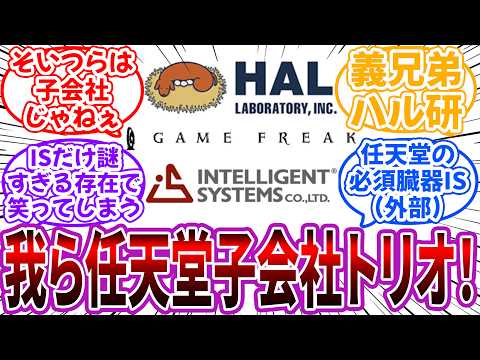
Intelligent Systems originated as a division of Iwasaki Giken, an electronics manufacturer. The company was spun off to provide specialized support to Nintendo, making it fundamentally different from most game developers that began as independent studios. This historical origin distinguishes IS from other Nintendo partners like HAL Laboratory and Game Freak, which started as independent companies before developing relationships with Nintendo.
The Fire Emblem series, which began with the 1990 Famicom title “Fire Emblem: Shadow Dragon and the Blade of Light,” represents IS’s most significant contribution to Nintendo’s catalog. The franchise has evolved across multiple Nintendo platforms, from Super Famicom to Nintendo 3DS to Nintendo Switch. Similarly, the Paper Mario series—beginning with the Nintendo 64 title “Paper Mario”—showcases IS’s distinctive creative approach to game design.
In 2022, another Iwasaki Giken-related company, SRD, became a Nintendo subsidiary. This development highlighted the unusual status of IS, which despite sharing the same corporate heritage, chose to remain independent.
Key Points
- Intelligent Systems was established in 1986 as a spinoff from Iwasaki Giken, an electronics manufacturer, specifically to support Nintendo’s development needs
- IS developed major Nintendo franchises including Fire Emblem, Paper Mario, and Fire Emblem Heroes, yet remains an independent company rather than a subsidiary
- Unlike HAL Laboratory and Game Freak, which developed for multiple platforms, IS has virtually no development history outside Nintendo’s ecosystem
- IS functions as part of Nintendo’s development infrastructure, including tools development and technical support, not merely as a game developer
- While related company SRD became a Nintendo subsidiary in 2022, IS has maintained its independent status despite deeper integration with Nintendo than many subsidiaries
- This partnership model represents an alternative to traditional acquisition strategies, prioritizing creative autonomy and flexible collaboration
Timeline
- 1986: Intelligent Systems founded in Kyoto as a spinoff from Iwasaki Giken
- 1990: Fire Emblem series launches on Famicom with IS as developer
- 2000: Paper Mario releases on Nintendo 64, establishing IS’s distinctive design philosophy
- 2007: Nintendo acquires Monolith Soft, contrasting with IS’s continued independence
- 2012: Fire Emblem: Awakening releases on Nintendo 3DS, revitalizing the franchise
- 2017: Fire Emblem Heroes launches as a mobile title, expanding IS’s portfolio to smartphone platforms
- 2022: SRD, a related company, becomes a Nintendo subsidiary while IS remains independent
Perspectives
The Independence Advantage: From Nintendo’s perspective, maintaining IS as an independent partner provides operational flexibility. Rather than integrating IS fully into Nintendo’s corporate structure, the company can leverage IS’s autonomous decision-making while maintaining close collaboration. This arrangement allows IS developers to propose creative solutions without navigating the approval hierarchies that typically constrain subsidiary studios.
The Partnership Model: IS and Nintendo’s relationship exemplifies a modern industry trend toward strategic partnerships rather than complete acquisitions. This model preserves the partner company’s identity and creative culture while establishing deep operational integration. For IS, independence means maintaining its corporate heritage and decision-making authority. For Nintendo, it means accessing world-class development talent without the overhead of full corporate integration.
Fan Perception: Gaming communities widely assume IS is a Nintendo subsidiary, a misconception understandable given that all IS titles release exclusively on Nintendo platforms with Nintendo’s marketing support. However, this perception misses the nuance of the actual relationship. The distinction matters because IS’s independence likely contributes to the creative distinctiveness of franchises like Paper Mario, which feature design philosophies that diverge from typical Nintendo conventions.
Industry Implications: The IS-Nintendo model challenges the assumption that larger corporations must acquire smaller development studios to ensure loyalty and quality control. By maintaining IS’s independence while deepening operational integration, Nintendo demonstrates that trust-based partnerships can achieve the same strategic objectives as ownership while preserving creative autonomy.
Insights
The relationship between Intelligent Systems and Nintendo represents a sophisticated approach to corporate partnership that prioritizes creative excellence over administrative control. Rather than viewing independence and collaboration as opposing forces, Nintendo has structured its relationship with IS to leverage both simultaneously. This arrangement suggests that the most innovative game development may emerge not from top-down corporate control, but from partnerships between independent creative teams and supportive publishing partners.
The persistence of this model—particularly IS’s decision to remain independent while SRD accepted subsidiary status—indicates that both parties view the current arrangement as mutually beneficial. For IS, independence preserves the creative culture that originated from its Iwasaki Giken heritage. For Nintendo, IS’s autonomy enables the kind of distinctive game design that has made franchises like Fire Emblem and Paper Mario stand apart from other Nintendo properties.
As the gaming industry increasingly emphasizes creative talent and innovative game design, the IS-Nintendo partnership may represent a template for how large corporations can maintain access to world-class development resources without sacrificing the independence that fosters creativity. In an era where many studios have been absorbed into larger corporate structures, IS’s continued independence—and Nintendo’s respect for that independence—offers an alternative model worth studying.