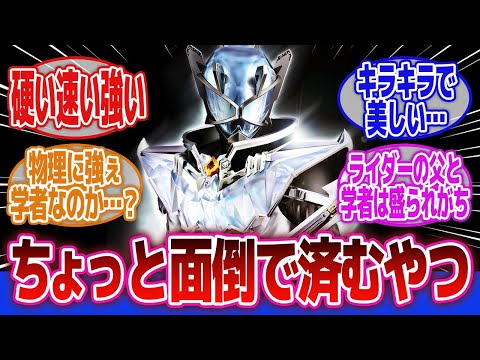
▶ Watch the original YouTube video
Why Kamen Rider Wizard’s Infinity Style Is Overpowered: A 15-Year Fan Analysis
After 15 years of following the Kamen Rider series, fans and analysts have identified a fundamental imbalance in Kamen Rider Wizard’s final form: the Infinity Style possesses overwhelming defensive, offensive, and mobility capabilities that seem disproportionate to the protagonist’s personal growth. This analysis explores why the form’s excessive power serves a deeper narrative purpose about inherited legacy and personal identity.
What Happened
Kamen Rider Wizard, which premiered in September 2012, introduced a protagonist named Haruto Soma who inherits a magical driver and spellcasting abilities from his deceased physicist father. The series culminates in the Infinity Style—a diamond-themed final form that combines physics-based magic with extraordinary defensive capabilities. Online communities have extensively debated why this form appears so overpowered compared to other Kamen Rider final forms, with viewers questioning both its design and its narrative placement within the story.
Why It Matters
The Infinity Style’s overwhelming power raises important questions about how superhero narratives handle inherited versus earned strength. Unlike other Kamen Rider protagonists who develop their abilities through personal growth or scientific innovation, Haruto Soma primarily utilizes his father’s legacy. This structural difference reveals how the series explores themes of parental influence, personal identity, and the limitations of inherited power—themes that resonate with audiences examining their own relationships with family legacy and self-determination.
Background
Kamen Rider Wizard distinguishes itself within the franchise by centering on a protagonist who is not a scientist but a magician. His father, a physicist, developed a revolutionary system that merges ancient magical knowledge with modern physics, creating the Wizard Driver and its associated spells. The Infinity Style represents the culmination of this fusion—a form that embodies both the hardness of diamond (a physics-based property) and supernatural speed enhancement (a magical attribute). This hybrid nature is central to understanding why the form appears so exceptionally powerful compared to other final forms in the franchise.
Key Points
- Defensive Anomaly: The Infinity Style’s diamond-based armor provides near-impenetrable defense, making physical attacks largely ineffective—a trait that contradicts typical Kamen Rider design philosophy where final forms balance multiple attributes.
- Speed Paradox: Despite being diamond-hard, the form also possesses exceptional speed through time-manipulation effects, creating a logical inconsistency that has sparked significant fan debate about the form’s design.
- Inherited Rather Than Earned: Unlike protagonists in Kamen Rider Build or Drive who develop their abilities through personal effort or support, Haruto directly inherits and deploys his father’s pre-existing technology without significant personal innovation.
- Narrative Timing Issue: Fans frequently question why such a powerful form is not deployed from the beginning, suggesting potential structural problems in the story’s pacing and conflict escalation.
- Weapon Synergy: The Hamel Cane weapon compounds the form’s power by enabling internal explosion attacks that bypass external defenses, further amplifying its combat effectiveness.
- Physics-Magic Fusion: The form symbolizes the series’ central theme of merging scientific principles with magical practice, making its power level a thematic necessity rather than a design flaw.
Comparative Analysis: Inherited Power Across Rider Series
| Series | Protagonist Role | Approach to Inheritance | Character Growth Focus |
| Wizard | Magician (not scientist) | Direct use of inherited technology | Creative application of inherited tools |
| Build | Scientist | Knowledge foundation for new development | Scientific innovation and discovery |
| Drive | Ordinary person | Receives scientific support | Human development and determination |
Perspectives: Fan Reactions and Critical Interpretations
Criticism of Excessive Power: Online communities frequently express frustration with the Infinity Style’s overwhelming capabilities. Comments like “Why is something this hard also this fast?” highlight perceived design inconsistencies. The form’s ability to end battles with single attacks (particularly the Explosion technique) has led some viewers to criticize the narrative for removing dramatic tension.
Defense of Thematic Necessity: Other analysts argue that the form’s excessive power is intentional and serves the story’s exploration of inherited legacy. The overwhelming strength emphasizes Haruto’s dependence on his father’s achievements, making his personal growth journey about learning to use inherited tools creatively rather than developing entirely new powers. This interpretation views the power imbalance not as a flaw but as a narrative device.
Structural Storytelling Questions: A significant portion of fan discussion centers on why such a powerful form is withheld from early deployment. This narrative choice raises questions about story structure: Is the restraint justified by plot requirements, or does it represent a missed opportunity for more dynamic conflict progression?
Thematic Significance: The Ghost of Inherited Power
The Infinity Style’s design reflects a unique position within the Kamen Rider franchise. Unlike other series where scientists actively support the protagonist or where the protagonist themselves innovates, Wizard features a deceased scientist whose legacy defines the hero’s capabilities. This creates a narrative dynamic where Haruto essentially fights alongside his father’s ghost—a presence that cannot grow, cannot adapt, and cannot be surpassed.
This structural choice distinguishes Wizard from contemporaries like Build, which emphasizes scientific growth, or Drive, which emphasizes human resilience. Instead, Wizard explores the psychological weight of living up to a parent’s legacy and the limitations inherent in that position. The Infinity Style’s overwhelming power becomes a symbol of this constraint: Haruto can wield extraordinary strength, but that strength belongs to someone else.
The physics-magic fusion theme reinforces this interpretation. Ancient magical knowledge combined with modern physics represents the past meeting the present—a collision that produces unprecedented power but also creates an impossible standard for personal achievement. Haruto’s growth occurs not through surpassing his father’s power but through discovering creative applications of it.
Insights: Why Overpowered Design Serves Narrative Purpose
The Infinity Style’s excessive capabilities are not a production oversight but a deliberate creative choice that deepens the series’ thematic exploration. By making the inherited form overwhelmingly powerful, the creators force viewers to confront the same question that haunts Haruto: What does personal growth mean when you possess inherited power that cannot be matched through personal effort?
The fan question “Why isn’t this form deployed from the start?” becomes the central philosophical inquiry of the series. The answer—that deploying ultimate power immediately would eliminate all dramatic tension and leave no room for personal development—mirrors Haruto’s own struggle. He cannot simply rely on his father’s ultimate gift; he must learn to navigate challenges with lesser tools, discovering his own agency in the process.
This narrative structure places Wizard among the most introspective entries in the 2010s Kamen Rider era. While Build examines scientific innovation and Drive examines human determination, Wizard examines the burden and blessing of inherited legacy. The Infinity Style’s overwhelming power is the visual manifestation of this burden—a constant reminder that true strength must be earned, not inherited, even when inheritance provides extraordinary capabilities.
The series ultimately suggests that the most important growth occurs not in acquiring power but in understanding how to live with power that was never meant to be yours alone.