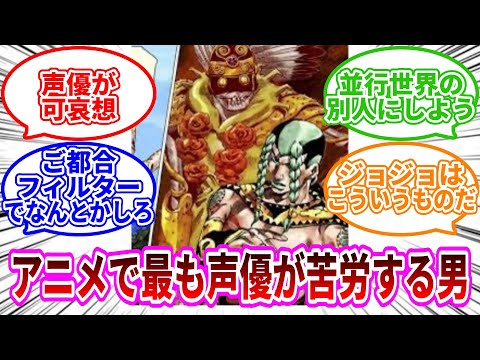
▶ Watch the original YouTube video
The Sandman vs. Soundman Controversy: A 15-Year Analysis of JoJo’s Steel Ball Run’s Most Debated Character
A persistent naming and ability inconsistency surrounding the character Sandman in JoJo’s Bizarre Adventure Part 7: Steel Ball Run has sparked a 15-year fan debate. The character’s identity shifts from “Sandman” with sand-based powers to “Soundman” with sound-based abilities, raising questions about whether this is a translation error, intentional character redesign, or something more complex.
What Happened
In Steel Ball Run’s first stage, a character initially introduced as “Sandman”—a Stand user who manipulates sand—later appears with the name “Soundman” and sound-based abilities. This inconsistency has never been explicitly resolved in the original manga, leaving fans with competing interpretations about the character’s true identity and the nature of this discrepancy.
Why It Matters
As JoJo Part 7 enters the anime adaptation phase, this unresolved plot point has become increasingly relevant. The anime production team will need to make a definitive choice about how to present the character, potentially settling a debate that has persisted since the manga’s serialization. This decision will reveal whether the original inconsistency was intentional ambiguity or a production oversight, and how modern anime studios handle source material contradictions.
Background
Steel Ball Run, serialized in Weekly Shonen Jump, follows protagonist Johnny Joestar and Gyro Zeppeli through a cross-continental horse race. The first stage introduces Sandman as an antagonist. However, as the series progresses, the character’s name and abilities shift, creating a continuity puzzle that has fascinated the fanbase for over a decade. The original manga never provides explicit clarification, allowing multiple interpretations to coexist within fan discourse.
Key Points
- Three Primary Theories Exist: The “mishearing theory” (readers misheard the name), the “ability redesign theory” (author Hirohiko Araki intentionally changed the character’s powers during serialization), and the “parallel world theory” (Sandman and Soundman are different individuals from alternate dimensions).
- Character Consistency Issues: Gyro and other characters consistently call the antagonist “Sandman,” yet the character’s demonstrated abilities later align with sound manipulation rather than sand control.
- Serialization Constraints: Weekly manga production operates under extreme time pressure, making mid-series character redesigns and concept changes relatively common among professional mangaka.
- Intentional Ambiguity Hypothesis: The author may have deliberately left this contradiction unresolved to maintain reader engagement and encourage ongoing fan analysis and discussion.
- Anime Adaptation Implications: Voice acting, character naming in dialogue, and visual presentation will force the anime production to commit to a single interpretation, potentially ending the debate.
- Fan Reception Pattern: Rather than expressing frustration, fans have largely embraced this ambiguity as part of JoJo’s distinctive “live energy” and spontaneous creative approach.
Timeline
- During Steel Ball Run Serialization: Sandman introduced as first-stage antagonist with sand-based Stand abilities.
- Mid-to-Late Serialization: Character designation shifts to “Soundman” with sound-manipulation powers.
- Post-Serialization (15+ Years): Fan community develops and debates three competing interpretations without official resolution.
- Present Day: JoJo Part 7 anime adaptation announced, forcing production team to make definitive presentation choices.
Perspectives
The Mishearing Theory: Supporters argue that readers simply misheard or misremembered the character’s name as “Sandman” when it was always “Soundman.” This represents the simplest explanation and aligns with how casual readers might process unfamiliar names during serialization.
The Ability Redesign Theory: This interpretation suggests that Araki, working under weekly serialization deadlines, initially conceived Sandman as a sand-manipulator but later decided to pivot toward sound-based abilities to create more interesting combat scenarios or narrative possibilities. This reflects realistic manga production where concepts evolve during the creative process.
The Parallel World Theory: Some fans propose that President Valentine, a character with dimension-crossing abilities, brought Soundman from an alternate reality, making him a separate individual from the original Sandman. This theory provides logical consistency for the ability discrepancy while maintaining both character names as valid.
The Intentional Ambiguity Perspective: A growing number of analysts argue that Araki deliberately preserved this contradiction as a creative technique, using unresolved mystery to deepen reader engagement and encourage ongoing fan discussion and analysis.
Comparative Analysis with Other JoJo Inconsistencies
Diavolo’s Dual Stands (Part 5): The character Diavolo initially appeared to possess only King Crimson, but later revealed he also wielded Epitaph. What seemed contradictory was eventually understood as representing Diavolo’s fractured personality, transforming apparent inconsistency into thematic depth.
Armin’s Power Surge (Attack on Titan): Though not a JoJo work, this parallel demonstrates how character power increases that initially seemed inconsistent were recontextualized as intentional character development arcs, reshaping fan perception from confusion to appreciation.
Muzan’s Mysterious Nature (Demon Slayer): The antagonist’s deliberately vague backstory and gradually revealed abilities maintained reader interest through strategic information withholding, suggesting that narrative ambiguity can be a sophisticated storytelling tool rather than a flaw.
Anime Production Considerations
Modern anime adaptations frequently “correct” or clarify source material ambiguities. Attack on Titan’s anime addressed unclear manga moments through visual clarity and voice direction. Jujutsu Kaisen’s adaptation similarly reinterpreted vague source material for viewer comprehension. The JoJo anime production team, which has successfully adapted previous parts, will likely employ one of three strategies: preserve the original ambiguity to maintain authenticity, implement the mishearing theory through consistent voice acting, or adopt the parallel world explanation through dialogue clarification.
Voice actor pronunciation and how other characters address the antagonist will prove crucial. If the voice actor consistently pronounces the name as “Soundman” while Gyro continues calling him “Sandman,” this creates deliberate dissonance. Conversely, uniform pronunciation would signal the production’s chosen interpretation.
Fan Community Response Patterns
Analysis of fan comments reveals that viewers have largely accepted multiple interpretations coexisting simultaneously. Rather than demanding resolution, the community treats the ambiguity as a defining characteristic of JoJo’s creative spontaneity. Humorous comments like “just eat sand” indicate fans have transformed the controversy into entertainment rather than frustration. This response pattern suggests that the ambiguity itself has become part of the work’s cultural value.
Fans supporting each theory tend to do so based on psychological comfort rather than definitive textual evidence. Those preferring the parallel world theory often acknowledge doing so because “it’s the only way to make sense of it,” revealing how fans unconsciously select interpretations that preserve their emotional investment in the narrative.
Insights
The Sandman/Soundman controversy exemplifies how modern serialized fiction operates under creative constraints that prioritize narrative momentum over perfect consistency. Rather than representing authorial failure, this inconsistency may demonstrate Hirohiko Araki’s sophisticated understanding of how ambiguity sustains reader engagement across decades.
The 15-year persistence of this debate—without official resolution—suggests that fans value the mystery itself more than its solution. This contradicts the assumption that audiences demand narrative clarity; instead, it demonstrates that strategic ambiguity can deepen a work’s cultural resonance and longevity.
The upcoming anime adaptation represents a critical juncture. If the production team preserves the ambiguity, it validates the theory that this inconsistency was intentional. If they impose clarity, they acknowledge it as a production artifact requiring correction. Either choice will provide meaningful insight into both Araki’s original intent and contemporary anime’s relationship with source material fidelity.
Ultimately, the Sandman/Soundman question transcends a simple naming error. It reflects the creative reality of weekly manga serialization, the sophistication of fan analytical culture, and the evolving standards for how adaptations should handle source material complexity. For new readers approaching Steel Ball Run, embracing this ambiguity as a feature rather than a bug—and engaging with the multiple interpretations—provides a richer, more participatory reading experience than any definitive answer could offer.