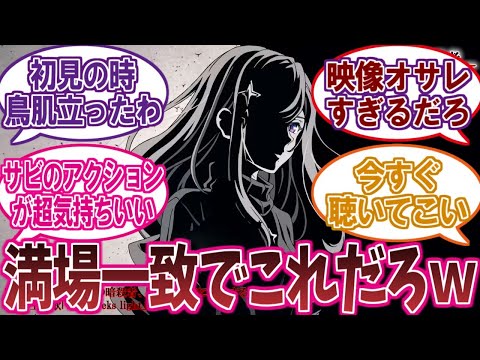
▶ Watch the original YouTube video
What Makes the Greatest Anime Opening of All Time? A Deep Dive Into Fan Perspectives
After 15 years of watching over 500 anime series and analyzing thousands of opening sequences, one expert examines the ongoing internet debate about anime’s strongest opening theme—revealing that the answer depends entirely on how you define “strongest.”
What Happened
A viral video compilation of internet reactions to the question “What is anime’s strongest opening theme?” has reignited a passionate debate across online communities. The discussion reveals that fans champion wildly different openings—from classic 1970s works like Mazinger Z to modern hits like Attack on Titan, Demon Slayer, and Chainsaw Man—based on different criteria for what makes an opening “the strongest.”
Why It Matters
Anime openings are far more than background music and visuals. They serve as the gateway to a series, capturing viewers’ attention within the first 30 seconds and setting the tone for the entire experience. This debate reflects how anime culture has matured and become more analytically sophisticated. As anime has gained mainstream recognition globally, fans have begun applying rigorous evaluation frameworks—comparing knowledge, production quality, musical composition, visual innovation, and emotional impact—rather than relying solely on personal preference. Understanding these criteria reveals what audiences truly value in storytelling and artistic expression.
Background
The author’s journey began in 2008 as a high school student watching Code Geass, an experience that sparked a 15-year passion for analyzing anime openings. Over this period, the landscape of anime production has transformed dramatically. Early openings were typically compilations of scenes from the series itself. By the 2010s, studios began creating entirely new, custom-made visuals specifically for opening sequences—treating them as independent artistic works rather than simple previews. This evolution in production philosophy has fundamentally changed how audiences evaluate openings, creating new standards for what constitutes excellence.
Key Points
- Multiple evaluation criteria exist: Fans assess openings based on fame recognition, musical composition quality, visual artistry, innovation, and emotional resonance—each leading to different “strongest” conclusions.
- Generational preferences are distinct: Viewers over 40 favor 1970s classics; 30-somethings prefer 2000s works; younger audiences gravitate toward 2010s-present productions, reflecting their formative anime experiences.
- Iconic contenders span decades: Cruel Angel’s Thesis (Neon Genesis Evangelion), Tank! (Cowboy Bebop), Shinzou wo Sasageyo (Attack on Titan), and Idol (Attack on Titan Season 4) consistently appear in top discussions.
- Tie-in songs versus original compositions: While tie-in tracks may achieve greater mainstream recognition, original compositions often score higher for thematic alignment with their source material.
- Visual execution has become paramount: Modern openings are evaluated as heavily on directorial choices, animation quality, and timing as on the musical composition itself.
- Timeless appeal transcends eras: Classic openings from decades past remain recommended alongside contemporary works, suggesting that true excellence survives generational shifts.
Timeline
- 2005: Author first experiences Cruel Angel’s Thesis during initial viewing of Neon Genesis Evangelion, discovering the power of thematic lyrical depth in openings.
- 2008: Code Geass opening sparks author’s serious interest in anime opening analysis.
- 2010s early: Anime openings transition from scene compilations to custom-created visual content.
- 2015 onward: Internet discourse shifts from subjective “favorite openings” to objective “strongest opening” evaluation frameworks.
- 2020: Author experiences Idol (Attack on Titan Season 4) and recognizes visual-musical synergy as critical evaluation metric.
- Present: Viral video compilation reignites comprehensive debate across all age demographics and fan communities.
Perspectives
The Recognition Standard: Some fans define “strongest” by cultural penetration and universal recognition. From this viewpoint, Cruel Angel’s Thesis is unquestionably supreme—nearly every demographic instantly recognizes it. One commenter noted that mentioning Evangelion in public reliably elicits the response, “Oh, that Cruel Angel’s Thesis song.”
The Composition Excellence Standard: Others prioritize musical and visual craftsmanship. Attack on Titan‘s first opening, Shinzou wo Sasageyo, exemplifies this approach—its animation cuts are so precisely choreographed that viewers discover new details on repeated viewings. The opening’s exaggerated depiction of 3D maneuver gear combat surpasses the actual series animation, deliberately maximizing viewer excitement.
The Innovation Standard: A third group champions openings that break conventional boundaries. Mob Psycho 100 earned praise for its distinctive visual style that defied anime norms. 86 received acclaim for its directorial choices, particularly the unconventional timing and presentation of the title card.
The Thematic Alignment Standard: Some prioritize how perfectly an opening captures its source material’s essence. Spy x Family‘s bright, playful opening mirrors the series’ tone flawlessly. Cowboy Bebop‘s jazz composition Tank! immediately establishes the show’s noir aesthetic without a single scene from the series.
The Generational Standard: One particularly insightful comment suggested that Anpanman’s March—a children’s show opening—surpasses all others in true cultural dominance, as it achieves recognition across age groups that no anime opening has matched. This perspective reframes “strongest” as “most universally acknowledged.”
Insights
The debate over anime’s strongest opening reveals that excellence in media is not monolithic—it depends fundamentally on what values the evaluator prioritizes. A 70-year-old who values simplicity and directness may find Mazinger Z‘s straightforward power display more impressive than Attack on Titan‘s complex visual choreography. A 25-year-old prioritizing technical innovation will reach entirely different conclusions than a 50-year-old valuing nostalgic resonance.
This diversity of opinion actually demonstrates anime culture’s maturation. Rather than a monolithic “best,” the community has developed sophisticated frameworks for evaluation. The existence of multiple defensible answers—each backed by coherent reasoning—indicates a healthy, intellectually engaged fanbase.
The most revealing comment from the viral video was: “Good anime almost always has great openings and endings, but bad anime often has great songs too.” This observation underscores openings’ unique power: they can captivate audiences and create emotional investment even when the series itself fails to deliver. A 30-90 second sequence of music and visuals possesses the capacity to move viewers regardless of the surrounding narrative’s quality.
As animation technology continues advancing and new artistic techniques emerge, the definition of “strongest” will inevitably evolve. Yet the fundamental criterion will remain constant: the ability to seize a viewer’s attention, establish emotional connection, and transport them into a story’s world within seconds. Whether that power comes from a 1970s minimalist composition, a 2000s thematic masterpiece, or a 2020s technical marvel matters less than the visceral impact on the audience.
Ultimately, the question “What is anime’s strongest opening?” cannot be answered objectively. It can only be answered personally. Your strongest opening may be Cruel Angel’s Thesis, Idol, or an obscure series that few have discovered. That answer is valid precisely because it reflects your unique intersection of life experience, viewing history, and values. The strength of anime openings lies not in unanimous agreement, but in their collective diversity—each one capable of moving someone, somewhere, at exactly the right moment in their life.