▶ Watch the original YouTube video
Why Pokémon’s Mob Trainer Designs Keep Missing the Mark: A 15-Year Fan Analysis
After 15 years of playing nearly every mainline Pokémon game, one persistent design flaw continues to undermine the series’ immersion: poorly executed mob trainer designs. From mismatched clothing and character ages to reused animations and lack of visual diversity, these background characters—whom players encounter repeatedly—reveal structural issues in how Game Freak allocates development resources and prioritizes character design philosophy.
What Happened
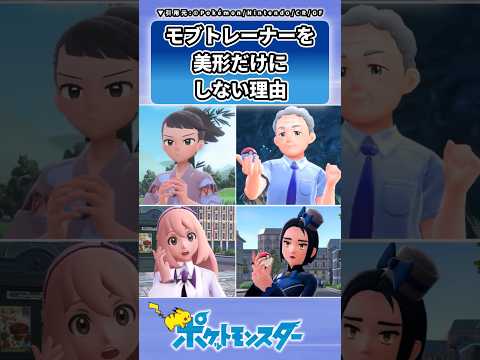
A recent YouTube analysis video examining Pokémon mob trainer designs sparked broader discussion about why Game Freak has failed to improve this aspect of the games, despite clear examples of how other franchises handle background characters more effectively. The video highlights specific problems in recent titles, particularly Pokémon Scarlet and Violet, where adult-looking trainers wear student uniforms and perform childlike animations—creating a jarring disconnect that damages immersion.
Why It Matters
Mob trainers are not minor background elements. Players encounter the same trainer models repeatedly throughout a playthrough—often 10+ times per game. This frequency means mob trainer design quality directly impacts overall game immersion and player experience. When these characters look inconsistent or poorly designed, it undermines the believability of the game world. Additionally, the design choices reveal how Game Freak prioritizes resources: investing heavily in Pokémon models while treating background characters as secondary concerns.
Background
The Pokémon series transitioned from 2D to 3D with Pokémon Sword and Shield (2019). This shift fundamentally changed how mob trainers could be created. In the 2D era, developers could reuse and recolor sprites efficiently. The 3D era requires individual models for each trainer variant, dramatically increasing production costs. This constraint has forced Game Freak to make difficult choices about resource allocation, and mob trainer design has consistently lost priority to other elements.
The problem became particularly visible in Pokémon Scarlet and Violet (2022), where the school setting required numerous student trainers. However, many of these characters have adult facial features while wearing student uniforms—a design inconsistency that suggests either rushed development or a fundamental misunderstanding of how character age and clothing should align.
Key Points
- The “Beauty Uniformity” Problem: Making all mob trainers conventionally attractive diminishes the visual impact of named characters like Gym Leaders and rivals through loss of contrast and relative importance.
- Generational Inconsistency: Generation V (Black/White 2) and Generation VI (XY) featured well-designed mob trainers with personality. Recent generations show declining quality and diversity.
- 3D Production Constraints: The shift to 3D eliminated the efficient sprite-reuse methods of the 2D era, forcing Game Freak to choose between quantity and quality—they chose quantity.
- Age and Clothing Mismatch: Pokémon Scarlet and Violet frequently feature trainers with adult facial features wearing student uniforms, creating visual and narrative inconsistency.
- Animation Reuse Issues: Adult trainers in Scarlet and Violet use childlike animations, resulting in unnatural and immersion-breaking movement.
- Lack of Visual Diversity: Modern Pokémon games prioritize aesthetic uniformity over the varied, character-driven designs of earlier generations.
Timeline
- 2003: Pokémon Ruby and Sapphire introduce varied mob trainer designs across multiple regions.
- 2009: Pokémon HeartGold and SoulSilver maintain design diversity with individual character personality.
- 2012: Pokémon Black 2 and White 2 feature some of the most distinctive and memorable mob trainer designs in the series.
- 2013: Pokémon X and Y introduce the “cute” aesthetic for Kalos region trainers, improving visual consistency but reducing character distinction.
- 2019: Pokémon Sword and Shield transition to full 3D, introducing new production constraints on mob trainer variety.
- 2022: Pokémon Scarlet and Violet reveal significant design inconsistencies, particularly regarding age-appropriate clothing and animations.
Perspectives
The Developer’s Constraint Perspective: Game Freak operates under significant resource limitations. Creating individual 3D models and animations for dozens of trainer variants requires substantial time and budget. The company has chosen to prioritize Pokémon models and mechanics over background character design—a defensible business decision given the franchise’s scope.
The Player Experience Perspective: From a gameplay standpoint, mob trainer design quality directly affects immersion. When players encounter the same poorly-designed character model repeatedly, it breaks the suspension of disbelief. The frequency of these encounters makes mob design more important than many other visual elements.
The Comparative Industry Perspective: Other RPG franchises demonstrate that high-quality mob character design is achievable. Dragon Quest XI features diverse, well-designed background characters with varied clothing, hairstyles, and body types. Final Fantasy VII Remake showcases detailed, unique mob designs throughout its environments. These examples prove that the problem is not technical impossibility but rather resource allocation and priority.
The Psychological Design Perspective: The “contrast effect” explains why uniform beauty in mob trainers diminishes named characters. Human perception relies on relative comparison. When all background trainers are equally attractive, Gym Leaders and rivals lose their visual distinctiveness and special status. Earlier Pokémon games understood this principle intuitively, using diverse mob designs to make important characters stand out.
Insights
The mob trainer design problem reflects a broader industry trend toward homogenization and “shareable” character aesthetics optimized for social media. Beautiful, uniform characters generate more fan art and social engagement—valuable for marketing. However, this strategy fails for games like Pokémon where repeated encounters with the same character are core to the experience.
The specific issues in Pokémon Scarlet and Violet—adult characters in student uniforms with childlike animations—suggest that Game Freak prioritized meeting the school-setting requirement over maintaining character design consistency. A simple solution existed: create a “veteran trainer” category with appropriate adult clothing, as Sword and Shield did. The fact that this wasn’t implemented suggests either time pressure or deprioritization of the issue.
Looking forward, the potential adoption of generative AI for mob character creation poses a risk. AI-generated characters tend toward statistical averages, producing bland, personality-free designs. This could further accelerate the trend toward homogenized, characterless background trainers.
Ultimately, the mob trainer design problem is not about developer incompetence but about resource allocation and design philosophy. Game Freak has chosen to concentrate development effort on Pokémon models, battle mechanics, and story elements. Mob trainers represent a lower priority. Whether this remains the optimal choice depends on whether players value immersion and character diversity as core elements of the Pokémon experience.
Practical Recommendations for Players
For those seeking the best mob trainer design experience, Pokémon Black 2 and White 2 offer the strongest balance between visual appeal and character personality. Pokémon X and Y provide consistent, attractive designs, though at the cost of character distinction. Pokémon Sword and Shield maintain reasonable design balance.
When playing Pokémon Scarlet and Violet, focusing on the Pokémon used by trainers rather than the trainers’ appearances can mitigate the visual inconsistencies. Additionally, playing Sword and Shield before Scarlet and Violet provides context for understanding how mob trainer design philosophy has shifted.
For comparison, Dragon Quest XI demonstrates how diverse, well-designed background characters enhance immersion without requiring excessive resources. Players interested in seeing how mob character design should function would benefit from experiencing that title.
Community Response
Online discussions reveal nuanced player perspectives. Some praise earlier generations for balancing visual quality with character diversity. Others note that Pokémon Scarlet and Violet’s adult-looking student trainers create immersion-breaking inconsistency. A particularly insightful observation from the community distinguishes between “individual personality” (which can feel forced) and “natural diversity” (which feels organic). This suggests players want variety not for its own sake, but because it reflects realistic human diversity.
Interestingly, some players defend the current approach, arguing that mob trainer appearance matters less than gameplay mechanics. However, the frequency with which players encounter these characters suggests that design quality does impact overall experience, even if subconsciously.