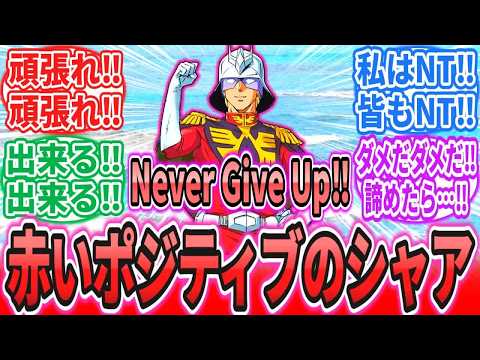
▶ Watch the original YouTube video
How a Positively Optimistic Char Aznable Reveals the Core Truth of Gundam After 15 Years of Fandom
A viral parody video reimagining Char Aznable as an unflinchingly positive character has sparked widespread debate about the nature of Newtype philosophy and what constitutes an ideal human being in the Gundam universe. The concept challenges 15 years of accumulated fan interpretation by asking: what if Char simply believed in himself?
What Happened
A parody video featuring an alternate version of Char Aznable—the iconic antagonist from Mobile Suit Gundam: Char’s Counterattack—has gained significant traction online. In this reimagining, Amuro Ray acknowledges Char as a Newtype, and Char accepts this validation completely, transforming into an entirely positive, confident individual. Rather than pursuing his original plan to drop Axis onto Earth, this version of Char becomes driven by a mission to guide all humanity toward Newtypehood, powered entirely by belief in himself and others.
The video’s premise is deceptively simple: it explores what happens when a character defined by doubt and internal conflict suddenly gains absolute confidence through external validation. The result has resonated with viewers who see in this optimistic Char a more idealistic vision of what a Newtype should be.
Why It Matters
This parody cuts to the heart of fundamental questions that have defined the Gundam franchise for decades: What is a Newtype? What does it mean to be truly evolved as a human being? And perhaps most importantly, is doubt a weakness or an essential part of the human experience?
The viral response reveals a significant generational shift in how audiences perceive character development. Modern anime increasingly favors protagonists with unwavering conviction—characters like Eren Yeager from Attack on Titan or Yuji Itadori from Jujutsu Kaisen—over the conflicted, doubting heroes that defined earlier works. This parody forces viewers to confront whether the industry’s preference for certainty over introspection represents progress or loss.
Additionally, the video raises uncomfortable questions about the dangers of absolute confidence in high-ability individuals. A Char who acts without hesitation could be either humanity’s savior or its doom, depending on perspective.
Background
Char Aznable is one of anime’s most complex antagonists, introduced in the original Mobile Suit Gundam (1979) and developed across multiple series. His character arc spans from cold military officer to tragic figure consumed by doubt and philosophical conflict. In Char’s Counterattack (1988), Char attempts to drop the asteroid Axis onto Earth, ostensibly to save humanity from gravitational stagnation, but his motivations remain clouded by internal uncertainty.
Throughout the Gundam timeline, Char is defined by a fundamental contradiction: he possesses exceptional ability and intelligence, yet constantly questions the validity of his own judgments. He repeatedly seeks external validation—particularly from Amuro Ray—to justify his actions. This psychological dependency, while making him deeply human and relatable, ultimately contributes to his defeat.
The concept of “Newtype” itself remains deliberately ambiguous throughout the franchise. Amuro defines it as the ability for humans to understand one another. Char interprets it as the next evolutionary stage of humanity. This definitional gap forms the philosophical core of their conflict.
Key Points
- The Premise: In this parody, Amuro’s acknowledgment that Char is a Newtype causes Char to completely transform into an unwavering optimist with absolute self-confidence.
- Character Transformation: Positive Char abandons doubt entirely and becomes driven by a mission to guide all humanity toward Newtypehood through belief and trust.
- Viewer Response: The majority of online reactions express that this optimistic version actually represents a more ideal form of Newtype than the original conflicted Char.
- The Paradox: The parody simultaneously celebrates the power of believing in others while highlighting the potential danger of high-ability individuals acting without hesitation.
- Fundamental Question: The video asks whether Newtype philosophy is truly about transcending doubt, or whether doubt itself is essential to being authentically human.
- Industry Trend: The parody reflects a broader shift in anime from depicting conflicted, doubtful protagonists to favoring characters with clear conviction and unwavering purpose.
Timeline
- 1979: Char Aznable introduced in Mobile Suit Gundam as a complex antagonist defined by internal conflict.
- 1985-1986: Char’s character deepens through Mobile Suit Z Gundam and Mobile Suit Gundam ZZ, showing increasing psychological turmoil.
- 1988: Char’s Counterattack released, depicting Char’s final confrontation with Amuro and his ultimate defeat.
- 2009: Viewer first encounters the Gundam series and becomes captivated by Char’s complexity.
- 2023: Parody video of “Positive Char Aznable” gains viral traction on social media, sparking widespread discussion.
Perspectives
The Optimistic Interpretation: Many viewers argue that Positive Char represents the ideal Newtype—someone who trusts himself, trusts others, and acts decisively toward humanity’s collective good. This perspective sees the parody as revealing what Char could have been if freed from self-doubt. The ability to believe in others without reservation is presented as a genuine strength, not a weakness.
The Critical Interpretation: Other viewers recognize the danger inherent in the parody. An exceptionally capable person acting with absolute confidence and without hesitation could cause catastrophic harm, regardless of their intentions. This perspective suggests that Char’s original doubt, while painful, served as a necessary check on his power. The parody inadvertently highlights how conviction without introspection can become tyranny.
The Philosophical Interpretation: Some see the parody as exploring the nature of human identity itself. Char’s transformation upon receiving Amuro’s validation reveals his fundamental dependence on external approval. This raises questions about whether true selfhood can exist independent of others’ recognition, or whether human identity is inherently relational.
The Industry Perspective: From a production standpoint, the parody reflects genuine shifts in what contemporary audiences find compelling. Modern anime increasingly features protagonists with clear moral convictions and decisive action, moving away from the existential doubt that characterized 1980s works like Gundam and Evangelion.
Comparative Analysis: Doubt vs. Conviction in Anime
Examining other major anime characters reveals a clear pattern. Char and Shinji Ikari (Evangelion) are defined by perpetual doubt and ultimately experience defeat or psychological breakdown. Eren Yeager (Attack on Titan) and Yuji Itadori (Jujutsu Kaisen) possess unwavering conviction and achieve their objectives, though at great cost. Lelouch (Code Geass) occupies a middle ground, doubting himself while still acting decisively, ultimately achieving his goal but losing everything in the process.
This pattern suggests that in anime narrative logic, conviction—regardless of whether it proves correct—produces action and results, while doubt produces paralysis and defeat. The parody exploits this pattern by asking: what if Char had conviction?
Insights
The viral success of Positive Char Aznable reveals several important truths about contemporary anime fandom and storytelling.
First, audiences have largely internalized a preference for confident, decisive protagonists over conflicted ones. This represents a genuine shift from the 1980s-1990s anime philosophy, which celebrated psychological complexity and existential doubt as markers of depth. The parody’s popularity suggests viewers find the idea of a confident Char more appealing than the original—yet this preference itself deserves scrutiny.
Second, the parody demonstrates that Char’s fundamental weakness is not his philosophy or his goals, but his psychological dependence on external validation. A single word from Amuro completely transforms him. This reveals that Char’s tragedy stems not from being wrong, but from being unable to trust his own judgment. The parody suggests that if Char could simply believe in himself, he would become unstoppable.
Third, and most importantly, the parody raises an uncomfortable question about the relationship between power and certainty. Should we trust powerful individuals who act without doubt? The video’s comment sections reveal viewers grappling with this tension—simultaneously drawn to Positive Char’s optimism while recognizing the potential danger of his absolute conviction.
Finally, the parody suggests that the original Char’s doubt was not a flaw to be overcome, but perhaps a necessary feature of his humanity. His inability to fully commit to his own vision, his constant questioning, his need for validation—these made him tragic and human. Removing them creates someone more effective, but less recognizably human.
The question the parody ultimately poses is not “Would Char be better if he were more confident?” but rather “What do we lose when we eliminate doubt from human consciousness?” In an era of increasingly polarized certainty, both online and in politics, this question carries weight beyond anime fandom.