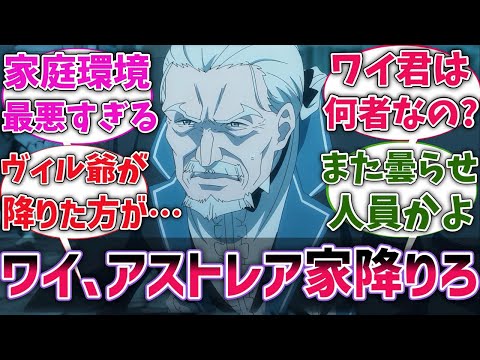
▶ Watch the original YouTube video
Re:Zero’s Wai-kun: The Hidden Genius of the Astrea Family and His Tragic Fate
Wai-kun, the mysterious younger brother of Reinhardt in Re:Zero, represents one of anime’s most complex explorations of talent and despair. Despite possessing hidden genius-level abilities, he remains overshadowed by his perfect older brother, embodying the series’ central theme that even exceptional talent can be rendered meaningless in the face of overwhelming superiority.
What Happened
Wai-kun is a largely unnamed character in Re:Zero who serves as the younger brother of Reinhardt van Astrea, the world’s strongest swordsman. Unlike typical minor characters, Wai-kun possesses significant hidden abilities: he acquired the “Sword” ability at a remarkably young age and allegedly defeated a Black Snake—one of the Three Great Demons—single-handedly. However, his existence remains largely overshadowed by his brother’s overwhelming power and his father Heinkel’s psychological breakdown. According to fan analysis and creator Tappei Nagatsuki’s hints, Wai-kun is destined for a tragic exit from the story, likely involving Pandra’s ability to misinterpret reality, resulting in his death.
Why It Matters
Wai-kun’s character serves as the ultimate expression of Re:Zero’s central thematic concern: the absolute determinism of talent in a world where effort proves meaningless against superior ability. His existence challenges conventional anime storytelling, where unnamed characters typically play insignificant roles. Instead, Wai-kun embodies a more sophisticated tragedy—a genuinely talented individual whose abilities are rendered irrelevant by proximity to absolute superiority. This character design reflects broader trends in modern anime that grapple with questions of merit, destiny, and the psychological toll of living in the shadow of perfection. Understanding Wai-kun provides insight into how contemporary anime explores existential despair and the limits of human potential.
Background
Wai-kun exists within the Astrea family, one of Re:Zero’s most prominent noble houses. His grandfather Wilhelm is a legendary swordsman; his father Heinkel’s mind was broken by past trauma; his older brother Reinhardt is acknowledged as the world’s strongest warrior. The family operates within a strict hierarchy of talent, where ability determines worth and social position. Wai-kun’s acquisition of the “Sword” ability—a manifestation of one’s talent and effort—at a young age suggested exceptional promise. However, this promise has been systematically eclipsed by Reinhardt’s existence. The character’s consistent silence throughout the narrative is interpreted not as mere personality trait but as a psychological defense mechanism: by remaining silent, Wai-kun avoids confirming his own inferiority in the face of his brother’s perfection.
Key Points
- Hidden Talent: Wai-kun acquired the “Sword” ability at an unusually young age and allegedly defeated a Black Snake single-handedly, suggesting strength potentially exceeding Theresa and rivaling young Wilhelm
- The Paradox of Excellence: Unlike typical “powerless younger brother” archetypes, Wai-kun is genuinely talented, yet his abilities are rendered meaningless by Reinhardt’s absolute superiority
- Psychological Defense: His characteristic silence functions as a defense mechanism against acknowledging his own inadequacy relative to his brother
- Predetermined Tragedy: Creator Tappei Nagatsuki has reportedly already written Wai-kun’s “exit scene,” suggesting his death is narratively inevitable
- Thematic Significance: Wai-kun embodies Re:Zero’s exploration of talent determinism—the idea that in this world, talent decides everything, and even exceptional ability cannot overcome the weight of superior talent
- Fan Resonance: The character generates simultaneous emotions of sympathy, hope, and despair among viewers, creating compelling psychological engagement
Estimated Strength Hierarchy Within the Astrea Family
- 1st: Reinhardt (world’s strongest)
- 2nd: Wai-kun (likely position based on young “Sword” acquisition and Black Snake defeat)
- 3rd: Young Wilhelm
- 4th: Theresa
- 5th: Heinkel
Comparative Analysis: Wai-kun and Similar Characters
| Series | Similar Character | Key Difference | Common Element |
|---|---|---|---|
| Attack on Titan | Jean Kirstein | Jean is ordinary; Wai-kun is hidden genius. Jean survives; Wai-kun faces predetermined death | Suffering in the shadow of perfect individuals |
| My Hero Academia | Todoroki Shoto | Todoroki is a perfect superhuman; Wai-kun is imperfect genius. Todoroki finds his own path; Wai-kun cannot | Parental expectations versus personal talent |
| Demon Slayer | Tanjiro’s Siblings | Tanjiro’s siblings lack talent; Wai-kun possesses it. Both remain overshadowed by their brother | Inferiority complex within sibling relationships |
The Pandra Misinterpretation Scenario
The most plausible death scenario involves Pandra’s reality-warping ability. When Pandra resurrects Theresa, Wilhelm—upon learning of her past as his enemy—attempts to strike her down. However, Pandra’s power causes Wilhelm’s blade to redirect toward Wai-kun instead. This scenario maximizes narrative tragedy across multiple characters: Heinkel’s despair deepens as he loses his son through his own choices; Wilhelm carries the guilt of killing his grandson; Reinhardt’s status as “world’s strongest” becomes relativized by his inability to prevent his brother’s death. This outcome reinforces Re:Zero’s thematic assertion that talent and effort alike prove powerless against fate.
Perspectives
Fan Interpretation: The anime community views Wai-kun through three simultaneous emotional lenses—sympathy for his overshadowed position, hope regarding his hidden potential, and despair over his predetermined exit. This emotional complexity makes him uniquely compelling despite minimal screen time.
Narrative Function: From a storytelling perspective, Wai-kun serves as the ultimate expression of Re:Zero’s talent-determinism worldview. His death would not represent random tragedy but rather the inevitable consequence of existing in a universe where ability absolutely determines outcome.
Character Design Intent: Creator Tappei Nagatsuki’s decision to leave Wai-kun unnamed is deliberate. In Re:Zero’s cosmology, “having a name” equals “being recognized by the world” equals “talent being rewarded.” Wai-kun’s namelessness and likely death represent the ultimate statement: even hidden talent means nothing when eclipsed by greater talent.
Insights
Wai-kun represents a sophisticated evolution in anime character design, moving beyond the traditional “powerless younger sibling” archetype to explore a more psychologically complex tragedy: the suffering of genuinely talented individuals rendered irrelevant by proximity to absolute superiority. His character embodies Re:Zero’s unflinching exploration of a world where talent determines everything and effort provides no meaningful counterbalance.
The broader significance lies in what Wai-kun reveals about contemporary anime’s thematic preoccupations. Since 2015, series including Attack on Titan, My Hero Academia, and Jujutsu Kaisen have increasingly grappled with questions of talent, merit, and the psychological toll of inadequacy. Re:Zero, through Wai-kun, presents perhaps the most pessimistic answer: even exceptional ability cannot overcome the weight of superior talent, and the only escape from this hierarchy is death.
Wai-kun’s silence throughout the narrative gains profound meaning when understood as psychological self-negation rather than personality trait. He has internalized the message that his existence is meaningless, and his predetermined tragic exit represents not random plot development but the logical conclusion of a world where talent is absolute and his talent, however considerable, remains insufficient.
The character ultimately functions as a mirror for viewers who have experienced the psychological burden of excellence in the shadow of greater excellence—a burden that Re:Zero suggests may be fundamentally unresolvable within its worldview.