▶ Watch the original YouTube video
Sasuke Uchiha stands as one of anime’s most hunted characters, pursued relentlessly by Orochimaru, Obito, and even Madara Uchiha himself. This deep analysis explores why the Uchiha prodigy became the ultimate prize for multiple factions, examining the intersection of bloodline talent, psychological vulnerability, and strategic value that made him irresistible to history’s greatest ninja.
- What Happened
- Why It Matters
- Background
- Key Points
- The Three Elements of Sasuke’s Desirability
- Madara’s Statement: The True Meaning
- The Heart-Body Paradox
- Sasuke Versus Naruto: Two Destinies
- The Perfect Instrument: Talent Plus Flaw
- Comparative Analysis: The “Hunted Talent” Archetype in Anime
- Industry Trends: The Rise of the Hunted Protagonist
- The Paradox of Sasuke’s Independence
- Insights and Implications
What Happened
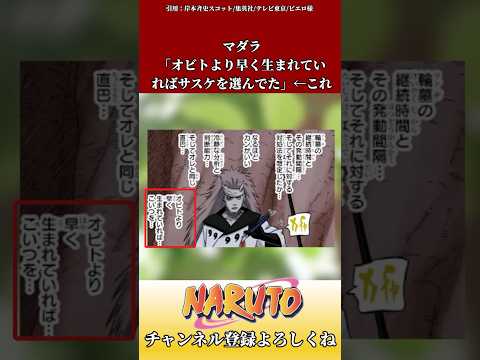
Throughout the Naruto series, Sasuke Uchiha becomes the target of multiple powerful antagonists. Most significantly, Madara Uchiha makes a striking statement: had he been born earlier, he would have chosen Sasuke as his successor instead of Obito. This declaration reveals a fundamental truth about Sasuke’s position in the ninja world—he represents an unprecedented combination of talent, potential, and exploitability that even the legendary Madara found compelling.
Why It Matters
Understanding why Sasuke was hunted provides crucial insight into Naruto’s thematic structure. While Naruto was “entrusted” with hopes and dreams by mentors like the Fourth Hokage and Kakashi, Sasuke was “hunted” as a tool to be used. This fundamental difference shapes their entire character arcs and the moral landscape of the series. The pattern of talented individuals being pursued rather than nurtured reflects deeper questions about power, ambition, and control in the Naruto universe.
Background
Sasuke’s desirability stems from multiple sources. First, he is the heir to the Uchiha clan, one of the founding families of the Hidden Leaf Village, carrying the prestigious Sharingan bloodline limit. Second, he demonstrates extraordinary learning ability—the capacity to instantly master any technique he witnesses. Third, his psychological profile makes him manipulable: his narrow focus on revenge against his brother Itachi, his emotional volatility, and his obsessive nature create exploitable weaknesses. These three elements combine to create what multiple antagonists recognized as the perfect instrument.
Key Points
- Madara’s Preference: Madara explicitly stated he would have chosen Sasuke over Obito had timing allowed, indicating Sasuke surpassed even his chosen successor in potential value
- The Sharingan Legacy: Sasuke’s Sharingan represents the culmination of generations of Uchiha power, making it the most evolved and promising version of the bloodline limit
- Supernatural Learning Speed: Sasuke’s ability to instantly comprehend and replicate any technique he observes is extraordinarily rare, even among elite ninja
- Psychological Exploitability: Sasuke’s revenge obsession, emotional instability, and narrow perspective make him susceptible to manipulation by those offering power or purpose
- The Perfect Tool: Orochimaru, Obito, and Madara all recognized that Sasuke’s combination of talent and vulnerability made him the ideal instrument for their ambitions
- Contrast with Naruto: While Naruto was given trust and responsibility, Sasuke was seen as a resource to be acquired and controlled
The Three Elements of Sasuke’s Desirability
Sharingan Perfection as a Bloodline Limit
The Sharingan is not merely a powerful eye technique—it represents the accumulated talent of the Uchiha clan across generations. Sasuke’s version stands as the latest iteration, carrying within it the potential of his father Fugaku, his brother Itachi, and extending back to Madara himself. This genealogical power makes his bloodline uniquely valuable. Orochimaru pursued Sasuke specifically because the Uchiha blood offered both immortality through body transfer and access to the most refined version of a bloodline limit in existence.
Abnormal Mastery and Learning Capacity
Sasuke possesses an unusual ability to instantly master techniques upon witnessing them. This is not merely talent—it is a form of cognitive ability that appears in few characters across anime. This capacity makes him exponentially more dangerous than standard prodigies, as he can counter enemy techniques in real-time by replicating them. The strategic implications are profound: an opponent cannot rely on technique secrecy when facing someone with Sasuke’s learning speed.
Manipulability Through Emotional Leverage
Paradoxically, Sasuke’s greatest weakness became his greatest value to manipulators. His obsession with revenge against Itachi created a psychological vulnerability that multiple antagonists exploited. Orochimaru offered power to fuel this revenge. Obito weaponized the revenge goal itself. Madara attempted to redirect this obsession toward his own vision. Sasuke’s narrow emotional focus, while limiting his perspective, made him predictable and controllable for those who understood his psychology.
Madara’s Statement: The True Meaning
When Madara declares he would have chosen Sasuke over Obito, this is not casual praise—it represents a strategic assessment. Madara, the legendary founder of the Uchiha clan and architect of the Hidden Leaf Village, recognized in Sasuke a potential successor superior to his actual choice. This acknowledgment carries profound weight because Madara is not known for empty compliments. He saw in Sasuke the combination of maximum talent and maximum manipulability that made him the ideal instrument for realizing his vision of the Infinite Tsukuyomi.
However, Madara’s preference for Sasuke as a tool rather than as a true successor reveals something crucial: even Madara did not seek a genuine heir who might surpass him. Instead, he sought a perfect instrument—talented enough to accomplish his goals, but psychologically dependent enough to remain under his control. This distinction between “successor” and “tool” defines the entire dynamic of Sasuke’s persecution.
The Heart-Body Paradox
One of the most psychologically astute observations in the series occurs when Madara recognizes a critical gap in Sasuke’s development: his body has grown far beyond his emotional maturity. Sasuke possesses the physical power of an adult warrior while retaining the emotional perspective of a child. This disparity troubled even Madara, who struggled to reconcile the threat Sasuke’s body represented with the immaturity of Sasuke’s mind.
This gap is not a minor detail—it is central to understanding why Sasuke remained so dangerous and so exploitable. His power outpaced his wisdom, creating a being capable of tremendous destruction but vulnerable to manipulation. Madara’s recognition of this gap, combined with his decision to pursue Sasuke anyway, demonstrates the depth of his ambition. He was willing to work with an incomplete instrument because the potential payoff justified the risk.
Sasuke Versus Naruto: Two Destinies
The fundamental contrast between Sasuke and Naruto illuminates the thematic core of Naruto. Sasuke was hunted—pursued by Orochimaru, Obito, and Madara as a resource to be exploited. Naruto, conversely, was entrusted—given responsibility and faith by the Fourth Hokage, Iruka, and Kakashi. This distinction creates two entirely different narrative arcs.
Sasuke’s repeated defections and betrayals can be understood not as character inconsistency but as a psychological response to being treated as a tool. Each time he was used, manipulated, or controlled, he sought escape. His journey involves rejecting every faction that attempted to claim him, ultimately choosing his own path. Naruto’s journey, by contrast, involves accepting the trust placed in him and growing into it.
This contrast suggests a deeper truth: being hunted creates a fundamentally different psychological experience than being trusted. The hunted develop defensive, reactive psychology. The trusted develop purposeful, proactive psychology. Both paths lead to strength, but through opposite mechanisms.
The Perfect Instrument: Talent Plus Flaw
A critical insight emerges from analyzing why Sasuke was so universally desired: he represents the optimal combination of strength and weakness. There exist two types of powerful individuals. The first type—the perfect master—possesses complete self-actualization and unshakeable conviction. These individuals are difficult to manipulate because they have already established their own path. Madara and Hashirama represent this archetype.
The second type—the talented but flawed—possesses extraordinary ability coupled with clear psychological vulnerabilities. These individuals are highly manipulable because they seek external solutions to their internal deficits. Sasuke exemplifies this archetype perfectly. His talent is undeniable, but his need for power to achieve revenge, his emotional instability, and his narrow perspective create exploitable gaps.
Paradoxically, Sasuke’s flaws made him more valuable than perfection would have. A perfect Sasuke would have been uncontrollable. The flawed Sasuke could be offered solutions: Orochimaru offered power, Obito offered purpose, Madara offered ideology. Each antagonist understood that Sasuke’s defects were the leverage points through which he could be controlled.
Comparative Analysis: The “Hunted Talent” Archetype in Anime
Code Geass and Lelouch
Lelouch in Code Geass becomes hunted after acquiring the Geass power, but with a crucial difference: Lelouch chose his power. Sasuke’s talents are innate. This distinction matters because chosen power implies agency, while inherited power implies destiny. Lelouch’s hunted status stems from his own choices, while Sasuke’s stems from circumstances of birth. This difference creates distinct psychological trajectories.
Attack on Titan and Eren
Eren Yeager, like Sasuke, becomes hunted for possessing a rare power—the ability to transform into a Titan. However, Attack on Titan frames this power as a curse, while Naruto frames Sasuke’s talents as gifts. The framing shapes how audiences interpret the hunted character’s moral position. A cursed power creates sympathy; a gifted power creates ambition.
My Hero Academia’s Approach
My Hero Academia presents a fundamentally different model: individual powers (Quirks) are socially recognized and institutionalized. Characters with strong Quirks are celebrated rather than hunted. This contrasts sharply with Naruto, where Sasuke’s talents make him a target precisely because they exist outside normal social structures. The Uchiha clan’s power is feared and coveted, not celebrated.
Industry Trends: The Rise of the Hunted Protagonist
Analysis of anime trends over the past two decades reveals that the “hunted protagonist” archetype has become increasingly prevalent. Jujutsu Kaisen’s Yuji Itadori, Attack on Titan’s Eren Yeager, and numerous other recent series feature protagonists pursued by multiple factions. This pattern suggests a shift in how contemporary audiences relate to power and destiny.
Naruto, which premiered in 2002, pioneered this approach in mainstream anime. By making Sasuke a hunted figure rather than a celebrated hero, the series introduced audiences to a protagonist whose power creates isolation rather than connection. This innovation influenced the entire trajectory of subsequent anime, establishing the hunted protagonist as a viable and compelling archetype.
The Paradox of Sasuke’s Independence
Despite being hunted by history’s greatest ninja, Sasuke ultimately refuses to become anyone’s instrument. He rejects Orochimaru’s control, breaks free from Obito’s influence, and resists Madara’s ideology. This refusal represents the core of Sasuke’s character arc: the hunted becoming the hunter, the tool becoming the agent.
This outcome suggests a profound truth about Sasuke’s nature. His value to his pursuers lay not in his actual compliance but in his potential. Each antagonist believed they could control him, but Sasuke’s fundamental nature—his independence, his pride, his refusal to be defined by others—ultimately made him ungovernable. The very qualities that made him desirable as a tool made him impossible to use.
Insights and Implications
The analysis of why Sasuke was hunted reveals several broader truths about power and ambition in the Naruto universe. First, raw talent alone does not determine value—psychological exploitability is equally important. Second, the difference between being hunted and being trusted creates fundamentally different character trajectories. Third, the most dangerous individuals are often those whose talents exceed their emotional maturity, creating unpredictable instruments.
Madara’s statement that he would have chosen Sasuke over Obito represents the highest compliment the series offers: recognition of potential so great that even the legendary founder of the Uchiha clan desired it. Yet this compliment also reveals the tragedy of Sasuke’s position—desired not for who he is, but for what he can be made to do. His ultimate triumph lies not in fulfilling anyone’s vision of his potential, but in transcending it entirely to forge his own path.
The hunted protagonist archetype that Naruto established continues to resonate because it reflects a universal human experience: the tension between external expectations and internal identity. Sasuke’s journey from hunted prodigy to independent agent speaks to the struggle all individuals face when their talents make them valuable to others’ ambitions. His refusal to become anyone’s instrument, despite overwhelming pressure and temptation, defines his character more than any of his extraordinary abilities.