▶ Watch the original YouTube video
Uma Musume KFC Collaboration 2026: Fan Reactions and Character Design Analysis
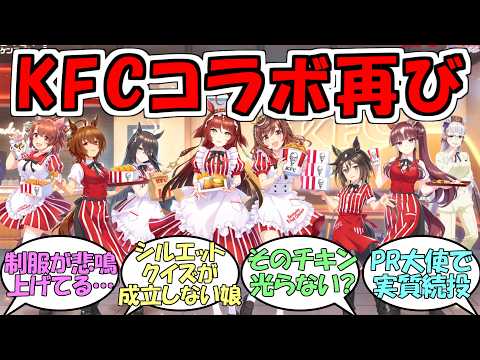
The 2026 KFC collaboration for Uma Musume has generated significant fan enthusiasm, showcasing how limited costume designs can enhance character individuality. The collaboration represents a refined approach to brand partnerships in gaming, combining real-world corporate identity with character authenticity while deepening fan engagement with their favorite characters.
What Happened
Uma Musume, a popular mobile game, has launched a 2026 collaboration with KFC featuring characters in KFC-themed uniforms. This marks an evolution from the previous casual clothing version, introducing a more defined thematic constraint through the fast-food restaurant uniform aesthetic. The collaboration has generated substantial online discussion, with fans expressing enthusiasm for how individual characters maintain their distinctive traits despite the uniform design limitation.
Why It Matters
This collaboration demonstrates a sophisticated approach to character merchandising and brand partnerships in the gaming industry. By constraining character expression through uniform design, the collaboration paradoxically enhances character individuality—a principle that challenges conventional costume design assumptions. The success of this approach provides insight into modern gaming marketing strategies and how real-world brand partnerships can strengthen rather than dilute game narratives. Additionally, the collaboration drives tangible consumer behavior, with fans expressing intent to visit actual KFC locations, bridging digital entertainment and real-world commerce.
Background
Uma Musume is a mobile game that launched in 2021 and has developed a mature fan culture centered around “favorite character” (oshi-uma) dedication. The game has established a track record of successful collaborations with real-world brands, including previous fast-food partnerships. Character design in Uma Musume emphasizes distinctive silhouettes and individual traits—such as unique ear shapes, hair styles, and body proportions—that remain recognizable even under costume constraints. The franchise has demonstrated consistent growth through strategic character positioning and multi-platform marketing initiatives.
Key Points
- Costume Evolution: The collaboration progresses from casual wear to KFC-branded uniforms, with major characters including Buena Vista, Red Desire, and Stego Style receiving new visual presentations while maintaining core design identity.
- Character Design Excellence: Characters remain identifiable by silhouette alone, demonstrating superior design fundamentals. Distinctive features—ears, hair, proportions—remain visually prominent despite uniform constraints.
- Strategic Character Positioning: Buena Vista functions as the collaboration’s focal point due to character traits aligned with service industry roles; Red Desire’s “saint” archetype naturally suits customer service; Dantz and Stego Style occupy established “food service” character positions across multiple collaborations.
- Mascot Strategy: Gorshi functions as a game mascot rather than a traditional character, appearing as a Colonel Sanders figurine and serving as the game’s symbolic representation rather than a role-playing participant.
- Fan Engagement: Overwhelming positive response from “oshi-uma” fans, with character-specific enthusiasm driving social media engagement and real-world purchasing behavior at KFC locations.
- Marketing Integration: The collaboration successfully bridges digital entertainment and physical retail, with character appeal directly influencing consumer visits to actual restaurants.
Character Analysis
Buena Vista: The Service Industry Archetype
Buena Vista emerges as the collaboration’s standout character, generating the most enthusiastic fan commentary. This positioning reflects strategic casting decisions: Buena Vista’s in-game characterization emphasizes sociability and professional customer service skills, making the KFC employee role a natural extension of established character traits. The character’s frequent appearance across multiple collaborations suggests developer recognition of her adaptability to various scenarios. Fan comments emphasize her “service smile” and professional demeanor, indicating that costume design successfully reinforces rather than contradicts character essence.
Red Desire: The Saint Archetype
Red Desire’s character theme centers on a “saint” archetype, fundamentally defined by service to others. The KFC employee role aligns with this core characteristic, as customer service represents a form of devotion. Fan observations note that Red Desire’s typical under-eye shadows appear diminished in the collaboration artwork, suggesting visual representation of happiness through service—a subtle design choice reinforcing character narrative consistency.
Dantz and Stego Style: Food Service Specialists
Both characters have established positions as food service industry representatives across multiple collaborations. Dantz appears in previous fast-food partnerships, while Stego Style’s smaller stature creates a “work-study student” aesthetic. This repeated positioning indicates deliberate character specialization, where specific characters become associated with particular industry roles across the game’s collaboration ecosystem.
Gorshi: Mascot Evolution
Gorshi’s role transcends traditional character participation, functioning instead as a Colonel Sanders figurine—a mascot representation rather than a uniformed employee. This positioning reflects a sophisticated strategy where Gorshi represents the game itself rather than participating in the narrative scenario. Fan commentary suggests some ambivalence about this approach, with questions about whether Gorshi’s mascot status has diminished character individuality.
Design Philosophy: Constraint as Creative Catalyst
The collaboration demonstrates a counterintuitive design principle: uniform constraints enhance rather than diminish character individuality. By limiting costume variation, designers must rely on fundamental character traits—facial structure, hair design, body proportions, ear shapes—to maintain visual distinction. This approach mirrors successful character design in other media, where iconic characters remain recognizable regardless of costume changes. The KFC uniform functions as a design constraint that forces emphasis on core character elements, resulting in stronger visual identity rather than weaker differentiation.
Fan Response and Community Engagement
Online reactions demonstrate overwhelmingly positive reception, with fans expressing enthusiasm for character presentations and indicating real-world purchasing behavior. Comments reveal that fans plan to visit KFC locations specifically to engage with the collaboration, indicating successful bridge between digital entertainment and physical retail. Fan commentary emphasizes character-specific appreciation, with “oshi-uma” fans expressing deep emotional investment in their preferred characters’ new presentations. The collaboration successfully deepens existing fan attachments rather than creating new ones, suggesting effective targeting of established community segments.
Industry Implications
The 2026 KFC collaboration represents a refined approach to brand partnerships in gaming, demonstrating how real-world corporate identity can integrate with game narratives without compromising either element. The collaboration succeeds by aligning character traits with industry roles, ensuring that costume changes reinforce rather than contradict established character identities. This approach contrasts with less sophisticated collaborations where costumes feel disconnected from character essence. The measurable impact on consumer behavior—fans visiting actual KFC locations—validates the commercial effectiveness of character-driven marketing strategies. Other gaming companies will likely adopt similar approaches, emphasizing character authenticity and narrative alignment in future brand partnerships.
Insights
The Uma Musume KFC collaboration demonstrates that successful brand partnerships require deep understanding of character design principles and fan community dynamics. Rather than treating collaborations as superficial costume changes, the developers have created scenarios where uniform constraints enhance character individuality through emphasis on fundamental design elements. The collaboration’s success reflects mature fan culture centered on character appreciation, where new visual presentations of established characters generate significant engagement. The bridge between digital entertainment and physical retail commerce indicates that character-driven marketing can effectively influence real-world consumer behavior. The collaboration also reveals how mascot characters (Gorshi) can serve symbolic functions distinct from traditional character roles, expanding the narrative possibilities within collaborative frameworks. Overall, the 2026 KFC collaboration represents a sophisticated evolution in gaming brand partnerships, where corporate identity integration strengthens rather than dilutes game narratives and character authenticity.