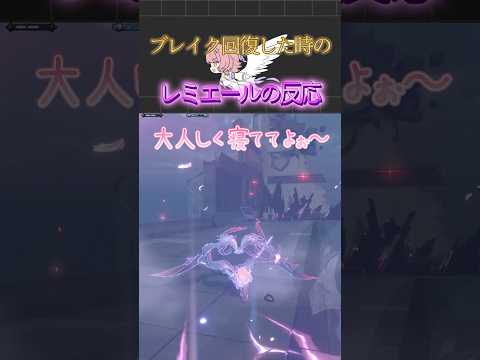
▶ Watch the original YouTube video
Zenless Zone Zero Players Debate Remielle’s Break Recovery Mechanic: A Game Design Philosophy Clash
A heated discussion has emerged within the Zenless Zone Zero community regarding the character Remielle’s break recovery system. Rather than a simple balance issue, the debate reveals deeper concerns about game design transparency and player predictability—raising important questions about how action RPGs should handle enemy mechanics.
What Happened
Remielle’s break recovery mechanic in Zenless Zone Zero has sparked significant debate across the player community. The issue centers on how quickly the character recovers from break status—a vulnerable state that occurs when players successfully destroy an enemy’s shield. Players report that Remielle’s break recovery timing is either too rapid or unclear, making it difficult to plan effective strategies during combat.
The controversy gained momentum on social media platforms, with players expressing confusion rather than simply claiming the character is overpowered. Video evidence and player testimonies suggest that the mechanic’s lack of transparency is the primary concern, not raw damage output or difficulty level.
Why It Matters
This debate transcends a single character balance issue. It highlights a fundamental principle in game design: player predictability and transparency are essential for strategic gameplay. When players cannot reliably predict enemy behavior patterns, they shift from executing strategy to pure reaction—transforming the game into what many perceive as a “luck-based” experience rather than a skill-based one.
The Remielle controversy also signals potential shifts in HoYoverse’s design philosophy. The studio built its reputation on games like Genshin Impact and Honkai: Star Rail by balancing complexity with accessibility. If Zenless Zone Zero introduces unpredictable mechanics, it may alienate players accustomed to HoYoverse’s established design standards.
Furthermore, this discussion has broader implications for the action RPG genre, potentially establishing new industry standards for how enemy mechanics should balance challenge with clarity.
Background
Zenless Zone Zero employs a break system where players can destroy enemy shields to create temporary windows of vulnerability. This mechanic sits between traditional turn-based RPG design and pure action gameplay, requiring players to identify optimal moments to maximize damage output.
In comparison, Genshin Impact provides approximately 2-3 seconds of vulnerability after shield destruction, while Honkai: Star Rail offers 1-2 seconds. Both games maintain high transparency regarding recovery conditions. Remielle’s break recovery, however, appears to operate under different parameters—either recovering too quickly or with unclear triggering conditions.
The character’s dialogue during combat—including lines like “I’m not giving up yet” and “I should rest”—reflects both character personality and potential system design issues, creating confusion about whether the mechanic is intentional or problematic.
Key Points
- The core issue is unpredictability, not power level: Players struggle with understanding when Remielle recovers, not whether the character is too strong.
- Transparency gap with other HoYoverse titles: Remielle’s mechanic lacks the clarity found in Genshin Impact and Honkai: Star Rail, creating inconsistent player expectations.
- Strategic gameplay compromised: Unclear recovery timing prevents players from planning effective combat strategies, forcing reactive rather than proactive gameplay.
- Possible intentional design experiment: Other Zenless Zone Zero characters feature more straightforward mechanics, suggesting Remielle may represent a deliberate design test.
- Community response emphasizes confusion over difficulty: Player feedback focuses on incomprehension rather than excessive challenge, indicating a design clarity problem.
- Broader industry implications: The debate raises questions about how action RPGs should balance complexity with player understanding across the entire genre.
Comparative Analysis: HoYoverse Design Standards
| Aspect | Genshin Impact | Honkai: Star Rail | Zenless Zone Zero (Remielle) |
|---|---|---|---|
| Break recovery window | 2-3 seconds | 1-2 seconds | Unclear (potentially shorter) |
| Recovery condition transparency | High | High | Low |
| Player predictability | High | High | Low |
| Difficulty scaling method | Shield quantity increase | Turn limit reduction | Recovery speed acceleration (suspected) |
Player Psychology: Why Unpredictability Causes Stress
The Remielle debate reveals a critical insight about player satisfaction: difficulty does not cause frustration; unpredictability does. Players willingly engage with challenging content when they understand the rules and can learn from repeated attempts. However, when mechanics remain opaque despite multiple playthroughs, players experience what psychologists term “learned helplessness.”
The distinction is crucial. In games like Dark Souls, boss patterns are completely learnable, enabling players to improve through skill development. Conversely, if Remielle’s recovery timing cannot be reliably predicted, players cannot develop effective counter-strategies, leading to frustration and disengagement.
This psychological principle explains why community feedback emphasizes “I don’t understand this mechanic” rather than “this character is too strong.” The former indicates a design clarity problem; the latter would suggest a balance adjustment.
Community Response and Sentiment
Negative feedback dominates: Twitter discussions consistently highlight confusion about break recovery timing. Strategy guides and counter-guides proliferate, indicating high player demand for external explanations of the mechanic.
Streamer observations: Gaming content creators frequently report “getting stuck” on Remielle encounters, with commentary focusing on mechanic comprehension rather than difficulty acknowledgment.
Minority positive perspective: Some hardcore players appreciate the added complexity, viewing Remielle as appropriately challenging. However, this viewpoint remains significantly outnumbered by critical feedback.
Root cause analysis: The disconnect likely stems from players transferring expectations from Genshin Impact and Honkai: Star Rail, where established design patterns do not apply to Zenless Zone Zero. This creates a learning curve that many perceive as poor design rather than intentional difficulty scaling.
Industry Trends and Design Philosophy Shifts
The Remielle controversy emerges within a broader industry context. Recent years have seen divergent approaches to game complexity: Final Fantasy XVI (2023) succeeded through combat simplification, while Palworld (2024) gained traction through intricate systems appealing to core gamers.
HoYoverse previously achieved “simplicity with depth” in Genshin Impact—accessible to casual players while offering strategic complexity for dedicated players. Zenless Zone Zero appears to test whether the studio can push toward greater mechanical complexity without sacrificing accessibility.
Remielle may represent an intentional experiment in this direction. If so, the community response provides valuable feedback about whether players accept increased unpredictability as a trade-off for deeper gameplay systems.
Practical Implications and Future Outlook
Near-term adjustments likely: HoYoverse has historically responded quickly to player feedback. Remielle’s mechanic will probably receive adjustments, potentially including clearer visual or audio cues indicating recovery timing.
Transparency improvements expected: The studio may implement in-game information displays—such as enemy status screens showing “break recovery speed: medium”—to enhance player predictability.
Broader design standards: This debate may establish new conventions for action RPG enemy mechanics, particularly regarding the balance between challenge and clarity.
Character-specific strategies: Players can mitigate Remielle’s unpredictability by prioritizing continuous damage over burst damage, utilizing status effects, and pairing with characters that ignore break mechanics entirely.
Insights
The Remielle break recovery debate illustrates a fundamental truth in game design: player satisfaction depends more on understanding than on difficulty. A well-designed challenging encounter teaches players through repeated attempts; a poorly-designed one frustrates them through incomprehensibility.
For HoYoverse, this represents a critical juncture. The studio can either refine Remielle’s mechanic to enhance transparency while maintaining challenge, or recalibrate Zenless Zone Zero’s overall design philosophy to align with established player expectations. Either path offers valuable industry lessons.
The broader takeaway: as games become more complex, design transparency becomes increasingly essential. Players embrace difficulty when they understand the rules; they reject it when mechanics remain opaque. Remielle’s controversy is ultimately not about balance—it is about communication between designers and players.
For the gaming industry, this debate signals that future complexity must be paired with enhanced clarity. Success lies not in making games harder, but in making them more understandable.