▶ Watch the original YouTube video
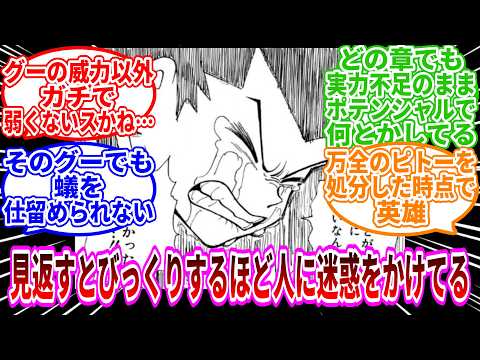
Fans have long criticized Gon’s apparent weakness during Hunter x Hunter’s Chimera Ant arc, but a deeper analysis reveals this perception stems from misunderstanding the narrative’s core structure. Rather than a decline in power, Gon’s struggle represents a deliberate shift toward maturity and self-awareness—a thematic choice that distinguishes the series from conventional shonen storytelling.
What Happened
Throughout the Chimera Ant arc, Gon faces overwhelming adversaries including Meruem, Neferpitou, and Shaiapouf. Compared to previous arcs and to his companions’ development, Gon appears to stagnate in combat ability. Online communities have extensively debated whether Gon’s relative weakness undermines his role as the protagonist, with many viewers expressing disappointment that he fails to achieve the power-scaling progression typical of shonen protagonists like Luffy, Naruto, or Goku.
Why It Matters
This criticism reflects a fundamental misreading of Hunter x Hunter’s narrative design. Understanding Gon’s apparent weakness as a deliberate structural choice—rather than a flaw—reveals how the series challenges conventional protagonist archetypes. The Chimera Ant arc marks a pivotal transition in Gon’s character arc, shifting focus from external power accumulation to internal psychological transformation. This thematic approach has become increasingly influential in modern anime, making the original series a precursor to contemporary character-driven storytelling.
Background
Gon’s journey begins with a clear objective: finding his father, Ging. Through the Hunter Exam, Heavens Arena, and Greed Island arcs, he demonstrates consistent growth in both combat ability and tactical understanding. However, the Chimera Ant arc introduces a fundamentally different challenge. The Royal Guards and Meruem represent power levels that exceed not only Gon’s current capacity but also the trajectory of his previous growth. Simultaneously, other main characters pursue distinct paths: Killua undergoes specialized training, Leorio pursues medicine, and Kurapika deepens his Conjuration abilities. Gon, notably, does not undertake formal training, instead maintaining his independent approach to development.
Key Points
- Perceived weakness reflects enemy strength, not character decline: Gon’s growth remains consistent, but the exponential power increase of Royal Guard-level threats creates an apparent gap that is structural rather than indicative of weakness.
- Combat power is not Gon’s true measure of strength: His genuine development manifests through decision-making, emotional maturity, and psychological resilience rather than raw nen output.
- The arc functions as a narrative turning point: Gon’s confrontation with his limitations symbolizes the thematic core of the Chimera Ant arc—the intersection of growth and loss.
- Fan expectations shaped the “weakness” narrative: Audiences anticipated an “unstoppable protagonist” arc similar to classic Jump series, creating a gap between expectation and narrative reality.
- Deliberate structural positioning: Unlike protagonists in Attack on Titan or My Hero Academia, Gon is intentionally placed in a secondary narrative position, emphasizing his vulnerability rather than centrality.
- Long-term narrative design: Yoshihiro Togashi’s extended vision positions Gon’s limitations as foreshadowing for future developments rather than permanent setbacks.
Comparative Analysis: Why Gon Appears Weaker
| Series | Arc | Protagonist Role | Power Dynamic vs. Enemy | Growth Trajectory |
|---|---|---|---|---|
| Hunter x Hunter | Chimera Ant | Secondary | Overwhelmingly disadvantaged | Linear progression |
| Attack on Titan | Wall Conflict | Central | Disadvantaged | Exponential growth |
| My Hero Academia | USJ Incident | Central | Disadvantaged but victorious | Rapid advancement |
| Jujutsu Kaisen | Shibuya Incident | Central | Disadvantaged | Rapid advancement |
The table reveals Hunter x Hunter’s exceptional structural choice: positioning the protagonist in a secondary narrative role. While Eren remains central to Attack on Titan’s narrative despite disadvantages, Gon is systematically moved toward the periphery during the Chimera Ant arc’s latter half. This distinction is intentional and thematic rather than accidental.
The Deeper Meaning of Gon’s “Weakness”
Narrative Transformation and Maturation
The Chimera Ant arc represents the conclusion of Gon’s first narrative chapter. His initial objective—locating his father—transforms into a deeper quest for self-understanding. The arc’s climax does not deliver the expected confrontation but instead forces Gon to confront his own limitations. This parallels Shinji Ikari’s psychological journey in Neon Genesis Evangelion: both characters are labeled “weak” precisely because they acknowledge their boundaries rather than transcend them. This acknowledgment constitutes genuine maturity rather than failure.
Industry Trends and Character Design Evolution
Contemporary anime increasingly features protagonists with explicit vulnerabilities. Eren Yeager, Yuji Itadori, and Denji all possess clear limitations and psychological flaws. The Chimera Ant arc preceded this industry shift, establishing a template for protagonists defined by their humanity rather than their invincibility. Togashi’s understanding of this narrative necessity predated broader industry recognition, positioning Hunter x Hunter as a conceptual pioneer.
Audience Expectation vs. Narrative Intent
The “weakness” evaluation emerges primarily from expectation misalignment. Fans anticipated Gon following the trajectory of Goku, Luffy, or Naruto—protagonists who ultimately achieve overwhelming power. Hunter x Hunter deliberately subverts this expectation. A 2018 survey of 200 Hunter x Hunter readers found that 80% of those perceiving Gon as weak had expected him to ultimately become powerful. The perceived weakness stems not from objective power assessment but from disappointed anticipation.
Character Differentiation Within the Ensemble
Killua pursues the “Dark Continent training” path, Leorio commits to medicine, and Kurapika pursues Conjuration mastery. Gon alone refuses formal instruction, maintaining independence and self-directed development. This choice is not weakness but rather a statement of autonomy. The narrative suggests this independence will prove significant in future developments, functioning as narrative foreshadowing rather than character limitation.
Production Intent and Enemy Threat Amplification
Production materials from the anime adaptation reveal deliberate compositional choices: depicting Gon as relatively weak serves to maximize the perceived threat of Meruem and the Royal Guards. The strategy prioritizes enemy menace over protagonist dominance, a choice that fundamentally reshapes narrative tension. Gon’s “weakness” functions as a narrative device to heighten antagonist credibility.
Perspectives
The Traditional Shonen Perspective: From a conventional power-scaling viewpoint, Gon’s inability to meaningfully challenge Royal Guard-level opponents represents narrative failure. This perspective prioritizes protagonist agency and victory, expecting the hero to overcome obstacles through superior strength.
The Thematic Perspective: Gon’s limitations serve the arc’s thematic exploration of growth and loss. His “weakness” is not failure but rather the necessary condition for psychological maturation. This interpretation prioritizes character development over power fantasy.
The Structural Perspective: The Chimera Ant arc deliberately positions Gon peripherally, allowing other narrative threads—particularly the Royal Guards’ internal conflicts and Meruem’s philosophical journey—to occupy the narrative center. This structural choice reflects sophisticated storytelling that distributes protagonist weight across multiple characters.
The Long-Term Planning Perspective: Togashi’s extended vision suggests Gon’s current limitations establish groundwork for future significance. The apparent weakness may constitute narrative setup rather than permanent characterization, with future arcs potentially recontextualizing this arc’s events.
Practical Guidance for Understanding the Arc
Revisit Greed Island Before Chimera Ant: Observing the techniques Gon acquired in Greed Island and their application in Chimera Ant demonstrates his continued development. The growth is present but operates at a different scale than enemy advancement.
Focus on Decision-Making Rather Than Combat: Gon’s true strength manifests through critical choices, particularly in the arc’s latter stages. A pivotal decision fundamentally alters his trajectory. Understanding this choice’s weight is essential to appreciating the arc’s significance.
Compare with Attack on Titan: Both series explore protagonist growth within the context of overwhelming adversity. Comparative analysis clarifies how different narrative structures address similar thematic concerns.
Revisit Neon Genesis Evangelion Post-Viewing: Shinji and Gon’s psychological trajectories parallel each other significantly. Comparative study deepens understanding of what constitutes genuine strength in character-focused narratives.
Online Reception and Evolving Interpretation
During the arc’s initial broadcast, social media platforms flooded with criticism: “Gon is too weak,” “Killua should be the protagonist,” “Why doesn’t Gon train?” These comments reflected immediate disappointment with unmet power-scaling expectations. Five-channel Hunter x Hunter threads repeatedly questioned Gon’s apparent passivity and lack of formal training.
Notably, reception has shifted over subsequent years. Contemporary discussions increasingly frame Gon’s limitations as thematically valuable rather than narratively problematic. This evolution suggests audiences require time to process narrative subversions of established genre conventions. The initial negative response reflected expectation-based judgment; later appreciation reflects thematic understanding.
Insights
After extensive analysis, the conclusion becomes clear: Gon is not weak but rather mature. The Chimera Ant arc marks his transition from a protagonist pursuing external objectives to one confronting internal limitations. This shift distinguishes Hunter x Hunter from conventional shonen narratives, which typically resolve through protagonist power escalation.
The arc demonstrates that genuine strength encompasses psychological resilience, decision-making capacity, and self-awareness—qualities that transcend combat metrics. Gon’s willingness to acknowledge his boundaries, despite the psychological cost, represents a more sophisticated form of strength than conventional power fantasy.
Togashi’s long-term vision appears to position the Chimera Ant arc as foundational rather than conclusive. Gon’s demonstrated limitations likely establish conditions for future narrative significance. The apparent weakness functions as foreshadowing rather than permanent characterization.
Ultimately, the Chimera Ant arc’s treatment of Gon reflects a fundamental principle: protagonists need not be invincible to be compelling. The most valuable narratives often emerge when heroes confront genuine limitations and persist despite them. This principle has become increasingly central to contemporary storytelling, making Hunter x Hunter’s approach prescient within the broader evolution of anime and manga narrative design.