▶ Watch the original YouTube video
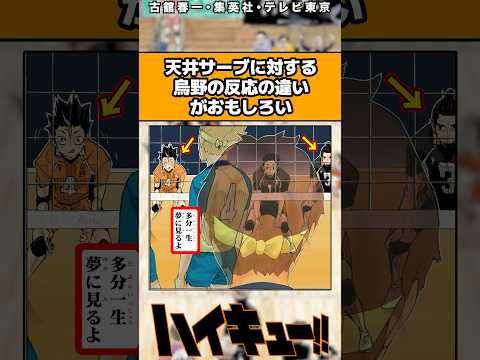
How Karasuno’s Reactions to Ceiling Serves Reveal Team Growth in Haikyuu
Haikyuu uses a subtle but powerful animation technique to show character development: by depicting how the same play—a ceiling serve—triggers different emotional and physical responses from Karasuno players across different story arcs. This approach transforms a single tactical element into a window into the team’s psychological maturation, demonstrating why Haikyuu stands apart in sports anime storytelling.
What Happened
Throughout Haikyuu, the opposing team’s ceiling serve appears multiple times across different seasons. What makes this significant is not the serve itself, but how Karasuno’s players react to it. In early episodes, the team displays fear, confusion, and a sense of helplessness when facing this powerful weapon. By later seasons, the same serve triggers analytical thinking, tactical awareness, and calm confidence. This shift in reaction—captured through facial expressions, body language, and positioning—tells the story of the team’s psychological growth without requiring explicit dialogue or explanation.
Why It Matters
This technique represents a sophisticated approach to character development in anime. Rather than simply stating that characters have grown stronger, Haikyuu shows growth through behavioral change in response to the same stimulus. This method engages viewers on a deeper level, allowing them to actively observe and interpret character development rather than passively receiving exposition. For anime as a medium, this demonstrates how visual storytelling can convey complex psychological states more effectively than dialogue alone.
Background
Haikyuu, produced by Production I.G., has been recognized for its meticulous attention to character psychology and team dynamics since its 2014 debut. The series distinguishes itself from other sports anime by focusing not only on technical skill improvement but on the psychological and emotional maturation of its characters. The ceiling serve reactions exemplify this philosophy—they serve as a recurring visual motif that tracks the team’s mental state across the narrative.
The animation studio employed several techniques to convey these psychological shifts: minute changes in pupil dilation and eyebrow position, alterations in posture and weight distribution, and shifts in how characters position themselves relative to the court and opponents. These details accumulate to create a clear visual narrative of growth.
Key Points
- Early-stage reactions: Karasuno players display fear, confusion, and physical withdrawal when facing ceiling serves, visually representing their psychological vulnerability to this unfamiliar tactic.
- Mid-stage adaptation: As the team gains experience, reactions shift toward analytical observation and tactical consideration, showing the beginning of psychological adjustment.
- Late-stage mastery: In later seasons, the same serve triggers calm assessment and strategic confidence, indicating full psychological integration of the threat into their tactical framework.
- Individual character arcs: Each player’s reaction changes distinctly, allowing viewers to track personal growth while observing collective team development.
- Visual storytelling efficiency: This technique conveys complex psychological development through animation alone, without relying on exposition or dialogue.
- Psychological realism: The progression mirrors actual sports psychology principles: threat perception decreases with familiarity, self-efficacy increases with successful adaptation, and team cohesion strengthens through shared experience.
Timeline
- Season 1: Ceiling serve introduced as a formidable opponent weapon; Karasuno displays visible distress and uncertainty.
- Season 2: Team begins developing tactical responses; reactions show growing confidence mixed with concentration.
- Season 3: Karasuno demonstrates clear analytical approach to the serve; fear largely replaced by strategic thinking.
- Season 4: Players respond with calm assessment and tactical opportunism; the serve is now treated as a manageable challenge rather than a threat.
Perspectives
Production and directorial intent: The deliberate choice to repeat this visual motif across seasons suggests intentional design by director Susumu Mitsunaka and the Production I.G team. This reflects a broader philosophy prioritizing psychological realism and character development over action spectacle.
Comparative analysis with other sports anime: While Slam Dunk focuses primarily on protagonist development and Kuroko’s Basketball emphasizes team tactical evolution, Haikyuu uniquely combines individual psychological growth with collective team maturation. This is achieved through detailed depiction of multiple characters’ simultaneous reactions to the same stimulus—a technique rarely executed with such precision in other sports anime.
Viewer interpretation: Online communities have widely recognized and praised this technique. Social media discussions reveal that viewers appreciate both the subtle artistry and the deeper narrative purpose. Some viewers report that comparing Season 1 and Season 4 reactions created a powerful emotional experience of witnessing growth.
Industry trend: This approach reflects a broader evolution in anime production, where increasingly sophisticated audiences expect and appreciate nuanced psychological storytelling. The technique has influenced subsequent sports anime productions, suggesting Haikyuu’s pioneering role in establishing this narrative method.
Insights
The ceiling serve reactions demonstrate that Haikyuu operates on a principle often overlooked in sports narratives: psychological maturity is as important as technical skill. The series suggests that true growth involves not just learning to execute techniques, but fundamentally changing one’s perception of and emotional response to challenges.
This technique also reveals the sophistication of modern anime production. By using animation to visualize internal psychological states—threat perception, self-efficacy, emotional regulation—the medium transcends its traditional limitations. What might require pages of internal monologue in prose or explicit dialogue in less sophisticated animation becomes immediately apparent through subtle visual cues.
The recurring motif serves a secondary function: it creates a visual anchor for viewers. By returning to the same scenario across seasons, the production invites active comparison and analysis. This transforms passive viewing into engaged interpretation, deepening viewer investment in the characters’ journeys.
Furthermore, the technique illustrates a fundamental principle of sports psychology: adaptation to repeated stimuli. The progression from fear to analytical assessment to confident mastery mirrors actual athlete development. By grounding the narrative in psychological realism, Haikyuu achieves both artistic authenticity and emotional resonance.
The broader implication is that Haikyuu transcends the sports anime genre by functioning as a study of human psychological development. The ceiling serve becomes a metaphor for any challenge: initial fear gives way to understanding, which eventually transforms into capability and confidence. This universal narrative arc, expressed through the specific language of volleyball and animation, explains the series’ broad appeal across diverse audiences.