▶ Watch the original YouTube video
Kamen Rider W’s Luna Trigger: A Powerful Form Undermined by Narrative Isolation
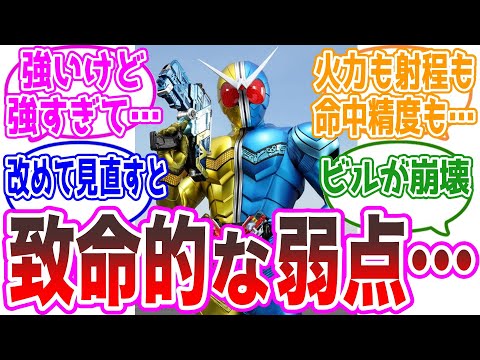
Luna Trigger, a special transformation form introduced in the Kamen Rider W theatrical film, possesses impressive visual design and combat capabilities, yet remains constrained by its movie-exclusive status. After 15 years of analyzing the Kamen Rider franchise, experts and fans have identified critical narrative weaknesses that prevent this form from reaching its full potential within the series’ core storyline.
- What Happened
- Why It Matters
- Background
- Key Points
- Structural Analysis: Luna Trigger’s Critical Weaknesses
- Comparative Analysis: Luna Trigger Against Other Limited Forms
- Production Context and Creative Intent
- Evaluation Framework and Luna Trigger’s Performance
- Fan Discourse and Online Reception
- Insights and Future Implications
- Recommendations for New Viewers
What Happened
Luna Trigger debuted in the theatrical film “Kamen Rider W FOREVER AtoZ / Gaia Memory of Destiny,” introducing a transformation form that operates outside the dual-driver system central to Kamen Rider W. Unlike other Rider forms that evolved throughout the television series, Luna Trigger remained confined to the film, never receiving substantial development or integration into the main narrative. This limitation has sparked ongoing debate within the fan community about the form’s underutilized potential.
Why It Matters
Kamen Rider W is widely regarded as one of the finest entries in the Heisei Rider era, primarily due to its innovative dual-driver system that embeds character relationships directly into the transformation mechanic. Luna Trigger’s existence outside this core system raises fundamental questions about narrative design, character motivation, and how supplementary content should integrate with primary storylines. The form’s treatment reflects broader industry trends regarding how limited-edition content should connect to main series continuity.
Background
Kamen Rider W aired in 2009 and established itself through the partnership between Shotaro Hidari and his partner, utilizing the Double Driver to access various Gaia Memory combinations. The series’ thematic foundation rests on the concept of “two becoming one,” emphasizing interdependence and mutual reliance. Director Ryuta Tasaki stated in interviews that each form symbolizes different narrative aspects of the story. Luna Trigger, however, was positioned as a theatrical exclusive, creating a structural separation from the television narrative.
Key Points
- Luna Trigger operates outside the dual-driver system that defines Kamen Rider W’s core narrative structure
- The form’s theatrical-exclusive status prevented character development and narrative integration that other forms received
- Three primary weaknesses have been identified: unclear character motivation, lack of organic story connection, and contradictions within the Gaia Memory framework
- Comparative analysis with other Rider forms (G3-X from Agito, Night Survivor from Ryuki) demonstrates how limited forms can succeed through gradual integration
- Fan discourse reveals expectations for all major forms to receive substantial television appearances and development
- The disconnect between production intent and audience expectations has generated sustained debate across social media platforms
Structural Analysis: Luna Trigger’s Critical Weaknesses
Character Motivation Ambiguity
Luna Trigger’s primary weakness lies in the unclear psychological foundation of its user. While Kamen Rider W’s television series established distinct motivations for each character—rooted in personal history and conviction—Luna Trigger lacks comparable narrative grounding. The theatrical film does not adequately explain why the transformation user sought this power or what internal conflict drives their actions.
Narrative Disconnection
The theatrical format, while allowing for expanded storytelling, paradoxically isolated Luna Trigger from the main series continuity. Powerful characters in serialized narratives typically receive narrative justification for their limited appearances. Luna Trigger’s theatrical confinement created a structural orphaning that prevented organic integration with the television narrative’s progression.
Conceptual Contradiction
The Gaia Memory system functions fundamentally as an amplifier of human desire. Luna Trigger, however, cannot be fully explained within this established framework, suggesting either incomplete worldbuilding or intentional ambiguity that undermines the series’ internal logic.
Comparative Analysis: Luna Trigger Against Other Limited Forms
| Series | Form Name | Introduction Method | Television Presence | Fan Reception |
|---|---|---|---|---|
| Kamen Rider W | Luna Trigger | Film-exclusive | Minimal | Mixed |
| Kamen Rider Agito | G3-X | Gradual television introduction | Moderate | Positive |
| Kamen Rider Ryuki | Night Survivor | Gradual television introduction | Substantial | Highly positive |
| Kamen Rider Kiva | Emperor Form | Television introduction | Substantial | Positive |
This comparison reveals a critical pattern: forms that received gradual television integration developed stronger character arcs and fan appreciation. G3-X from Kamen Rider Agito succeeded because its user received character development across multiple episodes, allowing psychological depth to emerge naturally. Night Survivor from Ryuki achieved exceptional fan reception through extensive television appearances that justified its power level through narrative necessity. Luna Trigger, confined to a single film, never received comparable developmental opportunity.
Production Context and Creative Intent
Director Ryuta Tasaki’s stated principle—that each form embodies different story elements—suggests Luna Trigger should have received equivalent narrative treatment. However, the theatrical format appears to have been a deliberate production choice to introduce new content while maintaining television narrative simplicity. The voice casting decision, which assigned the role to an actor already established in the television series, hints at intended connections that were never fully developed.
This production strategy reflects a common industry approach: theatrical films introduce supplementary content that expands the universe without complicating primary narrative structure. However, this approach succeeds only when the theatrical content is positioned as genuinely supplementary rather than as a major form that audiences expect to see integrated into the main story.
Evaluation Framework and Luna Trigger’s Performance
Applying a comprehensive five-point evaluation system reveals Luna Trigger’s uneven strengths:
- Character Clarity: Low—User motivation remains insufficiently explained
- Narrative Integration: Critically Low—Lacks organic connection to television story
- Conceptual Consistency: Moderate—Partially explicable within established worldbuilding
- Visual Distinctiveness: High—Design effectively differentiates from other forms
- Functional Presence: Low—Limited practical role in advancing the narrative
Overall assessment: Luna Trigger represents a visually accomplished design that fails to achieve its narrative potential due to structural constraints rather than inherent conceptual flaws.
Fan Discourse and Online Reception
Social media platforms reveal consistent fan sentiment regarding Luna Trigger’s underutilization. Twitter discussions frequently feature questions such as “Why doesn’t such a powerful form appear in the main series?” with common responses emphasizing that theatrical exclusivity feels wasteful. Comments like “I wanted to see more television appearances” and “The film-only status is a missed opportunity” dominate fan conversations.
Deeper forum discussions on platforms like 5channel present more technical critiques. Fans have noted apparent contradictions between Luna Trigger’s Gaia Memory and the established television system, with speculation that production never intended to integrate the form into the main narrative. YouTube comment sections display polarized perspectives: supporters praise the “special status” and “exceptional visual design,” while critics emphasize “insufficient screen time” and “vague characterization.”
This discourse reflects a fundamental expectation established by Kamen Rider W itself: that all major forms would receive substantial television development. Luna Trigger’s deviation from this pattern created a gap between audience expectations and narrative reality.
Insights and Future Implications
Luna Trigger’s case study reveals important principles about supplementary content in serialized narratives. Forms or characters introduced in limited contexts must either receive subsequent integration into primary narratives or be clearly positioned as genuinely supplementary from inception. The ambiguity surrounding Luna Trigger’s status—presented as significant enough to warrant theatrical introduction yet confined to that single appearance—created narrative dissatisfaction.
Three potential future scenarios exist: First, Luna Trigger could be integrated into future Kamen Rider W content, though this would require explaining its previous absence. Second, the form could remain theatrical-exclusive while receiving additional film appearances or spin-off development. Third, newer forms could supersede Luna Trigger, relegating it to historical status within fan memory.
Regardless of which scenario unfolds, Luna Trigger’s legacy demonstrates that visual design excellence and power level alone cannot compensate for narrative isolation. The form’s ultimate evaluation depends entirely on whether production chooses to develop the narrative foundations that remain incomplete.
Recommendations for New Viewers
For those beginning Kamen Rider W, viewing the complete television series before the theatrical film provides optimal context for understanding Luna Trigger’s unique position. This sequence allows viewers to fully appreciate the dual-driver system’s narrative centrality before encountering a form that operates outside it. Subsequent theatrical viewing will clarify Luna Trigger’s structural separation from the main narrative.
Comparative viewing of Kamen Rider Agito and Kamen Rider Ryuki offers valuable perspective on how other series handled limited forms with greater success. These comparisons illuminate the specific narrative choices that either enabled or prevented character development.