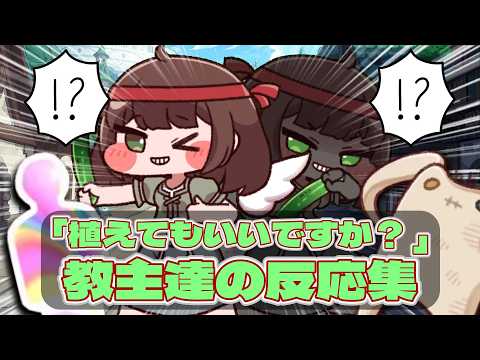
▶ Watch the original YouTube video
A recently circulated video showcasing how multiple cult leader characters in the game Trickle react to the character Kyuui has sparked widespread praise for its exceptional character interaction design. The video demonstrates how a single character can be perceived through multiple distinct perspectives, revealing sophisticated narrative construction and deep character development that rivals industry-leading titles.
What Happened
A compilation video featuring the various reactions of Trickle’s multiple cult leader characters to the character Kyuui has gained significant attention in gaming communities. The video highlights how each leader responds differently to Kyuui based on their individual personalities, backgrounds, and relationships. These reactions showcase a level of character depth and narrative consistency that has impressed both casual viewers and experienced gamers.
Why It Matters
Character interaction design is a fundamental pillar of modern narrative-driven games. When executed effectively, it transforms static characters into multidimensional beings whose personalities shine through their responses to others. Trickle’s approach—presenting multiple perspectives on a single character through different cult leaders—represents a sophisticated design philosophy that deepens player engagement and emotional investment. This technique demonstrates how thoughtful character development can elevate a game’s storytelling beyond linear narrative progression.
Background
Character reaction videos have become increasingly popular in gaming culture over the past decade. Games like Persona 4, Fire Emblem: Three Houses, and Tales of Berseria have established the template for meaningful character interactions that reveal personality and backstory. Trickle appears to build upon this foundation by implementing a unique system where multiple protagonist characters (the cult leaders) coexist within the same narrative, each bringing their own perspective to other characters. This design choice creates complex narrative possibilities while demanding sophisticated scenario construction from developers.
Key Points
- Each cult leader character displays distinct, personality-consistent reactions to Kyuui, reflecting their individual values and backgrounds
- The reactions are not superficial preferences but complex emotional responses rooted in character history and current circumstances
- Multiple perspectives on a single character reveal that character’s multifaceted nature and complexity
- The game’s narrative foundation and character backstories provide credibility and depth to these interactions
- Character reaction compilations serve as effective marketing tools that drive player interest in experiencing the full game narrative
- The design demonstrates how character-to-character dynamics can communicate information about all involved characters simultaneously
Character Interaction Framework
Personality Differences
Each cult leader possesses distinct personality traits and value systems. When encountering Kyuui, these fundamental differences manifest as varied emotional responses. This mirrors the approach seen in Persona 4, where the protagonist’s companions react individually based on their core characteristics.
Contextual Background
The circumstances each leader faces and their personal histories create different interpretations of who Kyuui is and what they represent. Similar to the experience in Tales of Berseria, where character reactions to events are filtered through their past experiences, Trickle’s leaders view Kyuui through the lens of their own narratives.
Relationship Dynamics
The specific relationship each leader has with Kyuui—its depth, history, and nature—directly influences their reactions. These relationships form the foundation for believable character interactions.
Comparative Analysis
| Title | Character Reaction Approach | Narrative Complexity | Emotional Depth |
|---|---|---|---|
| Persona 4 | Individual responses to protagonist choices | ★★★☆☆ | ★★★★☆ |
| Fire Emblem: Three Houses | Multiple story routes with different perspectives | ★★★★★ | ★★★★☆ |
| Tales of Berseria | Reactions grounded in character history | ★★★★☆ | ★★★★★ |
| Trickle | Multiple protagonists responding to same character | ★★★★☆ | ★★★★★ |
Trickle’s approach differs notably from Fire Emblem: Three Houses, which uses separate story routes to present different perspectives. Instead, Trickle maintains a unified narrative while allowing multiple cult leaders to coexist and respond to the same characters, creating a more integrated multi-perspective experience.
How Character Reactions Create Emotional Resonance
Revealing Character Dimensions
When Kyuui receives different reactions from multiple leaders, viewers gain a three-dimensional understanding of the character. Rather than a single personality profile, Kyuui emerges as a complex individual who affects different people in different ways.
Deepening Leader Characterization
Conversely, observing how each leader responds to Kyuui illuminates their own personalities. Viewers can infer values, emotional vulnerabilities, and character motivations from reaction patterns, creating a feedback loop of character understanding.
Narrative Intrigue
Distinctive reactions hint at untold stories and complex relationships. When viewers notice unexpected or nuanced responses, they naturally wonder about the backstory, creating organic interest in the full game narrative.
Strategic Intent and Audience Reception
The decision to release character reaction compilations suggests developer confidence in their character design work. This strategy serves multiple functions: it efficiently communicates character personality in condensed form, builds emotional attachment to characters before full gameplay, and generates curiosity about the narrative context underlying these reactions.
Community response has been overwhelmingly positive, with viewers praising both the character differentiation and the apparent quality of character development. Some viewers note that while reaction videos effectively showcase personality, the full emotional impact requires experiencing the game’s complete narrative context.
Recommendations for Deeper Engagement
Focus on Reaction Patterns
When playing Trickle, actively observe how each leader responds to significant moments. This conscious attention amplifies the game’s character-driven appeal.
Study Character Backgrounds
Understanding each cult leader’s backstory and circumstances before or during gameplay enriches interpretation of their reactions and motivations.
Track Relationship Dynamics
Pay attention to how relationships between leaders influence their individual reactions. These dynamics often reveal deeper narrative layers.
Compare Multiple Reaction Scenes
Viewing multiple character interactions establishes clearer personality patterns and core values for each character.
Explore Related Titles
Games like Persona 4, Persona 5, and Fire Emblem: Three Houses represent the current standard for character interaction design and offer valuable context for understanding Trickle’s approach.
Community Perspectives
YouTube comments and gaming forums show strong appreciation for the reaction compilation’s execution. Viewers frequently highlight how the different responses effectively communicate character personality and create investment in understanding the relationships between characters. Some commenters note that while the video effectively demonstrates character quality, it simultaneously creates desire to experience the full narrative context that shapes these reactions.
Individual character preferences have also emerged in community discussions, with different viewers gravitating toward different leaders based on their reaction styles. This diversity of preference indicates that the character design successfully creates distinct, appealing personalities.
Insights
The success of Trickle’s character reaction video reveals a fundamental truth about modern game design: players increasingly value character depth and interpersonal dynamics as much as plot progression. The video’s popularity demonstrates that audiences hunger for evidence of sophisticated character development and are willing to engage with games specifically to experience nuanced character interactions.
The multi-perspective approach—where a single character is observed through multiple viewpoints—proves more narratively efficient than traditional linear storytelling. It communicates character information, establishes relationship dynamics, and hints at backstory simultaneously. This technique suggests a shift in how narrative-driven games can structure their character development.
Furthermore, the video exemplifies how user-generated content and official character showcases can work synergistically. By allowing or encouraging such compilations, developers extend their game’s reach to audiences who may not immediately commit to full gameplay while simultaneously building anticipation for the complete experience.
As gaming narratives continue to evolve, character interaction design—the quality of how characters respond to each other and to player choices—appears to be becoming as important as traditional plot structure. Trickle’s approach suggests that future narrative-driven games may increasingly focus on creating rich character ecosystems where multiple perspectives and personalities interact in meaningful, consistent ways.