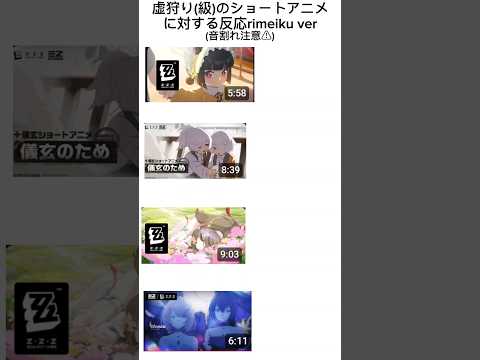
▶ Watch the original YouTube video
A seasoned anime analyst with 15 years of experience examines Zenless Zone Zero’s short-form anime project and its strategic use of reaction videos, revealing how modern game-related anime is evolving beyond traditional promotional content into a sophisticated multi-platform engagement strategy.
- What Happened
- Why It Matters
- Background
- Key Points
- Comparative Analysis: Game Anime Evolution
- Character Psychology and Voice Performance
- Current Anime Industry Trends
- Predicted Future Developments
- Fan Psychology and Creator Intent
- Audience Reception and Social Media Response
- Insights: A New Model for Game Promotion
- Recommendations for Viewers
What Happened
Zenless Zone Zero launched a short-form anime project featuring reaction videos from content creator Rimeiku. Rather than producing a traditional full-length anime series, the game’s promotional strategy centers on brief character-focused episodes paired with third-party reactions, designed to amplify reach across YouTube and social media platforms.
Why It Matters
This approach represents a significant shift in how game publishers approach anime adaptation and marketing. Instead of investing in lengthy broadcast-quality productions, studios are optimizing content for platform-specific distribution—particularly YouTube and TikTok—while leveraging reaction videos as a secondary distribution mechanism. This strategy addresses a fundamental challenge in modern media: capturing attention across fragmented platforms while maintaining production efficiency.
Background
Game-related anime has evolved substantially over the past 15 years. Early adaptations like Fate/stay night (2006) focused primarily on recreating game narratives in animated form. By the 2015–2018 period, productions like Azur Lane and Granblue Fantasy began creating independent storylines that complemented rather than replicated game content. Zenless Zone Zero’s approach represents the next evolution: ultra-short format content optimized for social media distribution, paired with influencer reactions to amplify organic reach.
The use of reaction videos is particularly strategic. This format allows creators to provide third-party validation of character appeal and voice acting quality, which subtly influences viewer perception while creating shareable content that performs well in algorithmic feeds.
Key Points
- Format Innovation: Short-form episodes bypass traditional broadcast constraints, enabling rapid production cycles and platform-native optimization for YouTube and social media.
- Character-Focused Design: Rather than complex multi-character narratives, each episode emphasizes individual character psychology and emotional depth, maximizing impact within time constraints.
- Dual Audience Strategy: Content simultaneously serves existing game players seeking deeper character understanding and non-players discovering the franchise through reaction content.
- Voice Acting as Core Asset: Seiyuu (voice actor) performance becomes the primary vehicle for character interpretation, with reaction videos highlighting vocal nuance and emotional delivery.
- Organic Social Amplification: Reaction video format naturally generates secondary distribution through shares, comments, and algorithm promotion—extending reach beyond direct viewers.
- Production Efficiency: Short format reduces budget requirements compared to full-length series, enabling sustainable continuation and iteration based on audience response.
Comparative Analysis: Game Anime Evolution
The following comparison illustrates how Zenless Zone Zero’s approach differs from previous game-related anime projects:
| Title | Format | Promotion Strategy | Character Focus | Target Audience |
|---|---|---|---|---|
| Azur Lane Anime | Full-length series (12 episodes) | Independent storyline from game | Inter-character relationships | Existing players + new viewers |
| Granblue Fantasy Anime | Multi-season series | In-game event integration | Ensemble cast around protagonist | Existing players primarily |
| Zenless Zone Zero Short Anime | Short-form episodes | Reaction video distribution | Individual character psychology | Players + potential players + general audience |
The key distinction is strategic focus: Zenless Zone Zero prioritizes individual character appeal and platform optimization over narrative complexity, enabling faster production and broader social media penetration.
Character Psychology and Voice Performance
A critical element often overlooked in game-to-anime adaptation is the gap between game character design and animated interpretation. Zenless Zone Zero bridges this gap primarily through voice acting. The selection and direction of seiyuu becomes the primary tool for translating game character archetypes into emotionally resonant animated performances.
The reaction video format amplifies this advantage. When a reaction creator comments on vocal delivery, emotional authenticity, or subtle character nuance, viewers gain explicit permission to notice and value these elements. This third-party validation creates a shared interpretive framework that enhances viewer engagement compared to passive consumption.
Current Anime Industry Trends
The anime industry is experiencing simultaneous diversification and platform fragmentation. Traditional broadcast television no longer dominates production decisions. Instead, creators must optimize for YouTube, Twitter, TikTok, and streaming services simultaneously—each with distinct algorithmic preferences and audience expectations.
Zenless Zone Zero exemplifies this shift. By choosing short-form content and reaction-video distribution, the project maximizes YouTube algorithmic performance while creating inherently shareable social media content. This represents not merely a promotional tactic but a fundamental restructuring of how game publishers approach multimedia engagement.
This trend will likely accelerate. Game-related content in particular shows strong performance in reaction video and short-form formats, suggesting that future game anime projects will increasingly adopt similar strategies rather than pursuing traditional full-length series.
Predicted Future Developments
Based on historical patterns in game anime production, several scenarios are plausible:
Scenario 1: Continued Short-Form Production — If current metrics indicate success, the production team will likely continue releasing short episodes. This approach minimizes production costs while maintaining audience engagement, making it sustainable long-term.
Scenario 2: Expansion to Full-Length Series — Successful short-form content could serve as a foundation for full-length anime development. Historical precedent suggests that successful initial projects often spawn expanded productions and spin-offs.
Scenario 3: Cross-Media Expansion — Anime success frequently triggers manga adaptations, light novels, or other media tie-ins. Character popularity established through short-form content could justify broader multimedia investment.
The most probable outcome is Scenario 1, given the production efficiency and proven performance of short-form content in current media ecosystems.
Fan Psychology and Creator Intent
A persistent tension exists between what audiences desire and what creators intend to deliver. For Zenless Zone Zero, this dynamic is particularly visible:
Fan Expectations: Existing players seek deeper character understanding and emotional connection to their favorite characters. Anime serves as a vehicle for three-dimensional character exploration beyond game mechanics.
Creator Strategy: The production team simultaneously targets non-players and potential players. Short-form content with reaction videos lowers barriers to entry for audiences unfamiliar with the game, while maintaining depth for existing fans.
The success of this project likely stems from achieving both objectives simultaneously—satisfying existing fan investment while remaining accessible to newcomers.
Audience Reception and Social Media Response
Social media reaction to the project reveals several patterns:
Twitter Response: Positive comments frequently highlight voice acting quality and character expression detail. This suggests that even short-form content successfully conveys character depth when production values are maintained.
Demand for Extended Content: Some viewers express desire for longer episodes or full-length series. While this might appear negative, it actually indicates successful engagement—audiences want more because they’re invested. This “appetite gap” may intentionally drive game downloads and engagement.
YouTube Comments: Reaction video audiences frequently praise the creator’s interpretive perspective. This indicates that the reaction format functions not merely as content reproduction but as legitimate critical analysis, adding value beyond the source material.
Insights: A New Model for Game Promotion
Zenless Zone Zero’s short-anime project demonstrates that effective game promotion in 2024 requires simultaneous optimization across multiple dimensions: platform architecture, audience segmentation, production efficiency, and social media virality.
The project succeeds because it acknowledges a fundamental shift in media consumption. Audiences no longer expect monolithic content experiences. Instead, they engage with fragmented, platform-specific formats that reward both passive consumption and active interpretation. Reaction videos capitalize on this by positioning viewers as participants in meaning-making rather than passive recipients.
From a production standpoint, the short-form approach offers significant advantages: lower budgets enable faster iteration, platform-native optimization improves algorithmic performance, and character-focused storytelling maximizes emotional impact within time constraints.
However, format limitations remain. Short episodes inherently restrict narrative complexity and character relationship development. The long-term viability of this approach depends on whether audiences remain satisfied with episodic character vignettes or demand more comprehensive storytelling.
Ultimately, Zenless Zone Zero’s approach likely represents an industry inflection point. As other game publishers observe this project’s performance metrics, similar strategies will proliferate across the industry. This project functions not as an isolated promotional campaign but as a template for how modern game-related entertainment should be structured, distributed, and consumed.
Recommendations for Viewers
For Existing Players: Review character-specific in-game events before watching anime episodes. This context deepens appreciation for voice acting choices and emotional nuance that might otherwise be missed.
For New Viewers: Focus on character emotional expression rather than narrative complexity. Short-form content prioritizes feeling over plot, making emotional authenticity the primary evaluation criterion.
For Reaction Video Audiences: Treat creator commentary as legitimate critical analysis. Reaction creators often highlight production details and performance qualities that enhance appreciation of the source material.
Comparative Study: Watch Azur Lane anime alongside Zenless Zone Zero content to understand different approaches to game character adaptation. This comparison illuminates how format constraints shape creative decisions.