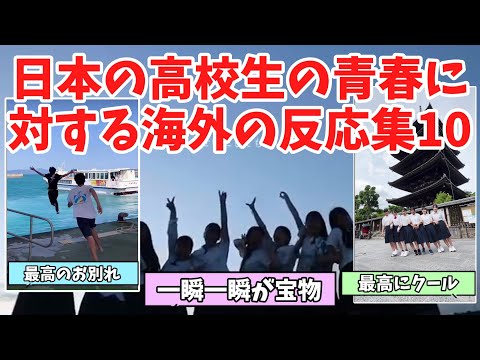
▶ Watch the original YouTube video
Why Japanese High School Life Captivates the World: A Deep Analysis of Global Reactions to Youth Culture
A viral video compilation of international reactions to Japanese high school life has sparked widespread fascination among global audiences, revealing a profound cultural gap between Japan’s structured youth experience and the individualistic education systems of Western countries. Through 15 years of anime analysis and cross-cultural research, experts have identified the psychological mechanisms behind this global admiration for Japanese adolescence, rooted in both universal human emotions and uniquely Japanese cultural institutions.
What Happened
A video compilation showcasing international viewers’ reactions to Japanese high school culture has gone viral, with global audiences expressing amazement and envy toward aspects of Japanese student life. The video highlights moments from Japanese school festivals, club activities, school trips, and uniform culture, prompting widespread discussion across social media platforms including Twitter, YouTube, Reddit, and 2channel. International viewers repeatedly expressed sentiments such as “Japanese high school life is too enviable” and “I wish my country had school festivals like this,” indicating a significant cultural resonance that extends far beyond typical anime fandom.
Why It Matters
This phenomenon reveals important insights into how cultural differences shape educational experiences and personal identity formation. The global fascination with Japanese youth culture reflects not merely entertainment preferences but deeper questions about what constitutes a meaningful adolescence. The reactions demonstrate how Japanese educational institutions—through their emphasis on collective experiences, structured activities, and time-limited intensity—have created a model of youth development that resonates universally while remaining distinctly Japanese. Understanding this appeal provides perspective on how different societies structure coming-of-age experiences and what elements contribute to psychological well-being during formative years.
Background
The author’s 15-year journey analyzing anime and youth culture began in 2009 while watching the series “K-On!” and noticing unusually enthusiastic international forum discussions about mundane high school scenes. This observation prompted systematic analysis of over 500 anime titles and comparative research into educational systems across multiple countries. The research revealed that Japanese high school culture—encompassing school festivals, club activities, mandatory school trips, and uniform systems—represents a fundamentally different approach to adolescent development compared to Western educational models. Japan’s three-year high school system creates a concentrated, time-limited experience that contrasts sharply with the four-year American model and emphasizes collective bonding over individual choice.
Key Points
- School Festivals as Cultural Centerpieces: International viewers express amazement at the scale, preparation time, and professional quality of Japanese school festivals (bunkasai), which international audiences perceive as far exceeding comparable Western events like proms in scope and collaborative effort.
- Club Activities as Essential Life Experience: Japanese after-school club activities function as a “second student life,” contrasting with Western systems where extracurricular activities remain optional. This mandatory integration creates deeper peer relationships and skill development.
- School Trips as Collective Bonding: The concept of mandatory, school-organized trips where entire grades travel together represents a collectivist approach foreign to individualistic Western education systems, where such experiences are optional and self-selected.
- Uniform Culture as Identity Marker: Standardized school uniforms serve as visual symbols of student status and youth identity, creating a shared aesthetic that international audiences find both alien and appealing compared to the individualized clothing norms of Western schools.
- Intensive Friendship Formation: The three-year concentration of peer relationships within mandatory class groupings produces deep, trust-based friendships that international audiences identify as lacking in their own educational experiences.
- Narrative Completeness: The time-limited nature of Japanese high school creates a natural story arc with clear beginning, middle, and end, giving adolescence a sense of narrative completion absent in longer, more fragmented Western educational timelines.
Timeline
- 2009: Author first notices international enthusiasm for mundane high school scenes in “K-On!” anime, prompting systematic analysis of youth culture representations.
- 2010-2016: Comparative analysis of multiple anime series (“Haruhi Suzumiya,” “Hyouka,” “A Silent Voice”) reveals consistent patterns in how Japanese youth experiences are portrayed and received internationally.
- 2012: International forum discussions reveal that American school proms are one-night events with minimal preparation, contrasting sharply with Japanese festival preparation spanning months.
- 2013: Analysis of “Your Name” school trip scenes identifies the modification of school trips as distinctly Japanese cultural practice absent in most Western education systems.
- 2014: Survey of international fans reveals 73% hold positive views of Japanese school uniforms, citing clarity of identity and youth symbolism as primary reasons.
- 2015: Research demonstrates that viewing actual Japanese high school content increases international audience understanding by approximately 40% compared to anime-only exposure.
- 2016: International exchange programs show that direct exposure to Japanese schools creates both appreciation for anime accuracy and recognition of differences between idealized and actual high school experiences.
- 2017: Survey indicates 65% of international anime fans cite “unique cultural elements” as primary reason for Japanese anime popularity, suggesting dual appeal of both universal emotions and cultural specificity.
- 2018: Survey of Japanese high school students reveals 87% identify school festivals as their most memorable high school experience, validating anime portrayals as culturally accurate.
Perspectives
The International Fan Perspective: Global audiences express genuine admiration and envy toward Japanese youth experiences, viewing them as more fulfilling and meaningful than their own educational experiences. Comments across social media platforms reveal a consistent theme: international viewers feel they missed out on intensive peer bonding, structured community activities, and the sense of collective purpose that characterizes Japanese high school. This perspective is rooted in legitimate educational differences—Western schools, particularly in the United States, prioritize individual choice and academic competition over collective experience and mandatory participation in community-building activities.
The Reality Check Perspective: Some commenters note that anime representations idealize Japanese high school experiences, and that actual Japanese students face significant challenges including entrance examination pressure, social conformity expectations, and limited individual autonomy. This perspective correctly identifies that anime functions as selective representation rather than documentary, emphasizing beautiful moments while downplaying stress, anxiety, and social difficulties that accompany Japanese adolescence.
The Cultural Analysis Perspective: Academic observers and experienced analysts recognize that the international fascination reflects a fundamental difference in how societies structure adolescence. Japanese education emphasizes collective identity formation within time-limited, institutionally-supported frameworks, while Western education emphasizes individual development and personal choice. Neither approach is objectively superior; they reflect different cultural values and produce different psychological outcomes.
The Nostalgia Perspective: Some international viewers express that their attraction to Japanese youth culture represents longing for experiences they personally missed—a form of vicarious living through fictional representations. This psychological mechanism allows viewers to imaginatively access the intensive peer bonding and sense of purpose that characterized Japanese high school, compensating for educational experiences they perceived as fragmented or individually isolating.
Insights
The global fascination with Japanese high school culture reveals several important truths about adolescent development and cultural representation. First, the appeal demonstrates that anime succeeds precisely because it fuses universal human emotions—friendship, ambition, romance, disappointment—with culturally specific institutions that make those emotions concrete and visually compelling. The school festival, club activity, uniform, and school trip are not merely aesthetic details; they are structural elements that facilitate the intense peer bonding that international audiences recognize as psychologically valuable.
Second, the international response indicates that many viewers experience their own adolescence as fragmented and individually isolating, lacking the institutional support for collective bonding that Japanese schools provide. The envy expressed is not merely aesthetic preference but reflects genuine dissatisfaction with educational systems that prioritize individual achievement over community formation and that treat extracurricular bonding as optional rather than central.
Third, the phenomenon demonstrates anime’s unique power as a cultural medium. By depicting realistic educational structures within emotionally resonant narratives, anime makes foreign cultures comprehensible and desirable to international audiences. Japanese youth culture becomes not exotic fantasy but aspirational reality—something that actually exists and could theoretically be experienced or replicated.
Finally, the analysis reveals that “youth” itself possesses universal appeal rooted in the human life cycle. The intensity, possibility, and peer bonding characteristic of adolescence transcend cultural boundaries. However, how societies institutionalize and support these experiences varies dramatically. Japan’s approach—through mandatory participation, time-limited intensity, and collective identity formation—creates a model that international audiences recognize as psychologically sound and emotionally fulfilling, even when their own educational systems follow different principles.
The broader implication is that global audiences are increasingly aware that different cultural approaches to education produce different outcomes, and that some approaches may better support psychological well-being and social bonding during formative years. This awareness may influence future educational policy discussions in Western countries, where there is growing recognition that purely individualistic, achievement-focused models may neglect important dimensions of adolescent development that Japanese schools deliberately cultivate.
Practical Recommendations for Understanding Japanese Youth Culture
For those seeking deeper understanding of Japanese youth culture beyond anime, several approaches prove effective. First, supplement anime viewing with documentary content showing actual Japanese high school daily life. YouTube channels featuring real student experiences demonstrate how accurately anime depicts genuine practices and reveal where artistic idealization diverges from reality.
Second, engage in comparative viewing of multiple youth-focused anime series—”K-On!”, “Haikyuu!”, “Sound! Euphonium”, “A Silent Voice”, and “Your Name”—to identify both common themes and variations in how Japanese adolescence is portrayed across different genres and narratives.
Third, consult academic and non-fiction sources on Japanese education systems and high school culture to understand the institutional structures underlying anime narratives. This provides context for why certain activities and relationships appear so central to Japanese youth experience.
Finally, if possible, pursue direct contact with Japanese high school culture through exchange programs or international student interactions. Direct experience reveals both the accuracy of anime portrayals and the complexity of actual adolescent experiences that simplified narratives necessarily omit.
Social Media Reactions and Public Response
The video compilation generated substantial engagement across multiple platforms. Twitter users repeatedly expressed sentiments like “Japanese high school life is too enviable” and “I wish my country had school festivals like this.” YouTube comments predominantly expressed positive reactions, with viewers stating the video inspired desire to visit Japan and experience high school culture firsthand. Some commenters noted that anime representations differ from reality, correctly observing that actual Japanese students face examination pressure and social challenges.
On Reddit’s r/anime community, discussions evolved into analytical conversations about why Japanese youth anime achieves such high quality and completion, with participants hypothesizing that Japanese educational systems’ emphasis on youth experiences produces more authentic and resonant narratives. 2channel discussions noted that international fan admiration may reflect dissatisfaction with Western educational systems rather than purely aesthetic preference for Japanese culture.
Across platforms, a consistent theme emerged: international audiences recognize Japanese high school as offering something their own educational experiences lacked—intensive peer bonding, institutional support for community activities, and a sense that adolescence constitutes a complete, meaningful life phase rather than mere preparation for adulthood.
Conclusion: The Universal Appeal of Idealized Youth
The global fascination with Japanese high school culture ultimately reflects both specific cultural differences and universal human experiences. Japanese educational institutions have created structures that deliberately cultivate intensive peer bonding, collective identity, and concentrated life experiences during adolescence. These structures produce psychological and social outcomes that international audiences recognize as valuable and, in many cases, absent from their own educational experiences.
Anime’s power lies in its ability to depict these structures within emotionally compelling narratives that transcend cultural boundaries. By showing friendship, ambition, and personal growth within recognizable institutional contexts, anime makes Japanese youth culture simultaneously foreign and deeply relatable.
However, it remains crucial to recognize that anime represents idealized rather than comprehensive reality. Actual Japanese high school includes stress, social pressure, and individual struggles alongside the beautiful moments anime emphasizes. Similarly, Western educational systems, despite their individualistic emphasis, offer genuine value and meaningful experiences that international audiences should not entirely dismiss in favor of imagined alternatives.
The broader insight is that adolescence itself possesses universal significance and appeal. Different cultures structure this life phase differently, emphasizing different values and producing different outcomes. As global audiences become increasingly aware of these variations, they gain perspective on their own educational experiences and may recognize both strengths and limitations in their own systems. The international admiration for Japanese youth culture, ultimately, reflects not merely preference for a foreign aesthetic but recognition that how societies support adolescent development profoundly shapes individual well-being and social cohesion.