▶ Watch the original YouTube video
The 5.6-Hour Wall: Why Sekiro Breaks Players Before It Makes Them Better
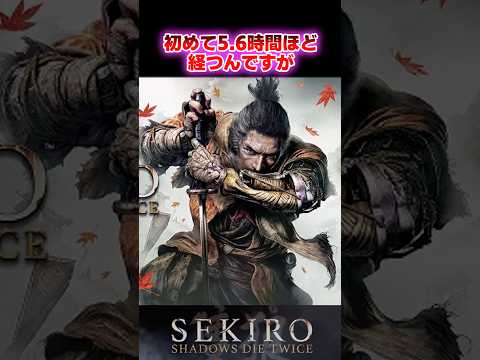
A viral video compilation captures the moment when Sekiro: Shadows Die Twice defeats its newest players at the same difficulty spike—around 5.6 hours in. This recurring barrier reveals something profound about FromSoftware’s design philosophy: the game deliberately forces players to unlearn everything they know about action games before they can master it.
What Happened
Multiple gaming streamers and content creators have documented their first encounter with Sekiro’s early-game difficulty wall, with nearly all of them hitting the same obstacle at approximately 5-6 hours of playtime. The video compilation showcases their collective frustration as they repeatedly fail against the same boss encounter, questioning whether the game’s difficulty is intentional design or simply unfair. This pattern is not coincidental—it reflects a carefully engineered learning curve that separates casual players from those willing to adapt to fundamentally different combat mechanics.
Why It Matters
Sekiro represents a rare case in modern game design: a commercially successful title that refuses to accommodate player preferences through difficulty settings or mechanical flexibility. In an industry increasingly focused on accessibility and player choice, FromSoftware made the opposite decision. Understanding why this approach worked—and what it reveals about game design philosophy—offers insights into how difficulty can enhance rather than diminish player satisfaction. The 5.6-hour wall is not a flaw; it’s the threshold between incomprehension and mastery.
Background
Sekiro: Shadows Die Twice launched in March 2019 to critical acclaim, selling over 5 million copies worldwide. The game follows FromSoftware’s tradition of challenging action gameplay, but departs significantly from the Dark Souls formula that made the studio famous. Where Dark Souls offered multiple viable combat approaches—magic, melee, ranged weapons, poison tactics—Sekiro strips away player choice and demands mastery of a single defensive mechanic: parrying, called “deflecting” in the game.
Players experienced with Dark Souls face a particular disadvantage. The dodge-rolling evasion tactics that define Dark Souls combat are actively punished in Sekiro. Enemies attack in relentless combos that cannot be escaped through traditional avoidance. Instead, players must learn to read attack patterns and deflect incoming strikes to deplete an enemy’s “posture gauge”—a stamina-like meter unique to Sekiro. This fundamental shift in combat philosophy creates the wall that streamers encounter around the 5-6 hour mark, precisely when they’ve exhausted their Dark Souls knowledge and haven’t yet internalized Sekiro’s rhythm.
Key Points
- The 5.6-hour barrier is consistent across players: Multiple streamers encounter the same difficulty spike at nearly identical playtime, suggesting deliberate design rather than random difficulty spikes.
- Prior experience becomes a liability: Dark Souls veterans struggle more than newcomers because established combat habits actively hinder Sekiro’s deflection-based system.
- The learning curve is intentionally steep: Sekiro’s difficulty increases sharply compared to other FromSoftware titles, forcing rapid mechanical adaptation rather than gradual progression.
- Player reactions split into three categories: Those who reject the game as unfair, those beginning to understand the system, and those who quit entirely—though many later return and embrace it.
- Design philosophy prioritizes unified experience: Unlike Dark Souls or Elden Ring, which offer multiple viable playstyles, Sekiro enforces a single correct approach for all players.
- The wall precedes mastery: Players who push through this 5-6 hour barrier typically reach true understanding around 10-15 hours, leading to dramatically higher satisfaction and engagement.
Timeline
- 0-3 hours: Players apply Dark Souls tactics; initial success creates false confidence.
- 3-5 hours: Established strategies begin failing; frustration mounts as dodge-rolling proves ineffective.
- 5-6 hours: The critical wall—most players hit a specific boss and cannot progress using familiar techniques.
- 6-10 hours: Gradual mechanical understanding; players begin recognizing attack patterns and experimenting with deflection timing.
- 10-15 hours: Mastery threshold; the game’s design intent becomes clear, and satisfaction increases dramatically.
- 15+ hours: Engagement peaks; players report the game becoming addictive as skill development accelerates.
Perspectives
The Frustration Perspective: Many players, particularly Dark Souls veterans, view Sekiro’s difficulty as punitive and unfair. They argue that enemy attacks are too fast, hitboxes are unreliable, and the game punishes established gaming knowledge. This group often abandons the game, at least temporarily, viewing the difficulty as a design flaw rather than an intentional challenge.
The Adaptation Perspective: A second group recognizes the systematic nature of Sekiro’s design. These players begin analyzing enemy patterns, experimenting with deflection timing, and treating the difficulty as a puzzle to solve. This group typically progresses past the 5.6-hour wall within 5-10 additional hours and becomes deeply engaged with the game.
The Vindication Perspective: Players who return to Sekiro after initial abandonment often experience a revelation. The same mechanics that felt unfair suddenly click, and they recognize the game’s elegant design. Many report that Sekiro becomes their favorite game after this breakthrough, with the initial frustration amplifying the eventual satisfaction.
The Design Intent Perspective: FromSoftware director Hidetaka Miyazaki has indicated in interviews that Sekiro was conceived as a deliberate departure from Dark Souls—not a sequel, but a redefinition of action game design. The high difficulty serves a specific purpose: forcing players to abandon preconceptions and experience a unified, intentional game design rather than a buffet of options.
Comparative Analysis: Sekiro vs. Other Challenging Games
Sekiro’s difficulty curve differs markedly from other FromSoftware titles and high-difficulty games:
Dark Souls Series: Moderate early difficulty with a gradual learning curve. Multiple viable strategies allow players to find their preferred playstyle. Players can bypass difficult encounters through alternative routes or tactics. Result: Trial-and-error gameplay feels rewarding rather than punitive.
Bloodborne: High early difficulty but more forgiving than Sekiro. Aggressive playstyles are rewarded, allowing experienced action game players to adapt more quickly. The learning curve is steep but not as rigid as Sekiro’s.
Elden Ring: Moderate early difficulty with a gentle learning curve. Open-world design allows players to avoid difficult bosses and return later. Multiple character builds and strategies are viable. Result: Accessibility without sacrificing challenge.
Sekiro: High early difficulty with an extremely steep learning curve. No viable alternative strategies; all players must master the same mechanic. No option to bypass difficult encounters. Result: Unified experience that either clicks or frustrates, with no middle ground.
The Philosophy Behind the Wall
Enforcing Mechanical Mastery: Sekiro’s design forces players to internalize a single combat system completely. Rather than allowing players to muddle through with partial understanding, the game’s difficulty ensures that only genuine comprehension of deflection mechanics enables progress. This creates a clear threshold between incompetence and competence.
Invalidating Prior Knowledge: By making Dark Souls tactics actively harmful, Sekiro forces a psychological reset. Players must consciously unlearn established habits before they can learn new ones. This creates a more profound learning experience than games that simply add new mechanics to existing frameworks.
Guaranteeing Unified Experience: Most games offer multiple valid approaches, creating different experiences for different players. Sekiro eliminates this variation. Every player who completes the game has mastered the same skills in the same sequence. This creates a shared cultural experience among players—a common language of combat understanding.
Maximizing Achievement Satisfaction: Psychological research on goal achievement shows that difficult goals produce greater satisfaction upon completion. Sekiro’s design deliberately creates difficulty to amplify the emotional payoff of success. The 5.6-hour wall is not a barrier to enjoyment; it’s an investment that compounds the eventual reward.
Player Psychology and Community Response
Analysis of community reactions reveals a predictable pattern. Initial responses in forums and social media are predominantly negative: “This game is unfair,” “I’m quitting,” “Why would anyone design it this way?” These comments cluster around the 5-6 hour mark, corresponding to the documented wall.
However, follow-up comments from the same players weeks or months later show a dramatic shift. “I came back and finally got it,” “This game is a masterpiece,” “Best gaming experience I’ve had.” The transformation is consistent enough to suggest that the initial frustration is not a design failure but a necessary precondition for the eventual appreciation.
Interestingly, players who approach Sekiro without Dark Souls experience often progress more smoothly. They have no established habits to unlearn and can focus entirely on mastering the new system. This supports the theory that the wall is specifically engineered to challenge experienced action game players—the very audience most likely to dismiss it as “just another FromSoftware game.”
Practical Guidance for New Players
Abandon Dark Souls Instincts: If you have Dark Souls experience, consciously suppress dodge-rolling reflexes. Sekiro punishes evasion. Instead, commit to deflection. In the early hours, practice deflecting every attack, even if you take damage. Build muscle memory for the timing before worrying about optimal strategy.
Recognize the Wall as Progress: Hitting the 5.6-hour wall means you’ve exhausted surface-level tactics and are approaching genuine learning. This is not failure; it’s the threshold of real engagement. Plan to invest another 5-10 hours past this point before expecting mastery.
Analyze Patterns Deliberately: Sekiro’s enemies follow strict attack sequences. Watch for patterns: “Three slashes from the left, then a thrust.” “Overhead swing followed by a sweep.” Write these down if necessary. Pattern recognition is the core skill Sekiro teaches.
Use Community Resources Wisely: Avoid detailed boss guides that spoil the discovery process, but general tactical discussions are valuable. Learning that a particular boss rewards aggressive play or punishes hesitation can accelerate understanding without removing the challenge of figuring out how.
Play Related Titles for Perspective: Playing Dark Souls 3 before Sekiro, or Elden Ring after, provides context for understanding Sekiro’s design choices. Comparison clarifies why Sekiro made the decisions it did.
Insights
The 5.6-hour wall in Sekiro represents a fundamental truth about game design: difficulty and satisfaction are not inversely correlated. The conventional wisdom that “harder games are less fun” breaks down when difficulty is purposefully designed to create specific learning outcomes.
Sekiro’s approach is rare because it requires confidence in a singular vision. Most games hedge their bets by offering difficulty settings, alternative strategies, and escape routes. FromSoftware instead doubled down on a specific design philosophy and trusted that players who engaged with it would find it rewarding. The commercial and critical success of Sekiro—and the consistent pattern of initial rejection followed by enthusiastic adoption—suggests this confidence was justified.
The streamers in the viral video are not experiencing a game flaw; they are experiencing the exact moment of maximum friction that precedes breakthrough understanding. Their frustration is not a bug in Sekiro’s design—it’s a feature. The game is working precisely as intended, separating players who will abandon it from those who will embrace it, and ensuring that those who persist will have earned their mastery through genuine skill development rather than mechanical flexibility.
For the gaming industry, Sekiro’s success offers a counterargument to the trend toward accessibility and difficulty options. There remains an audience—a large one—that values unified, uncompromising design over customizable experiences. The 5.6-hour wall is not a barrier to be removed; it’s the price of admission to a specific, intentional artistic vision.