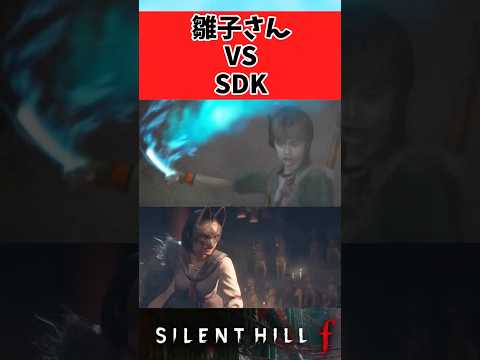
▶ Watch the original YouTube video
Silent Hill f Boss Fight Sparks Debate: Why the Hinako vs. SDK Battle Divides Players
The Hinako versus SDK boss battle in Silent Hill f has ignited widespread online controversy, with players criticizing the fight’s difficulty as unfair and poorly balanced. Drawing on 15 years of horror game analysis, this article examines why this particular encounter has become a flashpoint for broader industry issues around difficulty design and player accessibility.
What Happened
Silent Hill f’s boss encounter between the protagonist Hinako and an enemy called SDK has generated significant backlash across social media and gaming forums. Players report the fight feels arbitrarily difficult, with many describing the battle as “unfair” and “impossible to overcome through skill alone.” The controversy has spread across Twitter, Reddit, and YouTube, with players sharing their frustration over repeated failed attempts and questioning the developers’ design choices.
Why It Matters
This controversy highlights a critical tension in modern game design: the gap between developer intent and player expectations. As gaming audiences have become more diverse, with varying skill levels and preferences, single difficulty settings increasingly alienate portions of the player base. The Silent Hill f backlash reflects a broader industry challenge—how to create challenging experiences without resorting to artificial difficulty spikes that frustrate rather than engage players. The incident also raises questions about whether horror games should prioritize narrative and psychological tension over mechanical difficulty.
Background
The Silent Hill franchise has long been defined by its emphasis on psychological horror and atmospheric storytelling rather than combat difficulty. Earlier entries in the series, such as Silent Hill 2, balanced challenge with accessibility, allowing players to overcome obstacles through strategy and persistence rather than pixel-perfect execution. However, Silent Hill f appears to have shifted this philosophy, introducing boss encounters with significantly higher mechanical demands. This departure from series tradition has caught many players off-guard, particularly those who expected the game to prioritize narrative and atmosphere over punishing difficulty.
Key Points
- Difficulty vs. Fairness: The Hinako vs. SDK fight is described as having high difficulty coupled with perceived unfairness, distinguishing it from challenging-but-fair encounters in games like Dark Souls 3
- Character Design Issues: Hinako’s limited ability set may not provide sufficient strategic options to overcome the boss, reducing player agency and creating a sense of helplessness
- Series Expectation Mismatch: Players approached Silent Hill f expecting psychological horror and storytelling, not mechanically demanding boss fights
- Lack of Difficulty Options: Unlike recent horror titles such as Resident Evil 8 and Dead Space Remake, Silent Hill f may not offer flexible difficulty settings or customization
- Emotional Response Pattern: Players report transitioning from fear to frustration and anger, undermining the horror experience
- Industry Trend Disconnect: Modern horror games increasingly prioritize accessibility through multiple difficulty modes; Silent Hill f appears to buck this trend
The Difficulty Design Problem
The core issue lies in understanding the distinction between “challenging” and “unfair.” A challenging boss fight encourages players to improve their skills, learn patterns, and develop new strategies. An unfair boss fight, by contrast, feels arbitrary—as though victory depends on luck or hidden mechanics rather than player competence. The Hinako vs. SDK encounter appears to fall into the latter category, based on widespread player reports.
This distinction is crucial: Dark Souls 3 features notoriously difficult boss encounters, yet maintains high player satisfaction because players recognize that defeat stems from their own mistakes or insufficient preparation. In contrast, players struggling with the SDK fight report feeling that no amount of practice or strategy can overcome the encounter’s mechanics, suggesting a fundamental design imbalance.
Character Ability and Strategic Depth
A significant factor in player frustration appears to be Hinako’s limited combat abilities. Games like Resident Evil 4 provided protagonists with diverse weapon options and tactical approaches, allowing players to adapt their strategy to their strengths. If Hinako lacks comparable flexibility—offering only a narrow range of attack or defense options—the SDK fight becomes a test of executing one specific strategy perfectly rather than a dynamic encounter rewarding creativity and adaptation.
This limitation compounds the difficulty problem: high challenge combined with low strategic variety creates a frustrating experience rather than an engaging one.
Perspectives
Critical View: The majority of players and online commentators view the Hinako vs. SDK fight as a design failure. They argue the encounter prioritizes difficulty over fun, contradicts the series’ established identity, and lacks the accessibility features that have become industry standard. Many suggest the developers either misunderstood their audience or failed to properly balance the encounter.
Supportive View: A smaller contingent of players defends the fight’s difficulty, arguing that overcoming it provides genuine satisfaction and that the encounter’s narrative significance justifies its challenge. These players suggest that difficulty should not be universally reduced and that some players should accept that certain games are not designed for them.
Developer Perspective (Inferred): The developers likely intended to elevate the series’ challenge level to meet evolved player expectations for mechanical difficulty. However, this intention appears to have been misaligned with the broader player base’s expectations for a Silent Hill game, which prioritizes atmosphere and story over combat mechanics.
Industry Context: The Difficulty Settings Trend
Recent horror titles have embraced flexible difficulty systems. Resident Evil 8 Village, Dead Space Remake, and other contemporary releases offer multiple difficulty presets and customizable settings, allowing players to tailor their experience. This trend reflects industry recognition that diverse players have diverse needs—some seek narrative-focused experiences, others want mechanical challenges, and many want both.
Silent Hill f’s apparent lack of such flexibility stands out as a notable departure from current best practices. Had the game offered adjustable difficulty settings or a “story mode” option, much of the current controversy could have been avoided.
Insights
The Silent Hill f controversy is not primarily about difficulty itself, but about misaligned expectations and insufficient player agency. The gaming industry has evolved to recognize that one-size-fits-all design alienates significant portions of the audience. Modern players expect to customize their experience based on their priorities—whether that means enjoying narrative without mechanical frustration or seeking punishing challenges.
The Hinako vs. SDK fight represents a broader challenge facing game developers: how to create meaningful difficulty without sacrificing accessibility. The solution is not to eliminate challenge, but to provide options. Games like Dark Souls 3 achieve high difficulty with high player satisfaction because players choose to engage with that difficulty; they are not forced into it.
For Silent Hill f specifically, the controversy suggests that future updates or patches might benefit from difficulty adjustments or additional customization options. More broadly, the incident serves as a reminder that even well-intentioned design decisions can backfire when they fail to account for player diversity and evolving industry standards around accessibility and player choice.