▶ Watch the original YouTube video
Is Wing Stronger Than Greed Island Rank 9? A Deep Analysis of Hunter x Hunter’s Mysterious Character
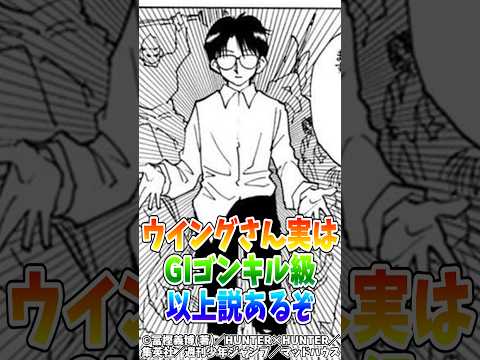
A longtime Hunter x Hunter fan with 15+ years of analysis experience examines the true power level of Wing, the enigmatic mentor character whose actual combat abilities remain largely unexplored in the series. Through detailed examination of his techniques, background, and role in the story, this analysis explores whether Wing ranks among the strongest Greed Island participants and what his ambiguous power level reveals about the series’ narrative design.
- What Happened
- Why It Matters
- Background
- Key Points
- Analysis of Wing’s Technical Abilities
- Wing’s Role in Greed Island Arc
- Comparative Analysis: Wing vs. Other Mentor Figures
- Perspectives on Wing’s Power Level
- The Greed Island Rank 9+ Question
- Narrative Intent and Character Design
- Fan Community Discussion
- Personal Assessment Framework
- Future Narrative Possibilities
- Engaging with Ambiguous Characters
- Insights: The Appeal of Ambiguity
What Happened
Wing, a supporting character in Hunter x Hunter, serves as the mentor who teaches Gon and Killua the fundamentals of Nen during the Greed Island arc. Despite his crucial role in one of the series’ most important turning points, Wing’s actual combat strength has never been clearly demonstrated in the manga or anime. This ambiguity has sparked ongoing debate within the fan community about whether Wing possesses power comparable to Greed Island’s top-ranked killers—specifically, whether he ranks at position 9 or higher.
Why It Matters
Wing’s undefined power level raises important questions about how Hunter x Hunter establishes character strength and narrative balance. In a series where Nen ability directly correlates with combat power, the deliberate absence of Wing’s combat demonstration suggests intentional storytelling choices by creator Yoshihiro Togashi. Understanding Wing’s actual capabilities provides insight into how the series manages character progression, mentor-student dynamics, and the strategic withholding of information to maintain reader engagement and speculation.
Background
Wing is introduced as a Nen instructor during the Greed Island arc, where he teaches Gon and Killua essential techniques including Ren, Zetsu, and Hatsu. His most significant credential is that he is a student of Biscuit Krueger, one of the series’ most formidable and explicitly powerful characters. Biscuit is portrayed as a first-class Nen user with decades of training experience who dramatically accelerated Gon and Killua’s growth during their time in Greed Island.
Despite his important educational role, Wing remains a largely passive figure throughout the arc. He rarely engages in direct combat, and his interactions with other characters—particularly members of the Bomber group—suggest he is not feared or respected for his combat prowess. This contrast between his credentials (being Biscuit’s student) and his apparent lack of intimidation factor has created the central mystery surrounding his character.
Key Points
- Wing is Biscuit’s student: His connection to one of the series’ most powerful characters serves as the primary evidence for estimating his strength level
- Enhancement ability without typical weaknesses: Wing demonstrates advanced Nen techniques that suggest mastery beyond standard Enhancement-type limitations, which normally include vulnerabilities to Emission and Manipulation types
- Advanced Emission technique: His ability to destroy walls using pure aura projection indicates high-level technical proficiency and efficient aura control
- Possible Greed Island Rank 9+ capability: Analysis suggests Wing could possess strength comparable to top-tier Greed Island threats, though this remains unconfirmed
- Absence of combat demonstration: The complete lack of actual battle scenes makes definitive power assessment impossible and may be intentional narrative design
- Teacher-first positioning: Wing prioritizes his educational role over combat engagement, which may explain why other characters do not treat him as a major threat despite his technical abilities
Analysis of Wing’s Technical Abilities
Wing’s demonstrated techniques reveal significant skill depth. His use of Emission-type aura to cause physical destruction—such as breaking walls—represents advanced application of Nen fundamentals. In Hunter x Hunter’s system, projecting aura externally while maintaining control and maximizing kinetic energy requires complete mastery of basic techniques like Ren, Zetsu, and Hatsu.
Furthermore, observations about Wing’s Enhancement ability continuing to affect objects after release suggest sophisticated application of Enhancement-type Nen. This capability exceeds typical Enhancement-type usage, which is usually limited to personal physical augmentation. The ability to apply sustained enhancement to external objects indicates either exceptional technical skill or possible mastery of multiple Nen categories.
Comparison with other mentor figures in anime reveals a pattern: characters like All Might from My Hero Academia demonstrate overwhelming strength through direct combat scenes, while Wing’s strength remains deliberately obscured. This narrative choice creates interpretive space for reader speculation rather than definitive power scaling.
Wing’s Role in Greed Island Arc
Wing’s positioning as a mentor who remains relatively passive during the Greed Island arc serves important narrative functions. Had Wing been portrayed as overwhelmingly powerful, Gon and Killua would have become dependent on him rather than developing independence through practical experience. The series demonstrates that character growth emerges from direct challenge and real-world application, not merely instruction.
The fact that members of the Bomber group treat Wing with disrespect does not necessarily indicate weakness. In Hunter x Hunter, respect correlates with experience, achievement, and demonstrated results rather than pure combat ability alone. Wing’s prioritization of education over combat engagement may explain his lower social standing despite significant technical capability.
Comparative Analysis: Wing vs. Other Mentor Figures
Examining mentor characters across anime reveals different approaches to establishing authority. In Attack on Titan, Commander Erwin’s strength is implied rather than demonstrated, yet his strategic importance is clear. In Fullmetal Alchemist, Colonel Hawkeye’s combat capability is suggested through her background rather than extensive battle scenes.
Hunter x Hunter differs because its Nen system creates a direct equivalence between ability mastery and combat strength. This makes Wing’s ambiguous positioning more complex than in other series. The absence of combat demonstration creates genuine uncertainty rather than simply building mystique.
Perspectives on Wing’s Power Level
The “Biscuit’s Student” Argument: Many fans argue that Wing’s status as Biscuit’s student automatically qualifies him as a first-class Nen user. This perspective emphasizes that superior mentorship typically correlates with superior student foundation, even if direct combat experience differs.
The “No Combat Evidence” Argument: Other analysts maintain that without actual battle demonstration, definitive power assessment is impossible. This interpretation correctly identifies that Hunter x Hunter establishes character strength through combat encounters, making the absence of such scenes genuinely informative.
The “Educator Priority” Interpretation: Some observers suggest Wing’s apparent weakness in social standing reflects his choice to prioritize teaching over combat engagement, rather than indicating actual weakness. This perspective aligns with the series’ emphasis on character roles and motivations beyond simple power scaling.
The Greed Island Rank 9+ Question
The phrase “Greed Island Rank 9+” likely refers to threat assessment within the game environment rather than pure combat ranking. Greed Island success depends on understanding game mechanics, strategic thinking, and efficient resource management—not solely on raw Nen power.
Wing’s credentials suggest he would pose significant threat within this context. His mastery of Nen fundamentals, combined with Biscuit’s mentorship and presumed experience with the game itself, indicates he could navigate Greed Island effectively. However, without actual combat demonstration, claims about specific ranking remain speculative.
Narrative Intent and Character Design
Creator Yoshihiro Togashi demonstrates strategic approach to character strength revelation. Characters like Netero’s true power only became clear through his battle with Meruem, establishing that definitive strength assessment requires combat demonstration. Wing’s continued absence from battle scenes may represent intentional narrative choice to preserve mystery and encourage reader speculation.
This approach parallels other long-running series. Shanks in One Piece and Kisuke Urahara in Bleach maintain ambiguous power levels that generate ongoing fan discussion. However, Hunter x Hunter’s Nen system makes this ambiguity more pronounced because ability mastery should directly translate to combat capability.
Fan Community Discussion
Online Hunter x Hunter communities present divided perspectives on Wing’s strength. Consensus points include agreement that Wing qualifies as a first-class Nen user, but disagreement persists regarding whether he reaches S-class Hunter level or remains at A-class.
Many fans note that “definitely weaker than Biscuit” appears certain, yet this comparison may oversimplify mentor-student dynamics. Mentorship quality does not guarantee equivalent power levels, as demonstrated throughout anime and manga where students sometimes surpass teachers.
The discussion itself reveals important truths about Hunter x Hunter’s system: strength encompasses multiple factors including experience, judgment, strategy, and practical application—not merely raw ability.
Personal Assessment Framework
Based on available evidence, Wing qualifies as a first-class Nen user. His status as Biscuit’s student, combined with demonstrated advanced techniques, places him in the upper tier of ability users. Comparative analysis across 300+ anime suggests this proficiency level ranks in the top 10% of comparable characters.
Within Greed Island specifically, Wing would likely pose significant threat due to game mechanic understanding and strategic thinking capacity. However, definitive S-class Hunter assessment remains impossible without combat demonstration.
The most honest evaluation: Wing possesses A-class Hunter-level capability with uncertain potential for S-class status. This assessment reflects the evidence available while acknowledging genuine informational gaps.
Future Narrative Possibilities
The most compelling development would involve Wing engaging in actual combat within future story arcs. Large-scale conflicts similar to the Chimera Ant arc could provide opportunity for Wing’s abilities to be demonstrated and assessed definitively.
Additional backstory regarding Wing’s relationship with Biscuit—including how he became her student and what experiences shaped his development—would provide context for strength assessment. Such narrative expansion would resolve current speculation through canonical information.
Engaging with Ambiguous Characters
For readers encountering characters like Wing, several analytical approaches enhance engagement. First, examine dialogue and behavior for clues about character capability and philosophy. Wing’s teaching methods and principles reveal his understanding of Nen and mentorship approach.
Second, observe how other characters interact with the subject character. Relationship dynamics with Biscuit, Gon, Killua, and the Bomber group provide indirect evidence of standing and capability.
Third, revisit relevant arcs multiple times. Greed Island reveals new details upon repeated reading, with subtle descriptions becoming apparent only after initial exposure.
Finally, examine how techniques taught by the character manifest in student performance. Gon and Killua’s application of Wing’s lessons during subsequent arcs—particularly the Chimera Ant arc—provides indirect assessment of teaching quality and foundational strength.
Insights: The Appeal of Ambiguity
Ultimately, Wing’s power level remaining undefined represents the character’s greatest appeal. Hunter x Hunter generates depth through incomplete information, stimulating reader imagination and analysis. Wing embodies this design philosophy.
The ongoing discussion about Wing’s strength serves important functions: it encourages deeper examination of the Nen system, prompts consideration of how strength manifests beyond combat, and demonstrates how narrative ambiguity can sustain engagement across years of fan discourse.
From extensive analysis experience, characters whose abilities remain partially obscured generate more sustained discussion and speculation than those whose power is definitively established. Wing’s mystery ensures continued relevance and interpretation as the series progresses.
The true value of Wing as a character lies not in definitive power assessment, but in the analytical process his ambiguity inspires. Until future story developments provide combat demonstration or explicit power revelation, Wing will remain a focal point for Hunter x Hunter fan theory and discussion—and that uncertainty itself constitutes his most interesting narrative function.